
DEEP DIVE
Wild Boar ‘Extinction Clock’ Accelerates Due to ASF
At least 6 species confirmed or strongly suspected of infection; some populations decline by more than 80% in months
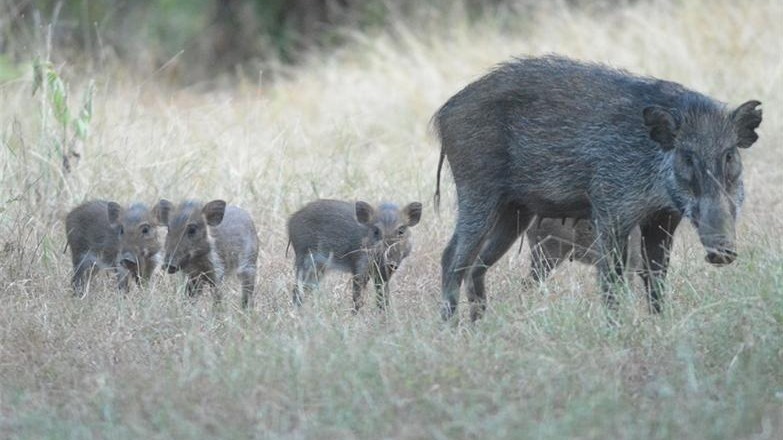
Warnings have been issued that African Swine Fever (ASF) can no longer be viewed as merely a disease of the pig farming industry. As ASF spreads from farms into forests in Asia, it has entered a stage where it threatens the very survival of some native wild pig species.
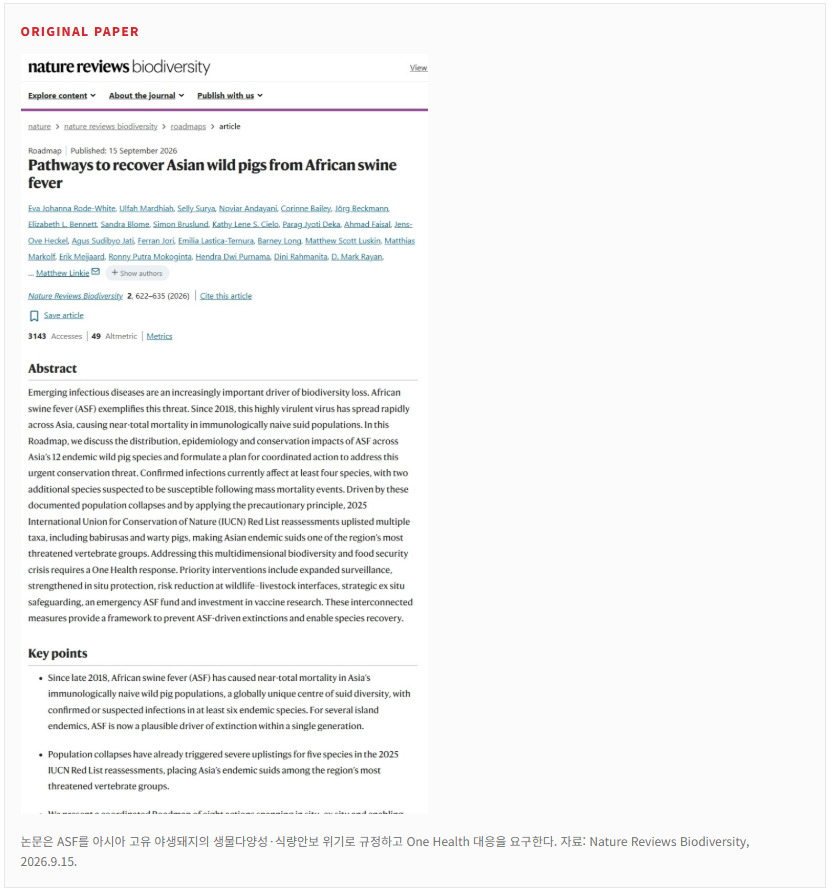
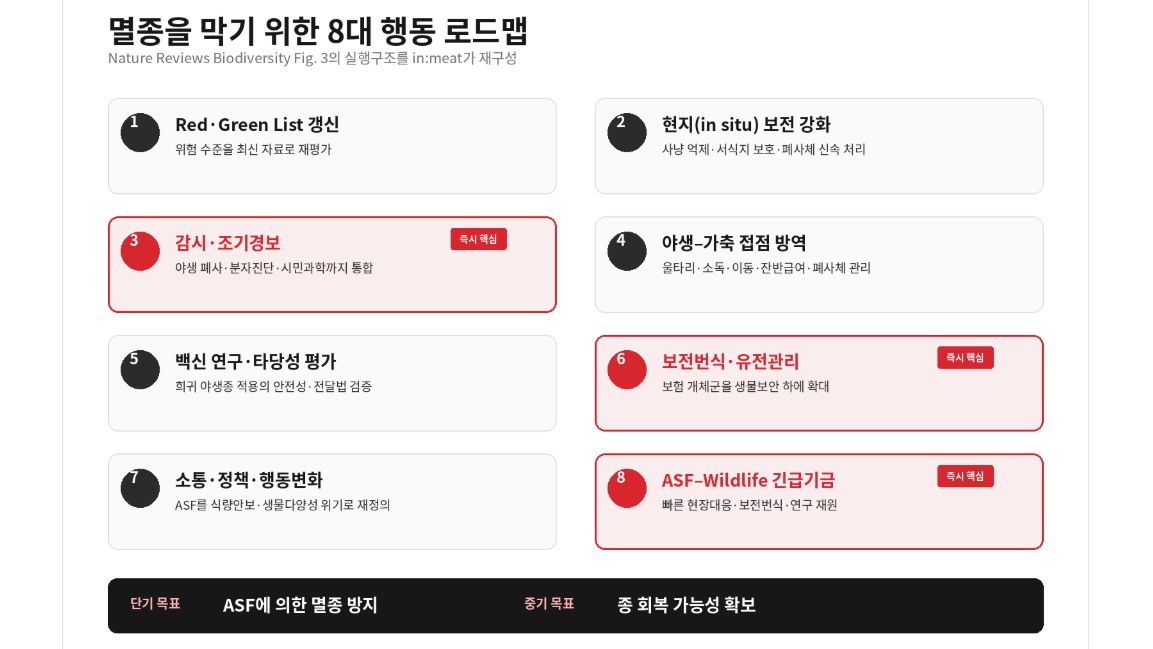
The roadmap paper "Pathways to recover Asian wild pigs from African swine fever," published by Nature Reviews Biodiversity in September 2026, synthesized the ASF exposure and conservation risks of 12 species of wild pigs native to Asia and presented eight action plans to prevent extinction. Thirty-one scientists from the fields of wildlife conservation and veterinary and disease control participated in the study.

Down 87% in just a few months… Not a ‘population decline’ but a ‘collapse’
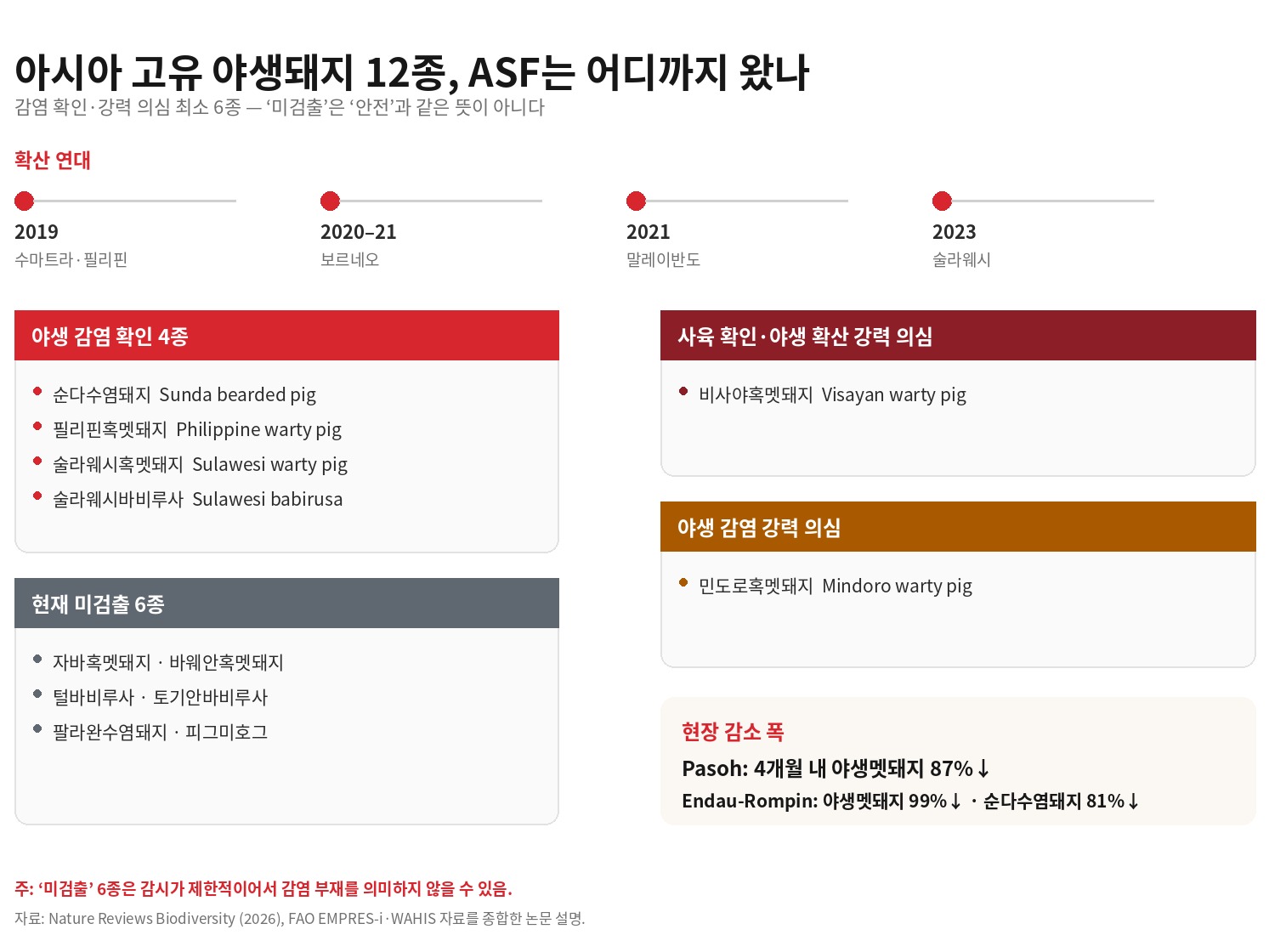
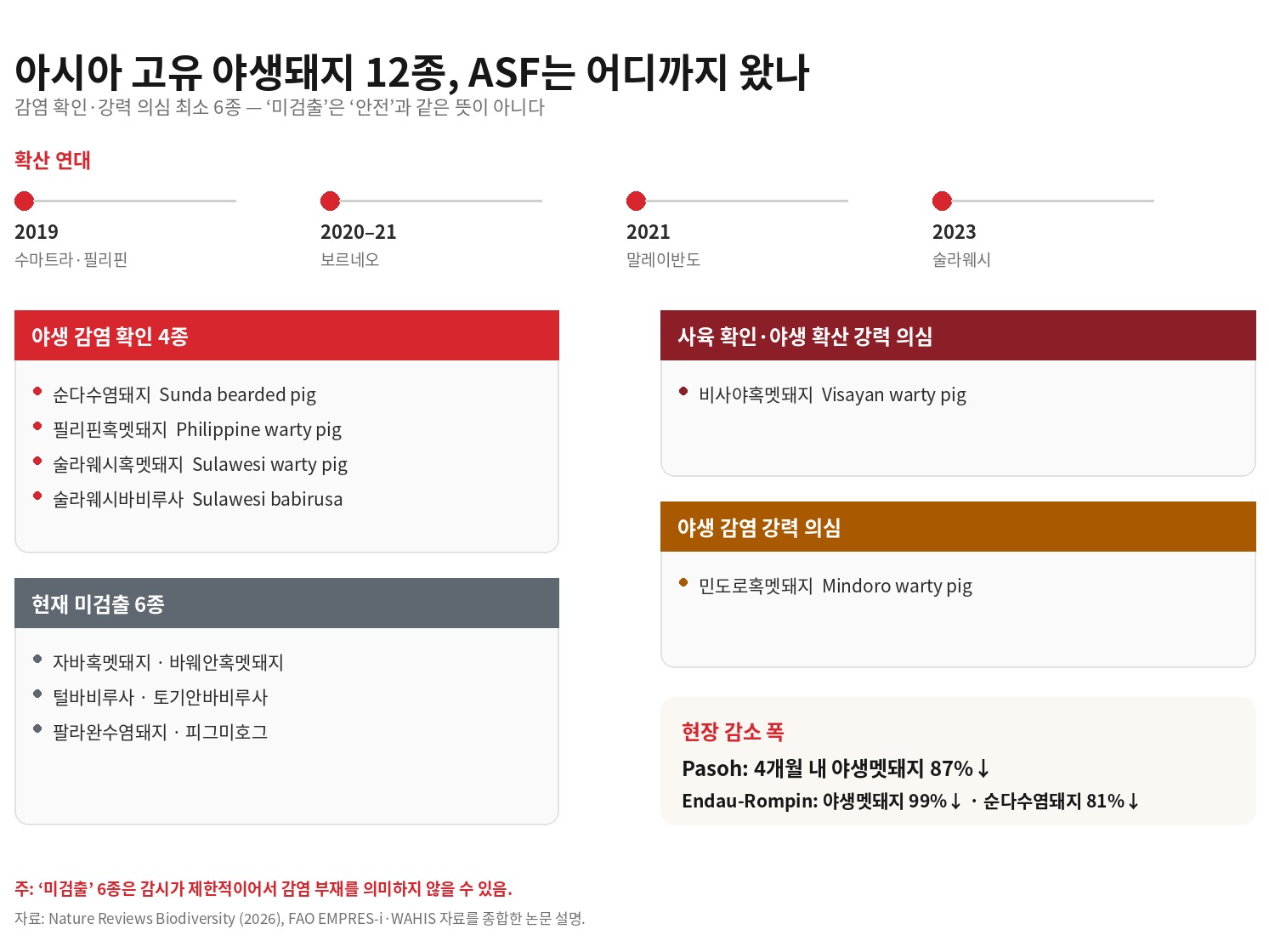
In Malaysia's Pasoh Forest Reserve, wild boar activity measured by camera traps decreased by 87% four months after ASF was confirmed. In the Endau-Rompin region, wild boar numbers decreased by 99% and Sundanese bearded pigs by 81% between 2021 and 2023. The paper explains that while signs of recovery have appeared in some areas, several populations remain significantly below pre-ASF levels.
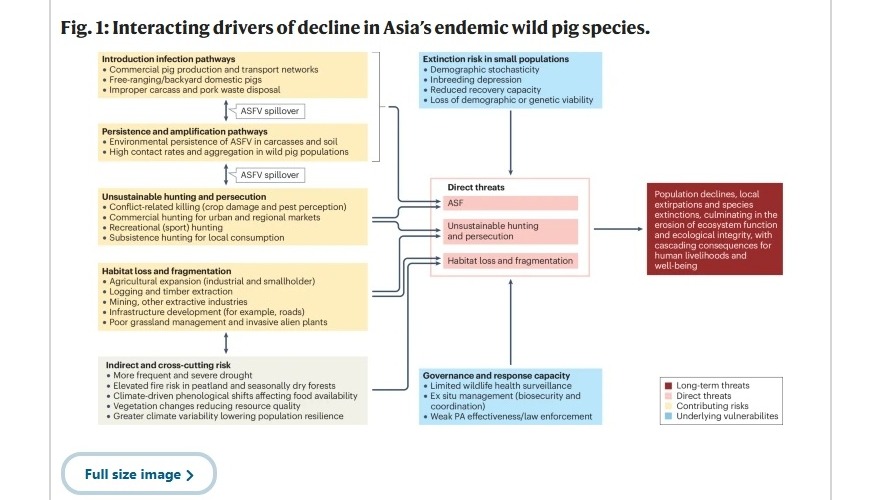

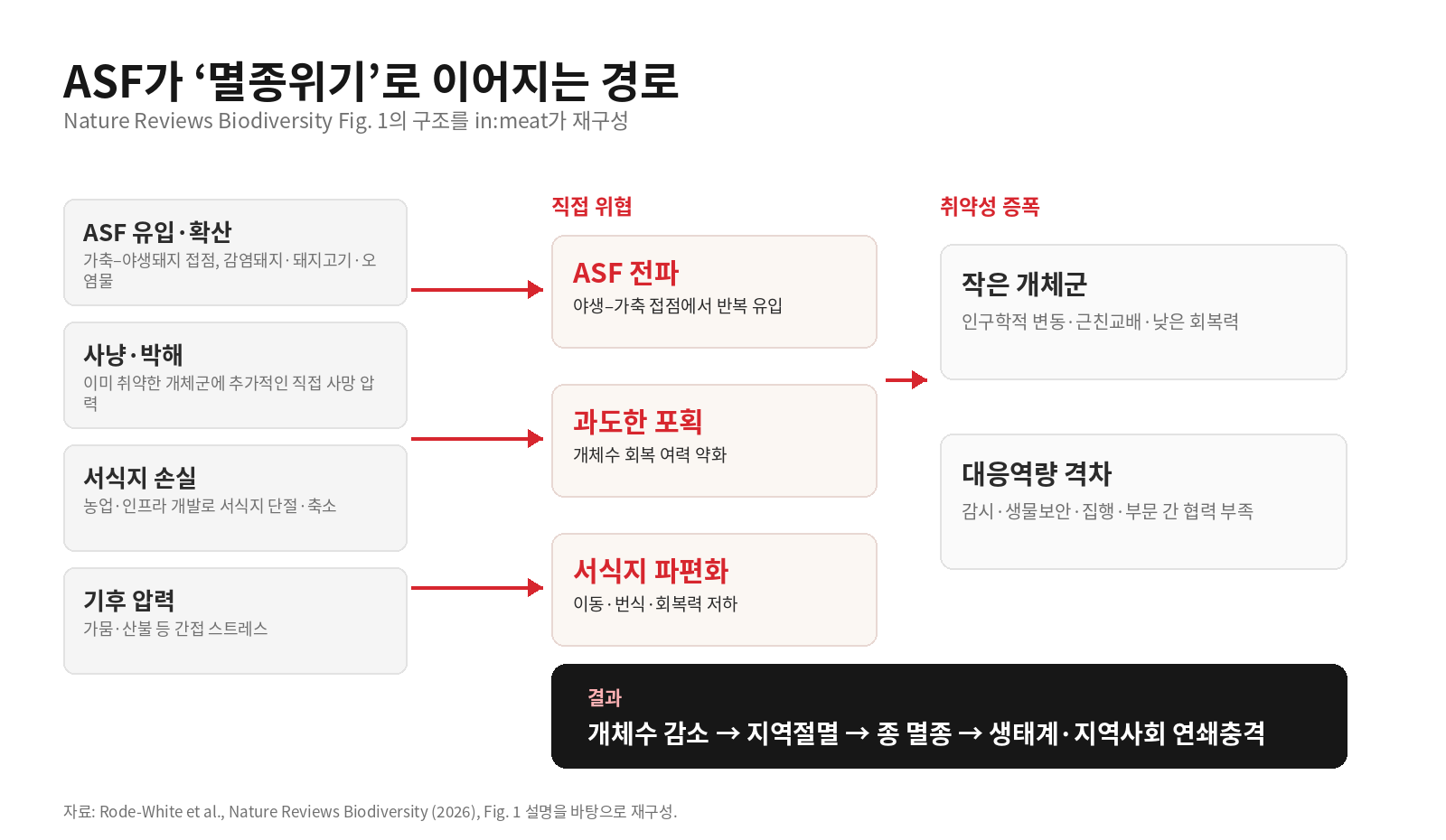
ASF is becoming an ‘accelerator’ that could shut down the very possibility of recovery for already vulnerable species, rather than being a final blow.
Why is ‘extinction’ a problem in Asia when it is the same ASF?
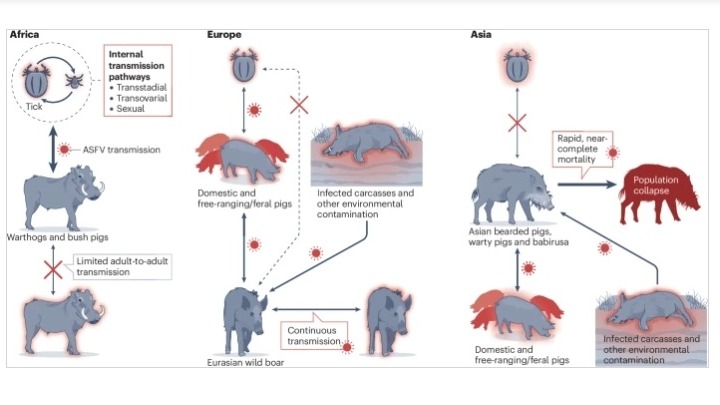
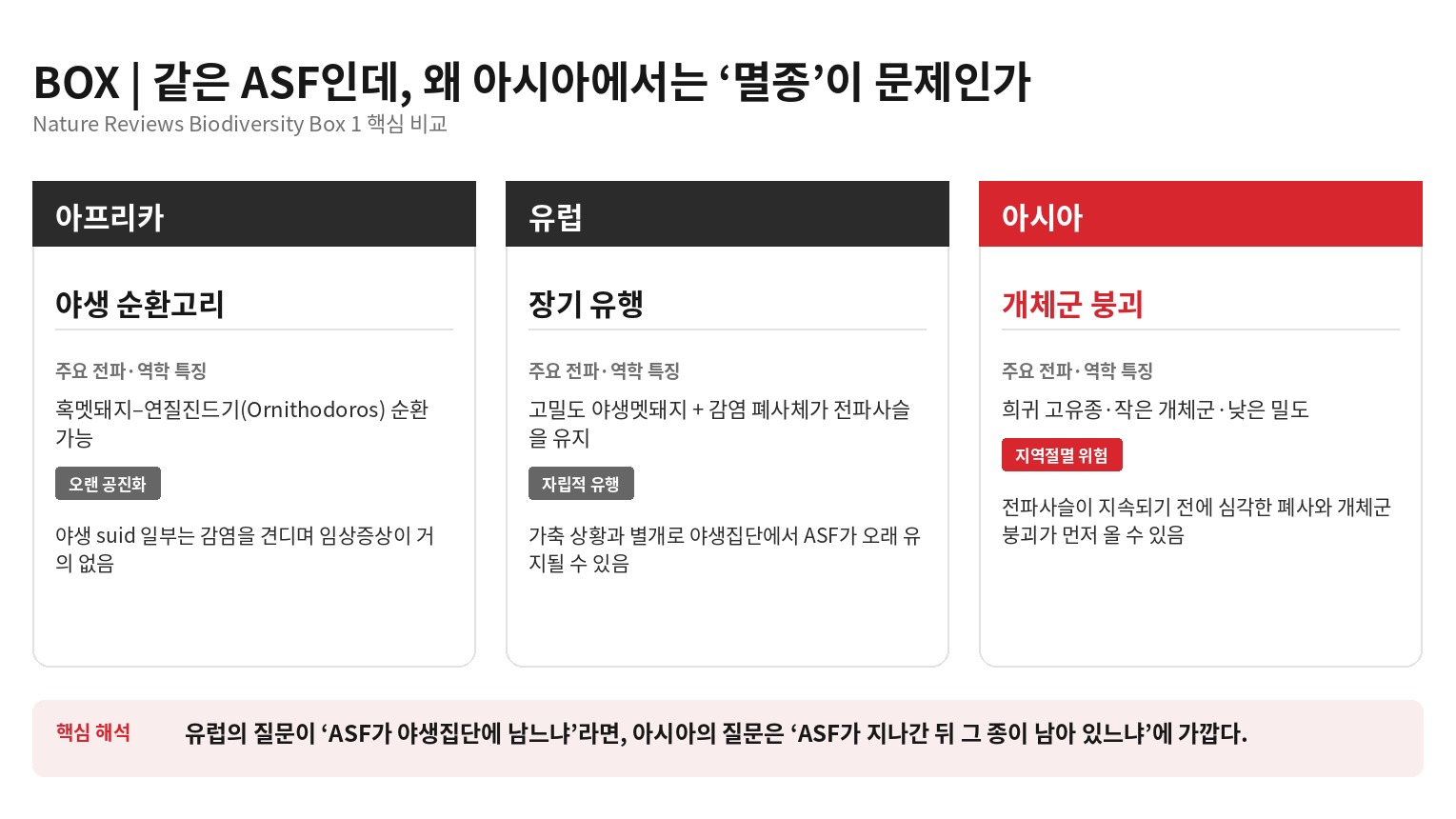
Box 1 of this paper explains that the epidemiological environments and transmission patterns of Africa, Europe, and Asia differ from one another. This difference is key to understanding why ASF in Asia can lead to the issue of ‘species extinction’ rather than ‘long-term epidemics.’

At least 6 out of 12 types… have already come into contact with the virus
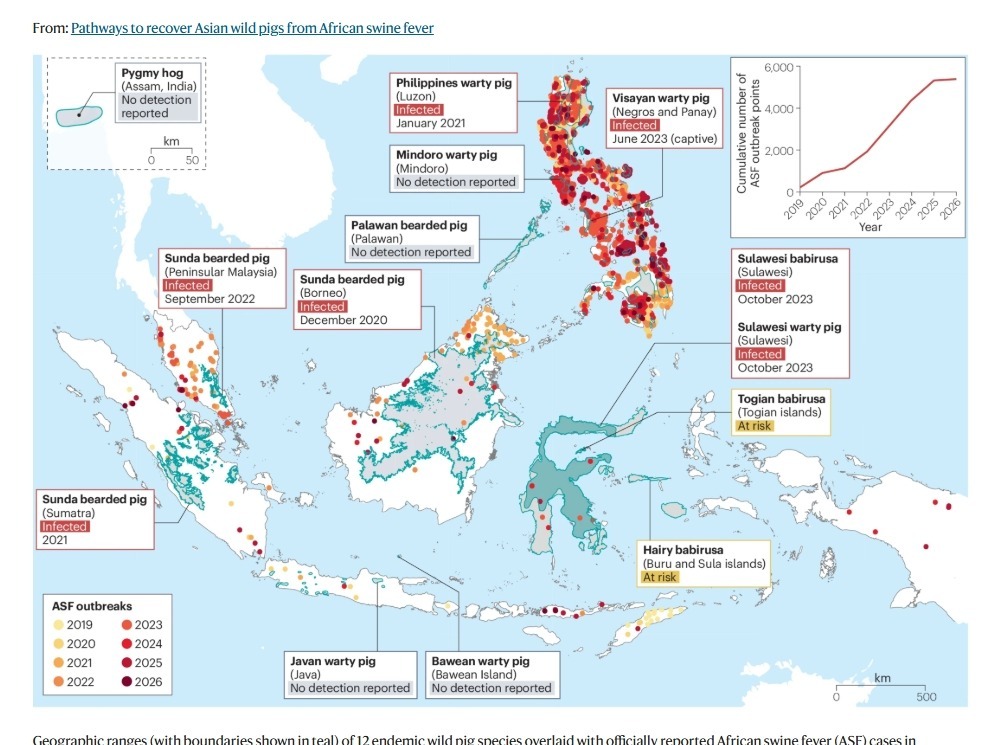
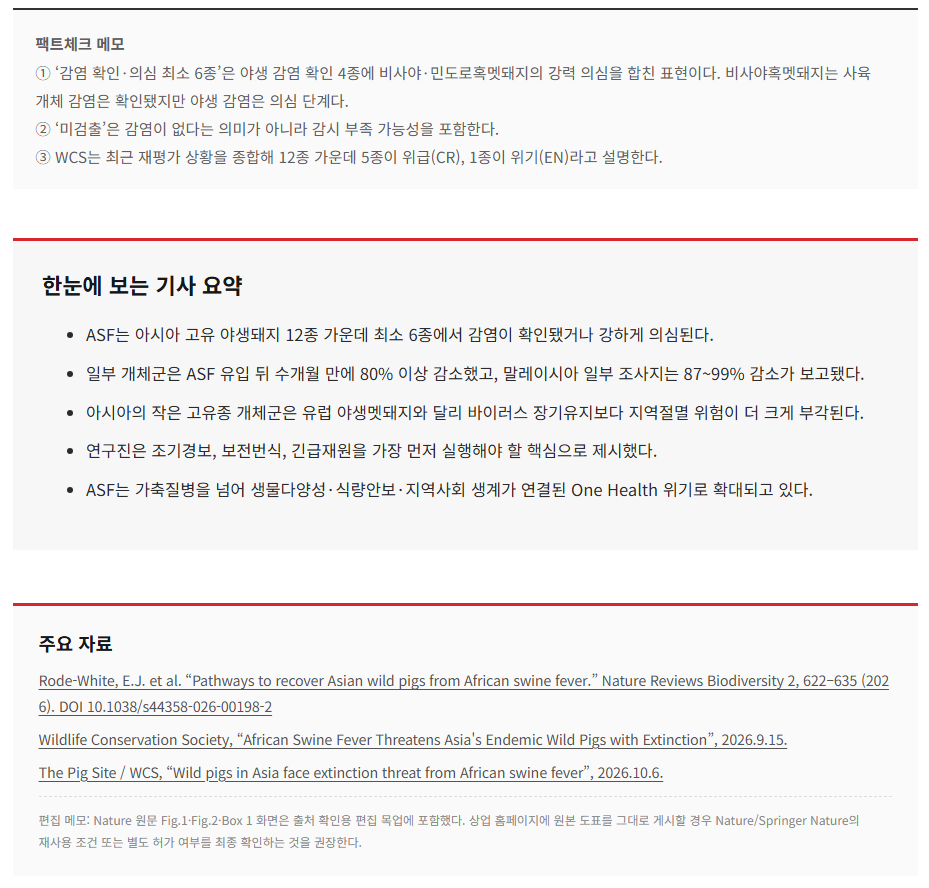
Four species have been confirmed to be infected with ASF in the wild: the Sunda bearded pig, the Philippine warthog, the Sulawesi warthog, and the Sulawesi babirusa. Infection was confirmed in captive-bred Visayan warthogs, and their spread to the wild is strongly suspected. The Mindoro warthog was assessed as having a high likelihood of infection due to reports of a rapid decline in the wild population.
Sulawesi, the front line where ASF has turned into an ‘endangered species’
Sulawesi, Indonesia, is one of the regions where the risk of extinction due to ASF was most clearly revealed in this study. Infections were confirmed in Sulawesi warthogs in August 2023 and in Sulawesi babirusa in October of the same year.
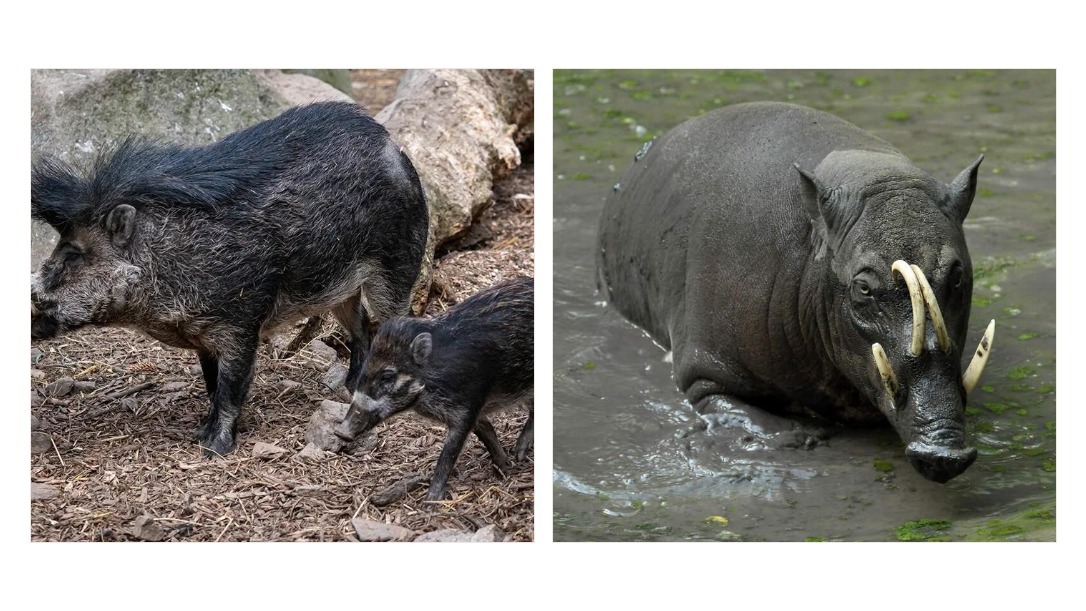
Data compiled by the paper confirmed 37 infections in Sulawesi warthogs and classified 34 as suspected deaths. For Sulawesi babirousa, 6 cases were confirmed and 4 suspected deaths were reported. Although Babyrousa is a distinct lineage that is evolutionarily quite distant from the genus Sus, actual infections and deaths have been confirmed.
In the 2025 reassessment, the Sulawesi, woolly, and Togian babirusa were all upgraded to Critically Endangered, and the Sulawesi warthog was upgraded from Near Threatened to Endangered.
If pigs disappear, the forest's food chain will also be shaken.
Wild pigs are ecosystem engineers that overturn the forest floor and seed dispersers, as well as an important food source for large predators such as tigers and leopards. The researchers point out that a decline in wild pigs can have a cascading effect on predators' food bases and forest ecosystem functions.
In Borneo, the Sunda bearded pig is a source of protein and a cultural resource for some indigenous peoples and forest-dependent communities. If the population collapses, hunting targets may shift to smaller wildlife, creating another form of ecological pressure.
The zoo was not safe either… All 16 died
When wild populations collapse, the last line of defense is ex situ populations in zoos and conservation breeding facilities. However, current safety nets are insufficient.
8 survival roadmaps released by the research team
Is the vaccine the answer?… Application to wild species is still ‘unknown’
While the development of ASF vaccines for domestic pigs is progressing, a safe and effective delivery system applicable to rare, freely roaming wild pigs has not yet been verified. At the current stage, surveillance, rapid disposal of carcasses, biosecurity at the wild-livestock interface, and conservation breeding are presented as more immediately applicable measures.
The pig industry has already lost $130 billion to $192 billion.
The research team estimates that the losses incurred by the Asian pig farming industry due to ASF since 2018 range from $130 billion to $192 billion. They also presented a comparison suggesting that investments to prevent the extinction of wild pigs over the next five years are likely to be orders of magnitude smaller than this figure. However, the core argument goes beyond cost-benefit analysis. This is because while industrial losses can be recovered, extinction is irreversible.
The question that ASF has posed to Asia is now expanding from ‘how to protect pigs’ to ‘how to prevent a species from disappearing in forests where ASF has entered.’
An era where disease control and preservation cannot be viewed separately
This study views ASF as a complex crisis involving livestock disease, wildlife conservation, food security, and community livelihoods. This is why a One Health approach is necessary, linking agriculture, veterinary disease control, wildlife conservation, local communities, and government policies.
WCS and its research partners are preparing an Innovation Challenge to put the roadmap into action, and plan to raise this issue at CBD COP17 in Yerevan, Armenia, in October 2026.
- #축산물
- #기술
Related Content
DEEP DIVE
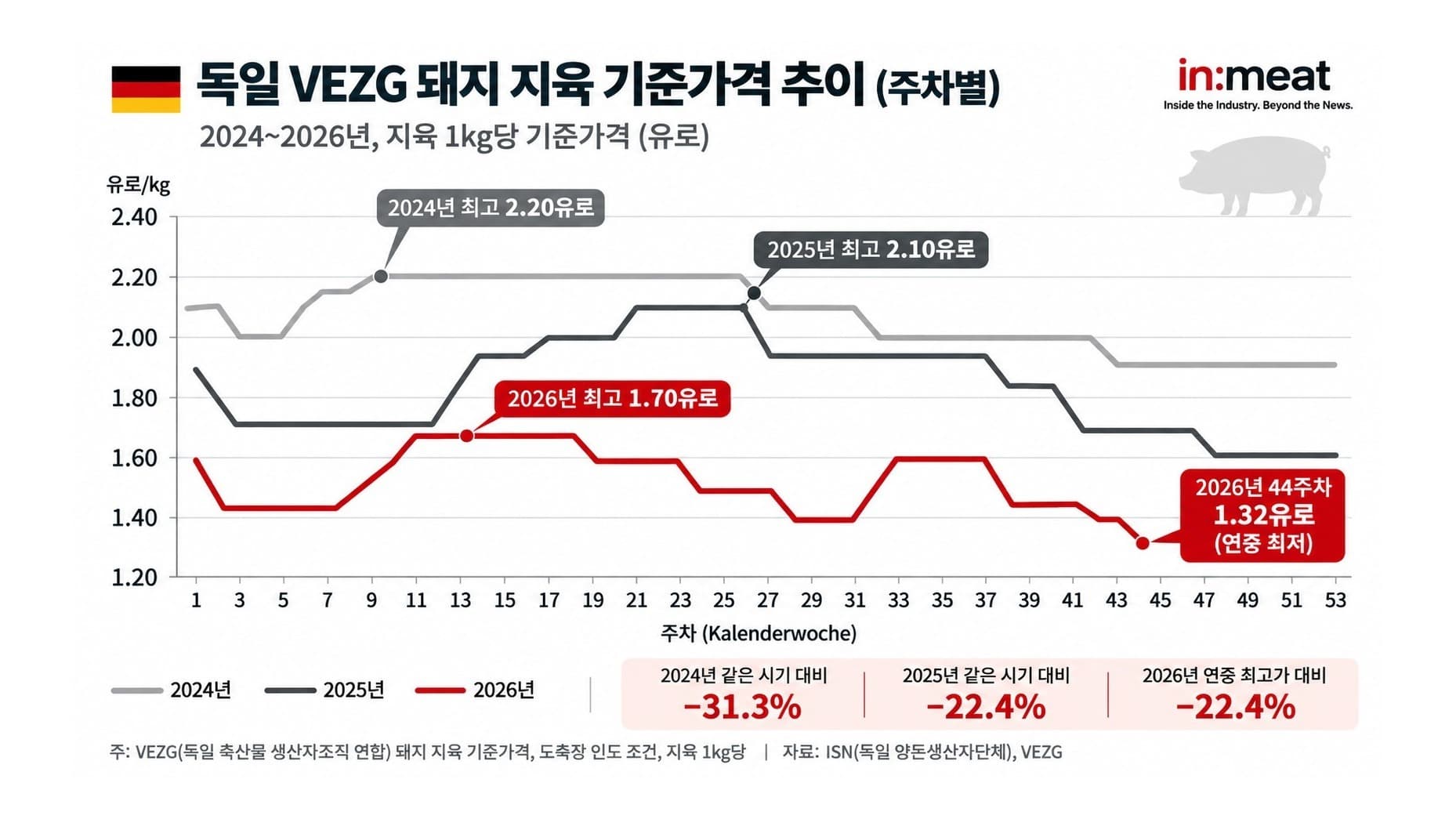
German Pig Prices 'Plunge'... 70 Euro Loss on Every Pig Sold
The management crisis for pig farms is deepening as the standard price of pork carcasses in Germany has fallen to 1.32 euros per kilogram. Producer organizations estimated that, taking into account total production costs, a loss of about 70 euros per pig is incurred.
2026.10.31
DEEP DIVE
The Hanwoo meat processing business driven into a struggle for survival—is there no way out?
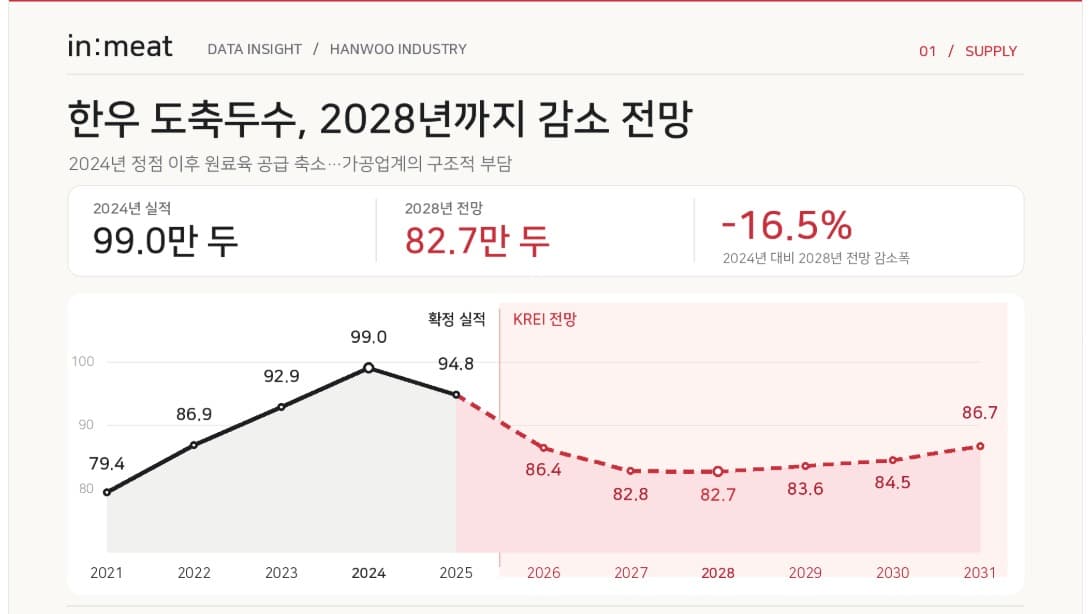
The Hanwoo beef processing industry stands at a crossroads of survival. The burden of maintaining existing production facilities and personnel is increasing as slaughter volumes have followed a decline in the number of cattle raised. On top of this, industry insiders explain that the business environment for processing companies is deteriorating due to a confluence of factors, including rising raw meat prices, intense competition in the market for specific cuts, and market expansion moves by major players.
2026.10.26

DEEP DIVE
“We must buy it to survive” … Restaurant industry wages ‘raw material procurement war’ amid U.S. short rib shortage
The atmosphere surrounding U.S. beef short ribs in the domestic meat market is becoming increasingly volatile. Companies that had been delaying purchases due to rising import prices are now scrambling to secure raw materials, even if it means accepting the high costs. For restaurant businesses that sell ribs as their main menu item, the ability to continuously secure the necessary supply has emerged as a greater concern than the cost itself.
2026.10.21