
Meat Culture & Trends
Pork Belly, ‘Crispy’ and ‘Moist’… 2027 Dining Out Keyword ‘Zero-Point Consumption’
From half a plate of special cuts and a customer-created 'perfect combination' to low-sugar marinated ribs.
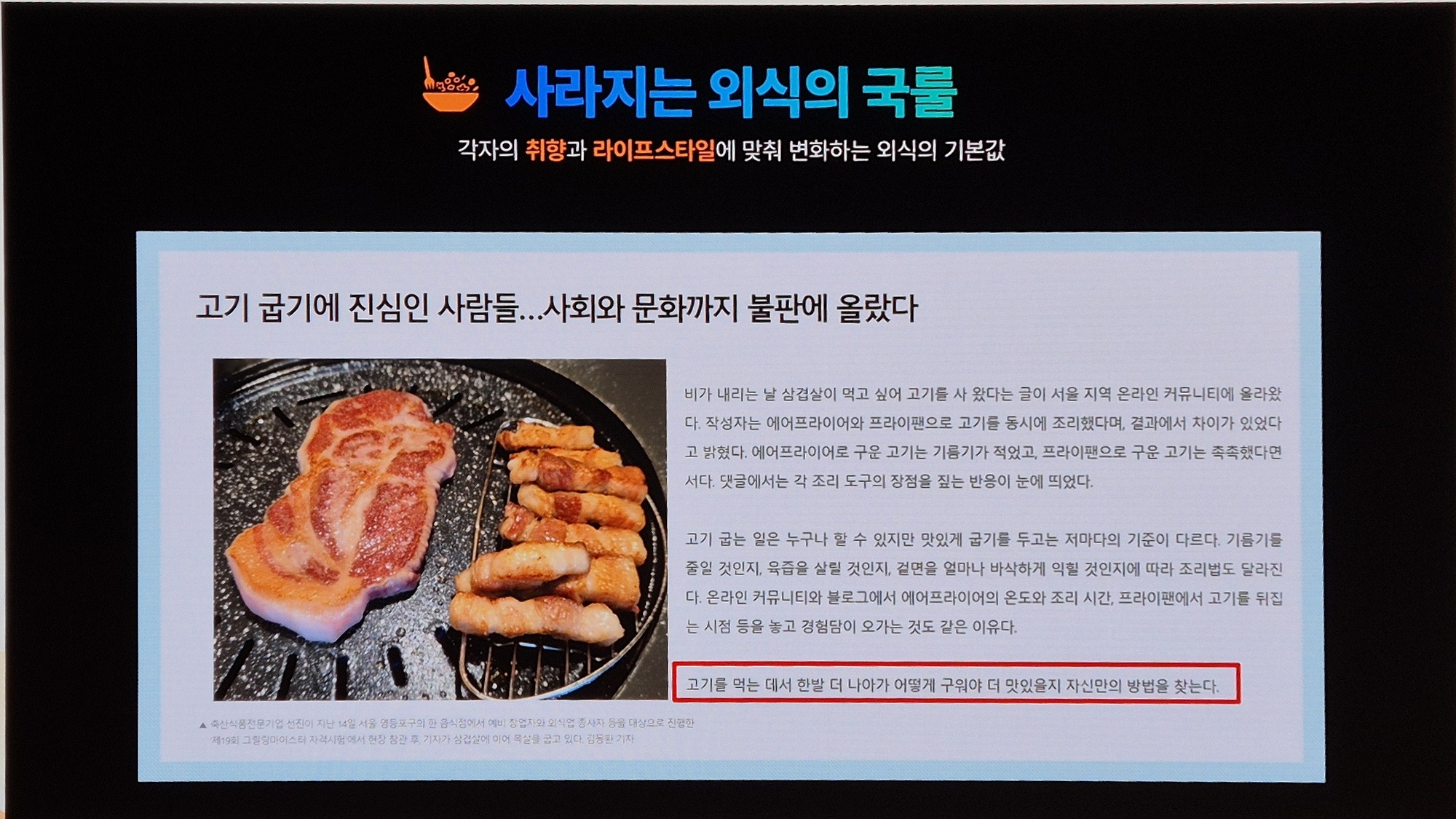
“Pork belly tastes best when it’s crispy.” “If you grill it like that, all the juices will drain out.”
Even with the same grill in front of them, chopsticks head in different directions. Some choose pieces with golden-brown edges, while others pick them up when the inside is still moist. This is a common sight at barbecue restaurants. However, at a forecast of the dining-out market in 2027, this seemingly trivial difference emerged as a clue that could change the menu.
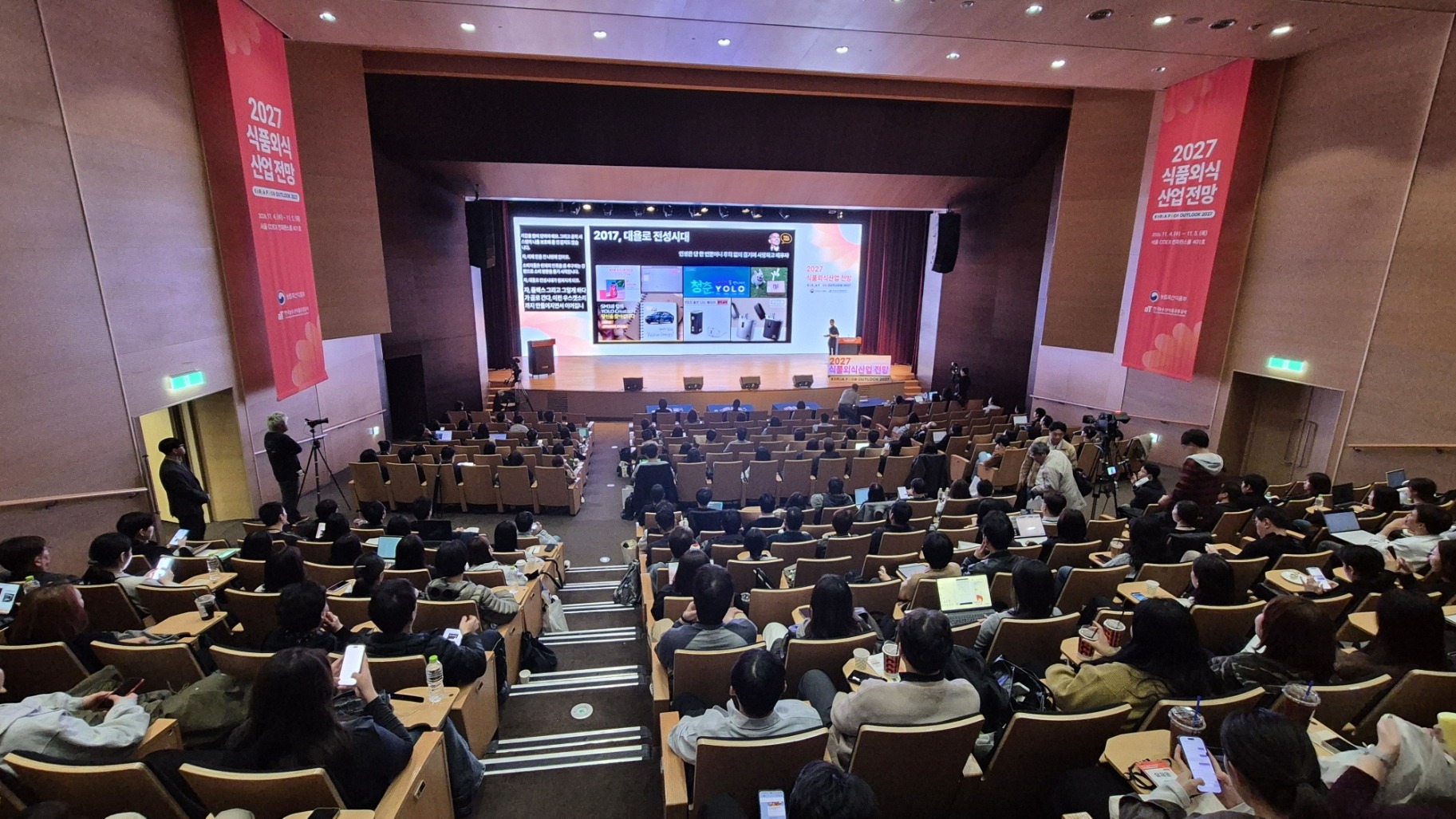
At the ‘2027 Food & Beverage Industry Outlook’ held at COEX in Seoul on November 5, Chae Seon-ae, Head of the Trend Center at Macromill Embrain, said the following.
Consumers haven't closed their wallets yet. They are only opening their wallets for things that fit perfectly.

The "zero-point consumption" mentioned by Center Director Chae refers to a style of spending where one weighs the question, "Is this the right choice for me right now?" before spending money, aiming to reduce the likelihood of regret after the purchase. This means that even when spending the same amount on dining out, the criteria for opening one's wallet vary depending on whether it is a company dinner, a solo lunch, or a long-awaited appointment.
01 / TREND REPORT
Consumers who used to try this and that, now even a single meal meets their own standards
Center Director Chae explained the changes in consumption over the past few years using three terms: ‘small-batch consumption,’ ‘compressed consumption,’ and ‘zero-point consumption.’
Small-scale consumption refers to experiencing various things in small units, such as a glass of wine or a pack of sliced fruit. After trying out different things, "compressed consumption" emerged as a trend to enjoy multiple experiences intensively with a single expenditure. It is easy to understand if you imagine enjoying a meal, dessert, and sightseeing all at once during a single outing.
In zero-point consumption, "having the experience I wanted" becomes more important than "having enjoyed myself this much." Since even a single meal out costs both money and time, people feel more at ease checking the menu and prices in advance and choosing a place that meets their standards.
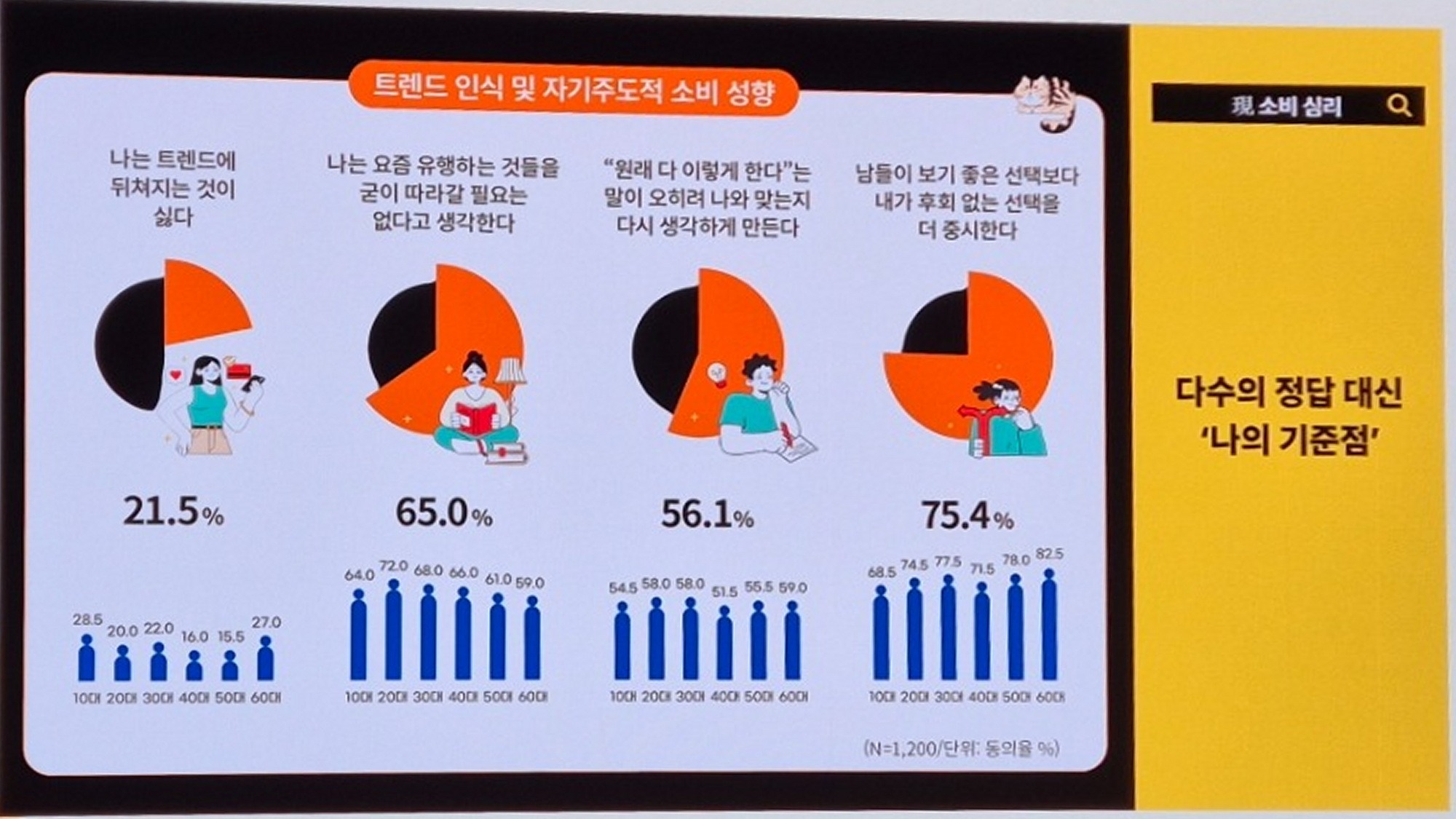
In a survey of 1,200 people released during the announcement, 75.4% answered that they prioritize choices they will not regret over choices that look good to others. 65.0% agreed with the statement that there is no need to follow trends. This explains why information that cannot be gleaned solely from the description of a popular menu item—such as the portion size, texture, and the ability to order according to one's preference—becomes important in making a choice.
02 / TREND REPORT
Bottled water at the lowest price, and people line up from dawn for their favorite foods.
In the presentation, Center Director Chae gave an example. He pointed out that a person looking for the lowest-priced bottled water and a person lining up from dawn to buy their favorite rice cakes could actually be the same consumer.
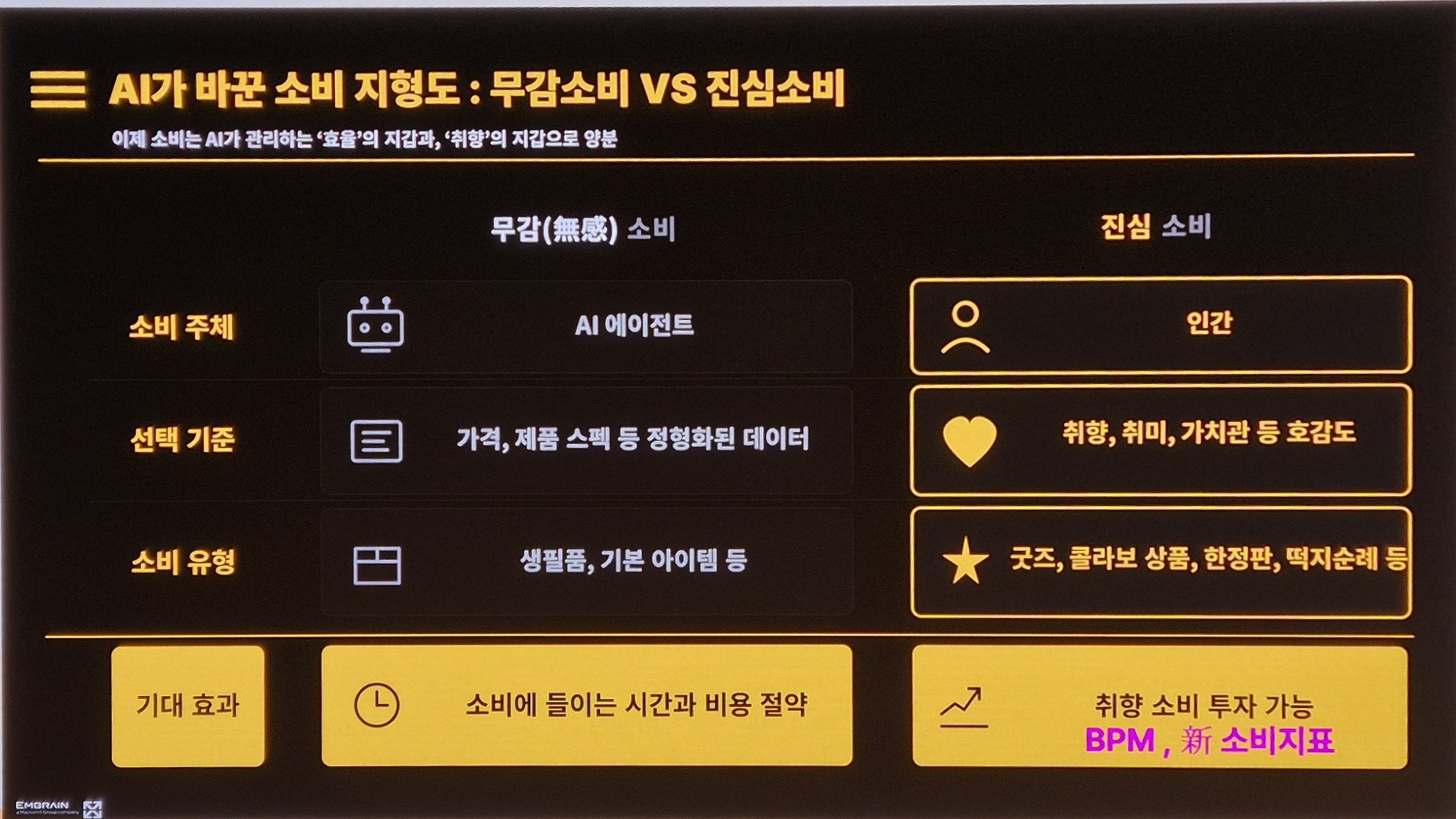
When buying bottled water, comparing only price and volume is sufficient. For such purchases, time and money can be saved by entrusting the comparison to AI shopping tools. Center Director Chae called this "consumption without devotion." On the other hand, when it comes to eating a long-awaited limited-edition menu item or spending time at a restaurant of one's liking, people personally search for it and willingly put in the effort. In the presentation, this was referred to as "sincere consumption."
Two criteria can coexist in meat consumption as well. When choosing meat for fried rice on a weekday evening, one might check the price and weight first, whereas when visiting a barbecue restaurant on the weekend, one might select it because of cuts that are usually hard to find or the restaurant's unique grilling method. Even for the same customer, grocery shopping on a weekday and dining out on the weekend are different purchases.
03 / TREND REPORT
Everyone has different company dinner menus and different ways of grilling meat.
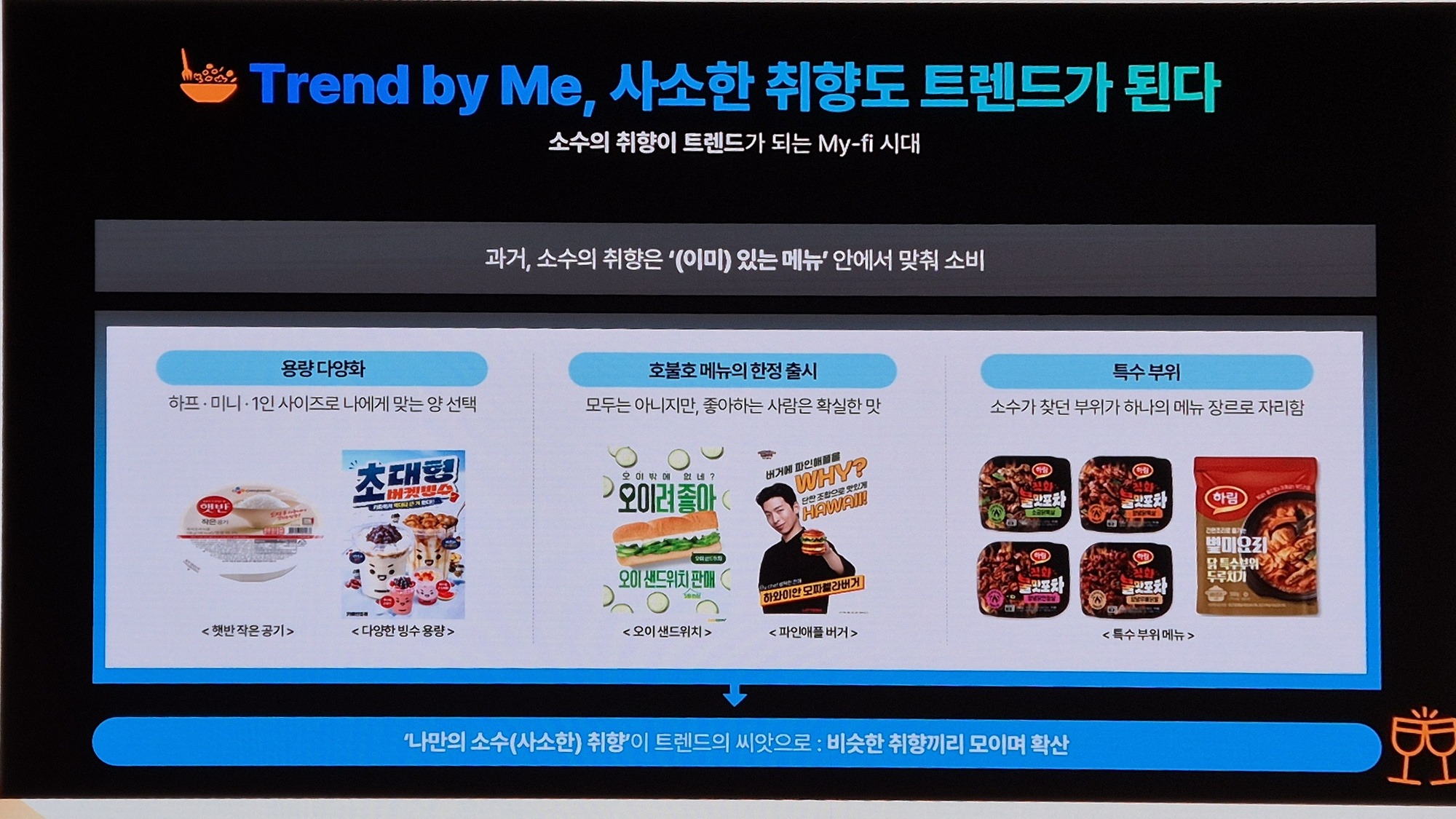
When one thinks of a company dinner, one typically pictures grilling meat and drinking alcohol in the evening. However, Center Director Chae observed that this formula is becoming less rigid at company dinners these days. Some simply have a meal at lunch, and even at the same table, some choose beer while others opt for non-alcoholic beverages. Guests have different preferences for how they want their beef cooked, and tastes for pork belly are also divided between lean and juicy options. In the presentation, this trend was referred to as "My-fi."
Specialty cuts are an example of this at barbecue restaurants. Customers can order an additional plate of a cut they were curious about while still ordering the meat they usually eat. Center Director Chae suggested that if a restaurant is concerned about revenue per customer due to declining alcohol orders, they could create reasons for additional orders on the meat menu in this way.
When applying this to a restaurant, you could consider an assortment containing small portions of cuts you are trying for the first time, or a menu that briefly describes the textures. Even customers who hesitated to order based solely on the menu name will find it easier to choose once they know their preferred characteristics, such as "chewy cuts" or "lean cuts."
04 / TREND REPORT
Customer-created ‘perfect combinations’ appear on the menu.
A specific ordering method circulated among consumers who enjoyed Mega MGC Coffee's vanilla lattes. It involved replacing the milk with almond milk and changing the syrup to light vanilla syrup. For first-time customers curious about the taste, it was a menu item that required pressing options multiple times on the kiosk. However, with the company officially launching this combination as the "Light Vanilla Almond Latte," customers can now place an order by selecting the menu name just once.
This is an example where consumers create combinations tailored to their tastes, and the company lists those combinations on the menu so that anyone can easily order them. Expanding options and grouping frequently chosen options to make ordering easier can be done together within a single store.
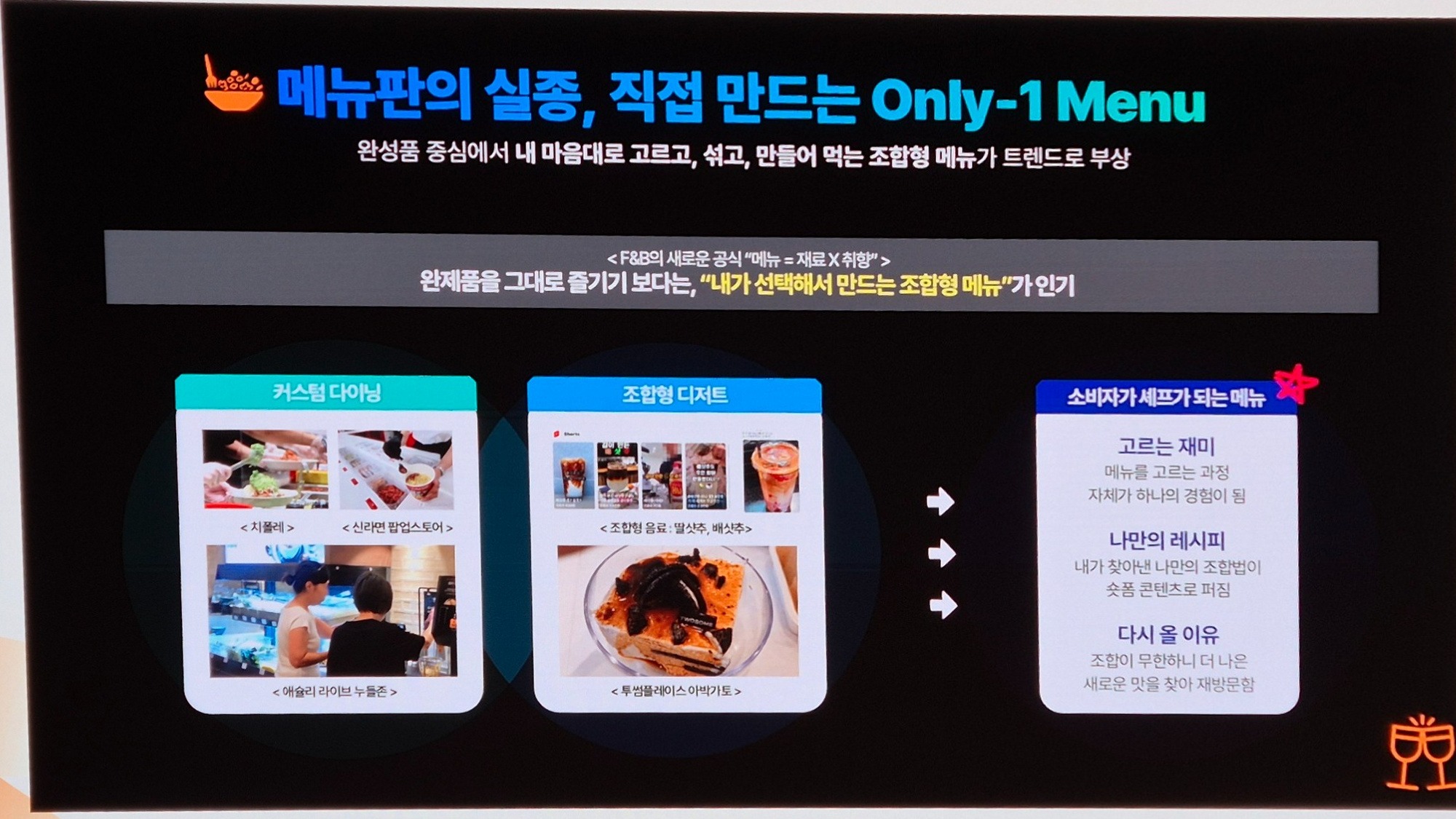
If we apply this to a meat restaurant, the following question arises: If customers consistently add the same sauce or side dishes to specific cuts of meat, couldn't those combinations be grouped into a menu item? Similarly, in a butcher shop, if the request to "slice this meat a little thicker" is repeated, one could examine whether that thickness is worth releasing as a separate standard. In essence, recurring orders in the store serve as the starting point for new products.
05 / TREND REPORT
Reasons why you might want to try pork belly-flavored snacks at least once
Seeing pork belly-flavored snacks makes you curious about the taste. If a cafe sells tteokbokki, you find yourself wondering at least once how it would pair with coffee. Center Director Chae described this trend of creating curiosity by adding unexpected combinations to familiar menu items as "uncliché."
For limited-edition menus, timing is also crucial. Signature dishes consistently sought after by regulars must maintain a consistent taste every time they visit. Limited-edition items must be released when customers are showing interest to convert that curiosity into orders. Center Director Chae cited quick thinking, launch timing, and a sense for reading consumer reactions as the essential competencies required when planning such products.
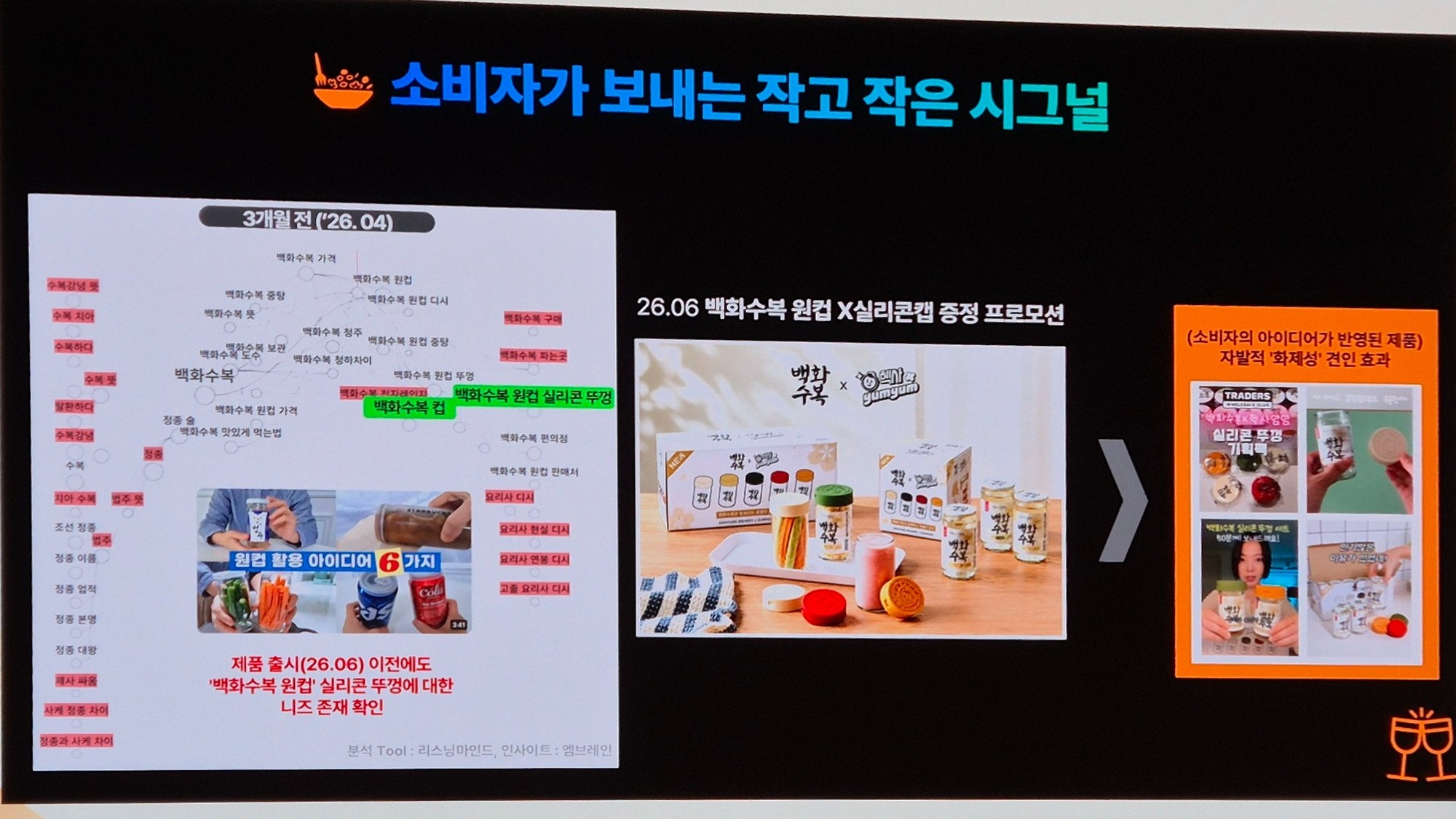
The case of the Baekhwa Subok One Cup introduced in the presentation demonstrates where such reactions originate. Consumers were observed searching for lids as they reused empty One Cups, such as for storing vegetable sticks, a trend that was captured in online searches and on social media. Subsequently, an event was launched offering silicone lids for the One Cups. Observing how consumers utilized the containers served as a clue for product planning.
06 / TREND REPORT
Marinated short ribs reduce sugar, and coffee adds protein.
Low-sugar marinated pork ribs and low-sugar charcoal-grilled chicken appeared on the presentation screen. This is an example where choosing options based on ingredients one wishes to reduce, such as decaffeinated or non-alcoholic, has entered the meat menu. Conversely, examples were also introduced of adding protein to coffee or selecting cup menus composed mainly of meat.
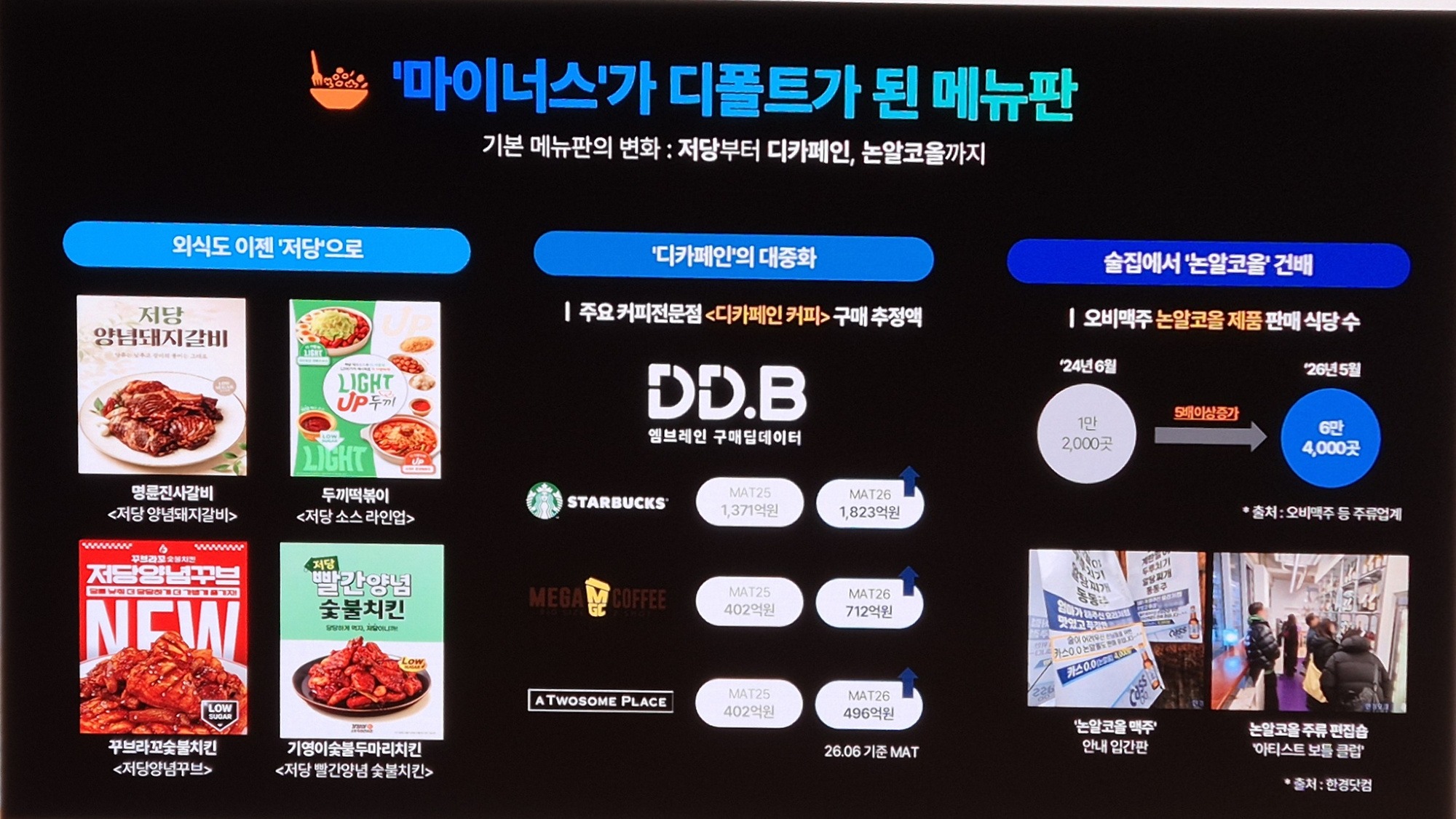
Center Director Chae called the process of selecting and securing the elements one needs "stat maximizing." It means that just as one selects and develops a character's stats in a game, one intensively manages the aspects one considers important in daily life, such as exercise or diet. For instance, when choosing a menu, one checks how much protein can be consumed after a workout, or how much sugar is in the seasoning if one is managing their sugar intake.
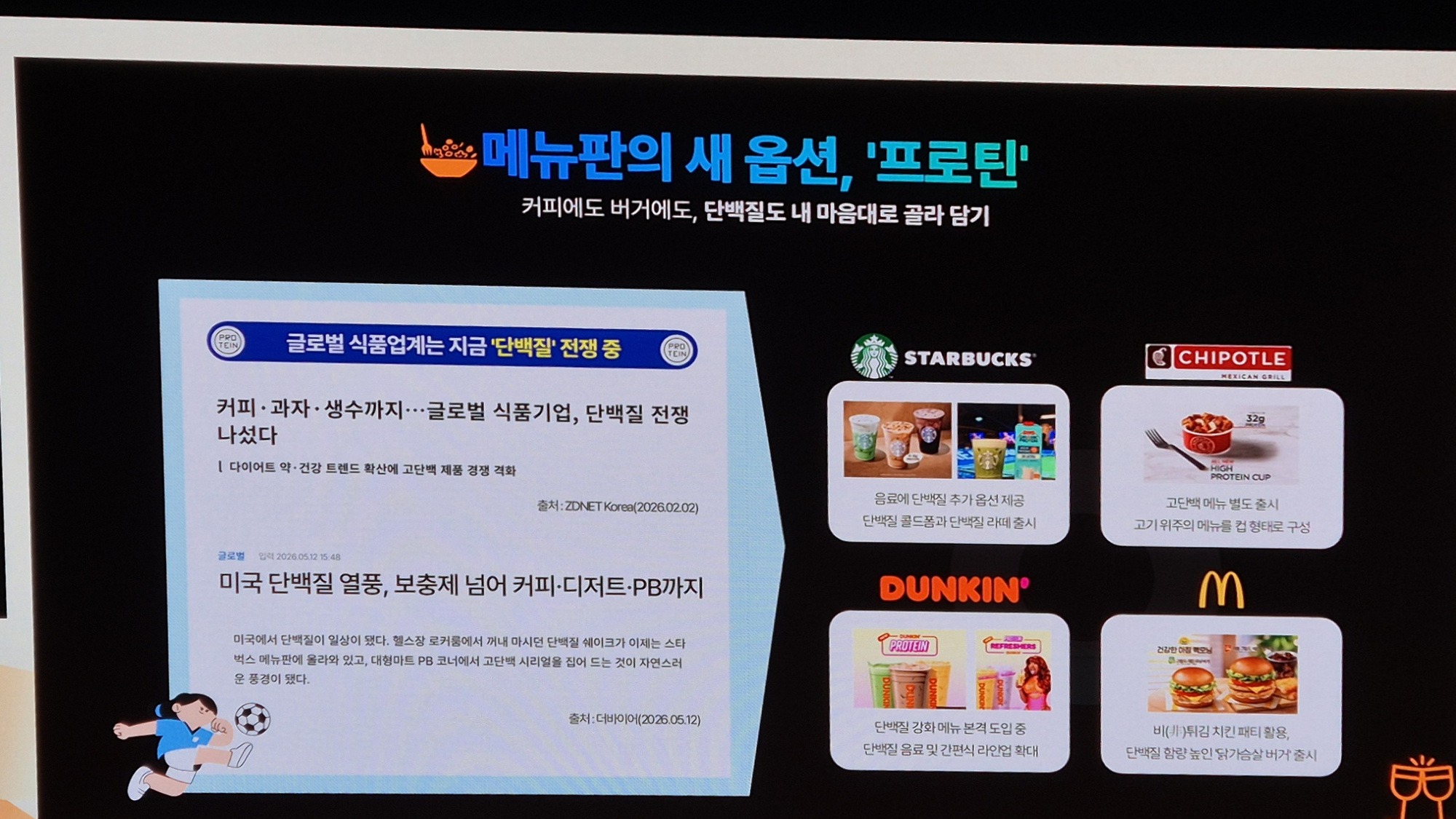
Center Director Chae predicted that interest in dietary fiber could grow following protein. He cited water-drinking habits as a similar example. He noted the trend of consumers going beyond simply looking for bottled water brands to searching for apps that remind them when to drink water or looking for electrolytes to take during exercise. In dining out as well, information detailing what and in what quantities a meal contains can be more helpful to customers' choices than a broad description of a "healthy meal."
07 / TREND REPORT
Things that are difficult to know from star ratings alone
Center Director Chae observed that the way consumers seek information could also change. Rather than scanning search results from the beginning, consumers are looking for information that has already been filtered to match their desired criteria. Regional restaurant maps and maps themed around specific menu items were presented as examples during the presentation.
Even two people searching for "great meat restaurants" may be looking for different answers. One is looking for a place to go for lunch with their child, while the other is seeking a spot to eat rare specialty cuts. Although both can view highly-rated restaurants, the information required for their final choice differs. Knowing whether lunch orders are available, which cuts are served, and how many grams a plate weighs allows customers to select a place based on their own criteria before visiting.
08 / TREND REPORT
A customer who was running alone comes to eat together.
Tastes can also bring people together. The presentation introduced examples of dining brands hosting running events or cafes becoming gathering places for running groups. Even people meeting for the first time find something to talk about over food after running together. Center Director Chae observed that food service businesses can create opportunities for customers to naturally meet based on these shared interests.
At a barbecue restaurant, you might already hear that clue when taking the order. “Can I have a half plate of just this cut?”, “Please include the sauce I had last time as well.” While a single person’s request may seem trivial, if the same thing is said at multiple tables, it is a demand worth adding to the menu.
2027 Food & Restaurant Industry Outlook
Hosted by: Ministry of Agriculture, Food and Rural Affairs · Organized by: Korea Agro-Fisheries & Food Trade Corporation (aT)
Presentation: Chae Seon-ae, Head of Trend Center, Macromill Embrain Co., Ltd.
November 5, 2026 · COEX Conference Room 401, Seoul
- #브랜드
- #정책
- #유통
- #기술
Related Content
Meat Culture & Trends
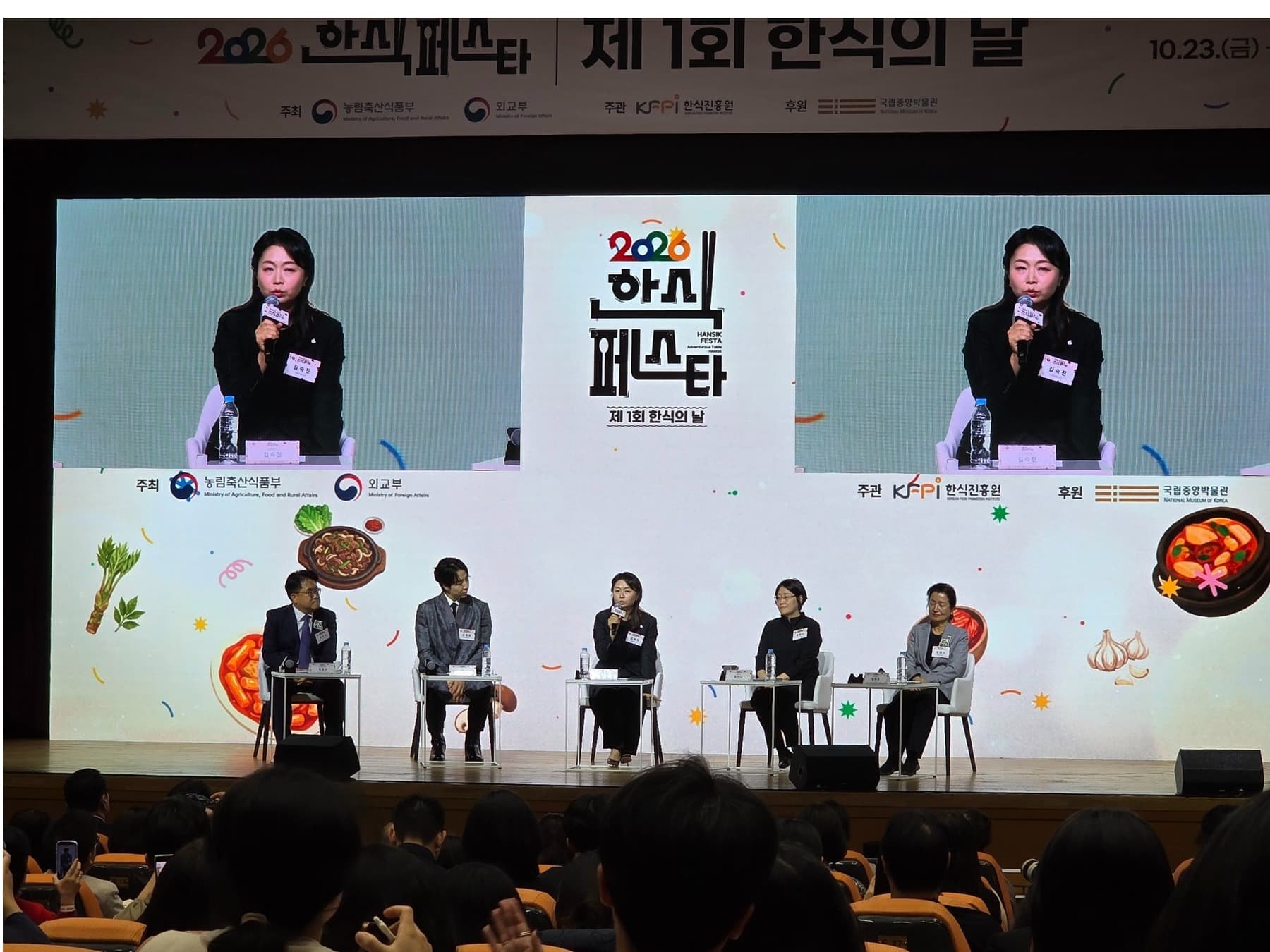
“Dawn of the Era of Hansik 3.0”… The 1st Hansik Day Declares a New Future for K-Food
At the 1st Korean Food Day ceremony in 2026, the government announced the ‘Korean Food 3.0’ vision. At the Korean Food Conference, Bibigo’s global strategy and chefs’ plans for the globalization of Korean food were discussed.
2026.10.26
Meat Culture & Trends
Marinated beef is being pushed off the dining table... The 'land of grilled meat' is turning into the 'land of solo dining'.
Based on three years of OpenSurvey Food Diary data (June 2022–May 2025), changes in seasoned meat consumption were tracked across 20 detailed menu items for four livestock types: beef, pork, chicken, and duck. The conclusion is simple: while spicy seasoned pork and chicken are growing as convenience foods, it was difficult to find beef menu items with growth potential in terms of seasoned meat.
2026.9.30
Meat Culture & Trends
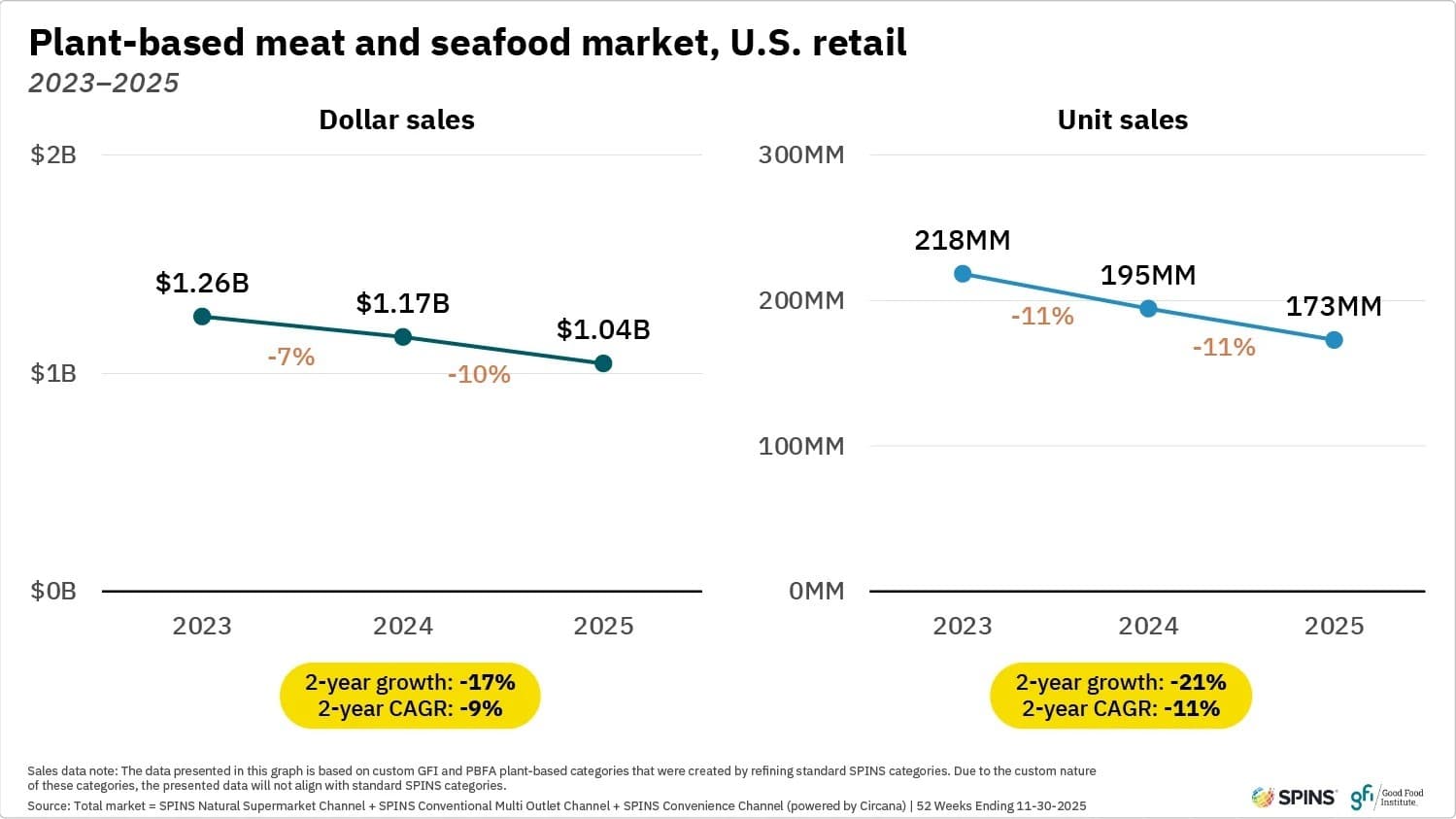
Did plant-based meat really replace meat? ... 96% of purchasing households also bought meat.
Is plant-based meat substitute truly replacing meat as its name suggests? Actual purchasing data from U.S. consumers indicates that the majority of purchases involve buying animal-based meat along with plant-based alternatives.
농촌경제연구원 · 2026