
Meat Culture & Trends
“Dawn of the Era of Hansik 3.0”… The 1st Hansik Day Declares a New Future for K-Food
Mrs. Kim Hye-kyung: “May the warm community spirit and charm of Korean cuisine reach the global dining table.”
To commemorate the first ‘Hansik Day’ since its designation as a statutory commemorative day, an event was organized to re-examine the cultural and industrial value of Korean food and to explore its global popularization and a sustainable future.
The Ministry of Agriculture, Food and Rural Affairs and the Ministry of Foreign Affairs held the ‘1st Hansik Day Commemoration Ceremony’ on October 23 at the Grand Auditorium of the National Museum of Korea in Yongsan-gu, Seoul. The event was attended by approximately 300 people, including members of the diplomatic corps in Korea, officials from the Korean food and food industries, representatives from academia and research institutions, and food masters.
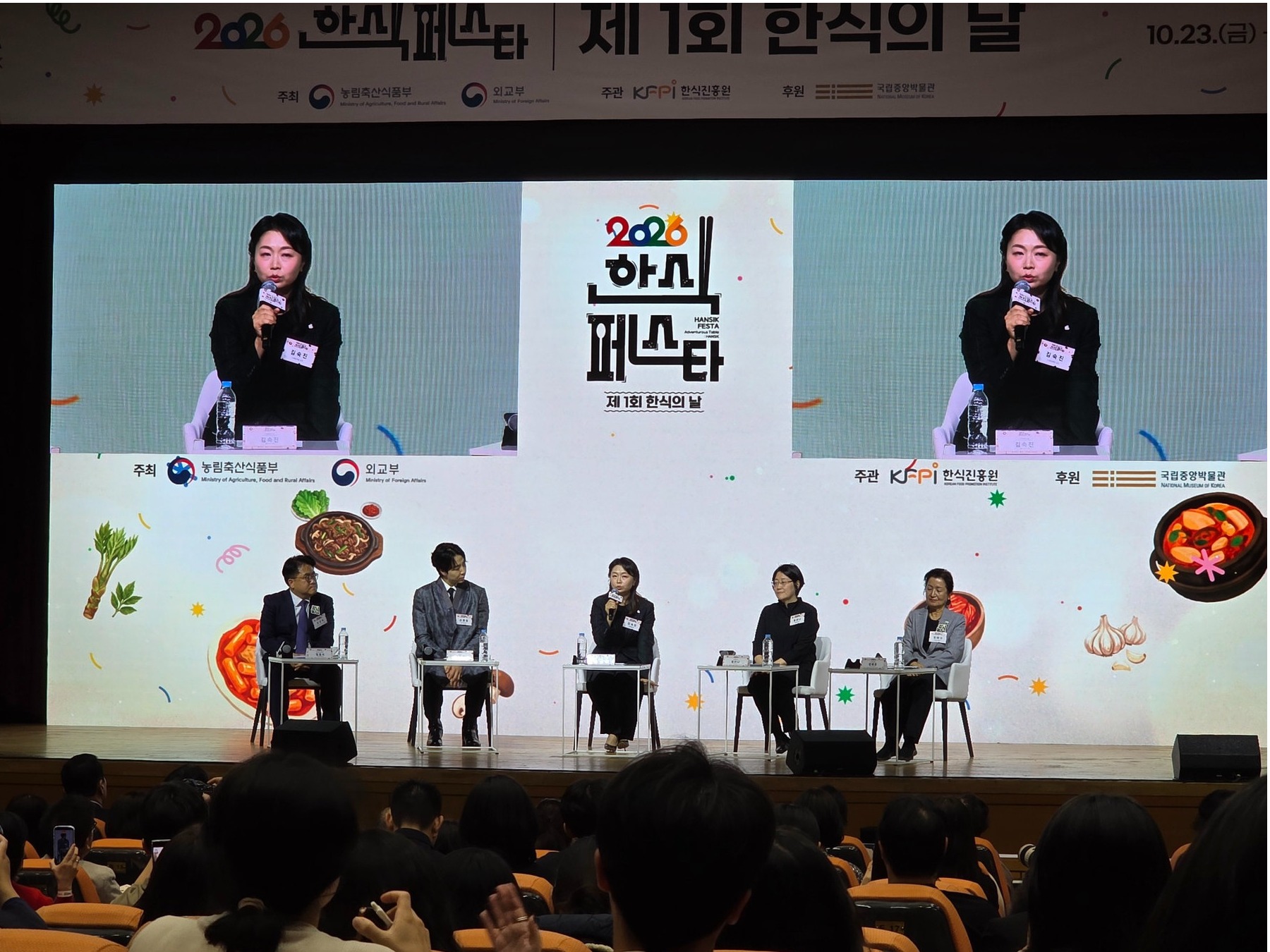
October 24, ‘Hansik Day’… Carrying the Value of Tradition to the Future
‘Hansik Day’ was set as October 24 by combining the number ‘10,’ which symbolizes completion and harmony, with the meaning of the ‘24 solar terms,’ which embody the flow of nature. This year marks the first commemorative event held since it was designated as a statutory holiday.
The ceremony featured the presentation of a future vision for Korean cuisine, congratulatory remarks, and the awarding of ministerial commendations to individuals who contributed to the preservation and development of Korean food.

Mrs. Kim Hye-kyung, who attended the event, expressed gratitude to those who have long preserved the value of Korean cuisine and emphasized the community spirit of Korean food, where families and neighbors gather to share affection.
Hansik embodies our unique and warm community spirit, in which families and neighbors gather to share affection and experience both joy and sorrow together.
— Mrs. Kim Hye-kyung, Congratulatory Speech for the 1st Hansik Day
First Lady Kim expressed her hope that the establishment of this commemorative day would serve as a turning point in passing on the spirit and values of Korean cuisine to future generations and promoting the beauty of Korean culture to the world through its charm.
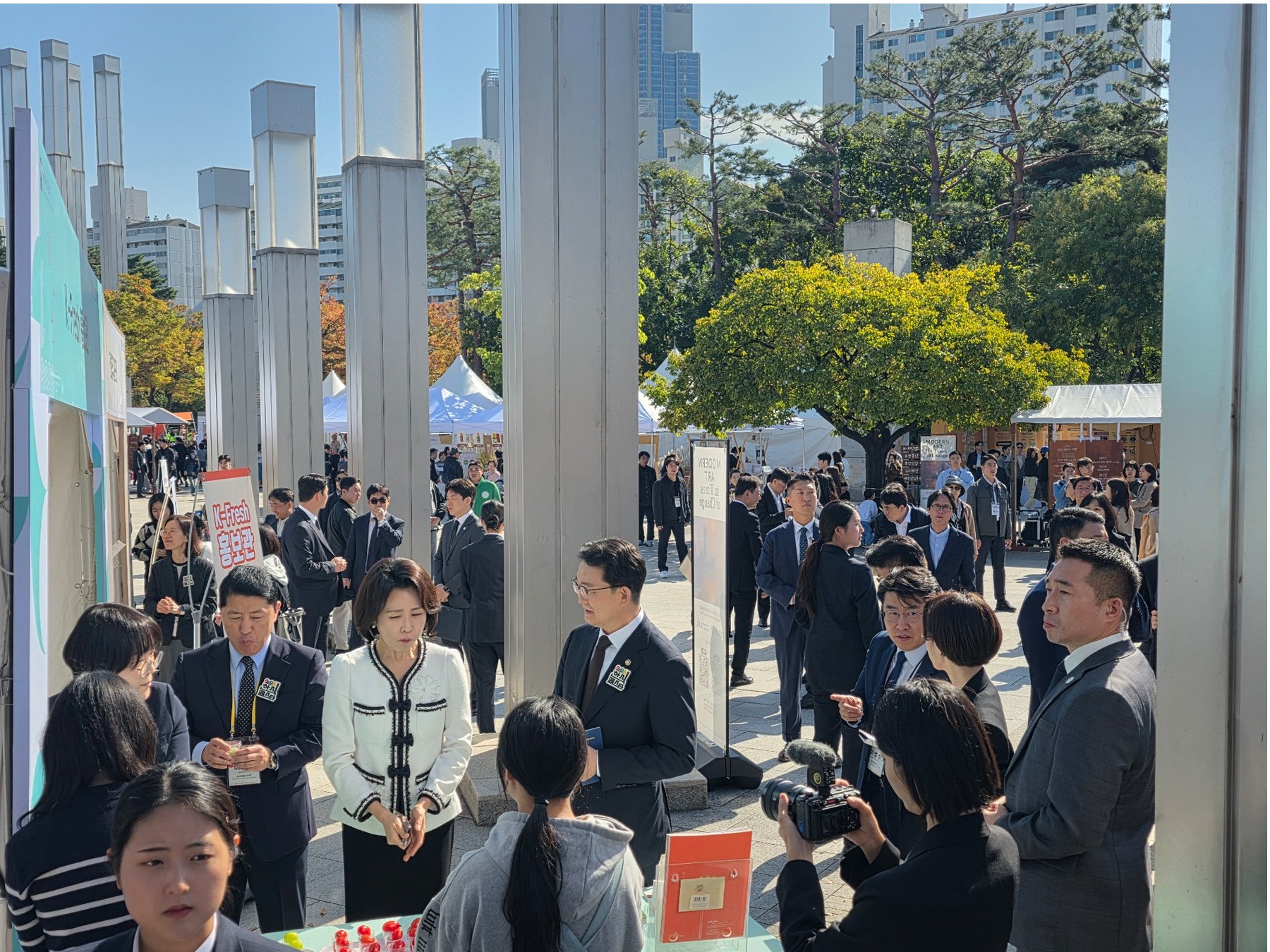
From preserving tradition to Korean food that permeates daily life
Kim Jong-gu, Vice Minister of Agriculture, Food and Rural Affairs, presented the direction for the new ‘Hansik 3.0’ era through a commemorative speech and a vision announcement. The plan is to move beyond ‘1.0,’ which carried on the traditions of Korean food, and ‘2.0,’ which expanded its reach globally, to a stage where it takes root in the daily lives of people around the world by adding modern technology and culture to the depth of tradition.
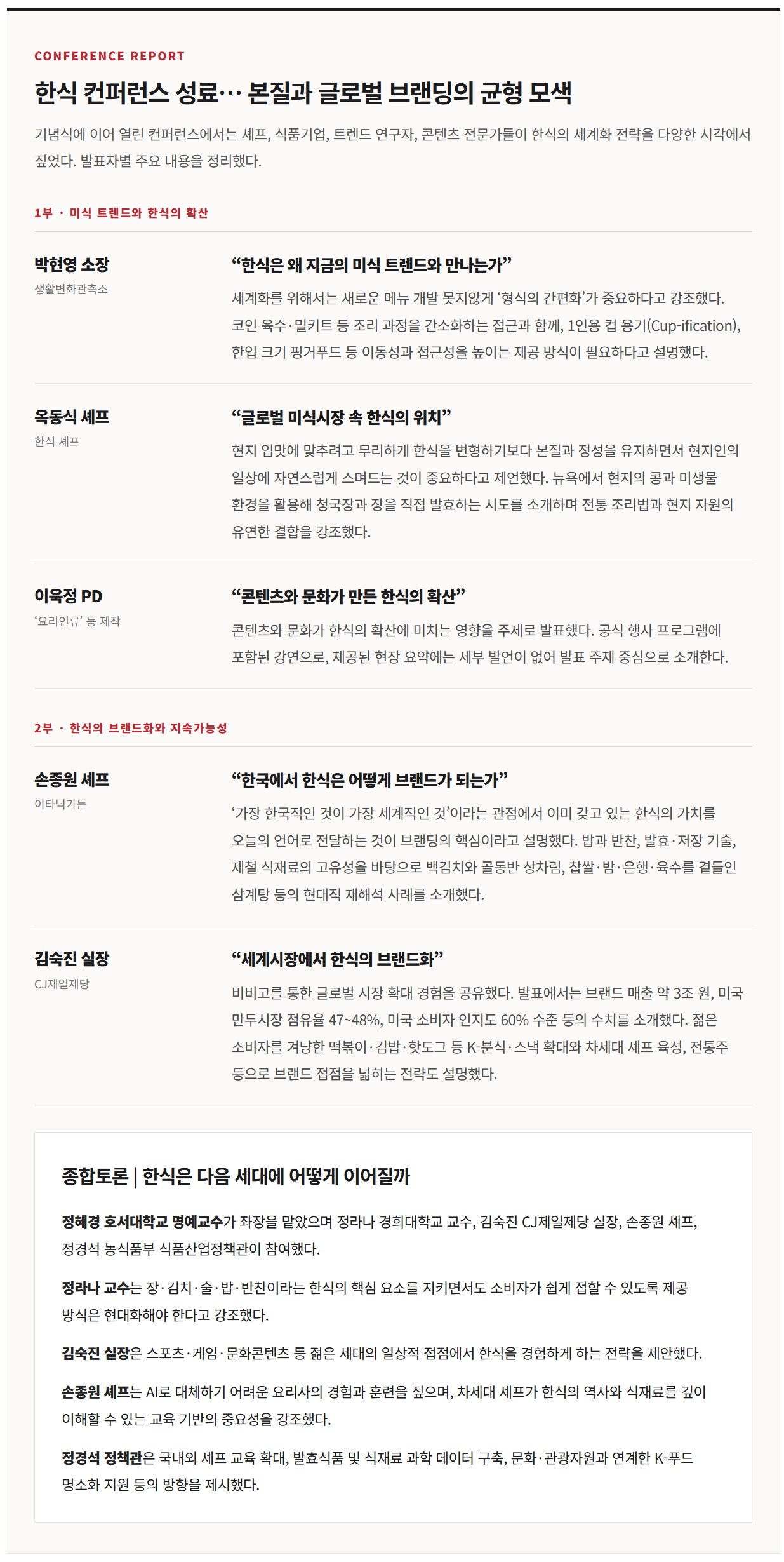
The policy directions officially announced by the government can be summarized into four points: the preservation of fermentation culture, innovation in AI and food tech, regional gastronomic tourism, and strengthening the competitiveness of the global Korean food industry.

The government plans to strengthen the industrial foundation so that the popularity of Korean food leads to increased consumption of domestic agricultural products and ingredients, and to the co-growth of the food and restaurant industries.
The first ‘Korean Food Day’ served as an occasion to confirm the challenge of moving beyond the stage of promoting Korean food to the world, while simultaneously modernizing consumption patterns and the industrial foundation to preserve the essence of tradition. The message shared was that for Korean food to establish itself as a culture in the daily lives of people around the globe, technology, brands, talent, and content must grow together alongside the competitiveness of the food itself.
- #브랜드
- #정책
- #유통
Related Content
Meat Culture & Trends
Marinated beef is being pushed off the dining table... The 'land of grilled meat' is turning into the 'land of solo dining'.
Based on three years of OpenSurvey Food Diary data (June 2022–May 2025), changes in seasoned meat consumption were tracked across 20 detailed menu items for four livestock types: beef, pork, chicken, and duck. The conclusion is simple: while spicy seasoned pork and chicken are growing as convenience foods, it was difficult to find beef menu items with growth potential in terms of seasoned meat.
2026.9.30
Meat Culture & Trends
Did plant-based meat really replace meat? ... 96% of purchasing households also bought meat.
Is plant-based meat substitute truly replacing meat as its name suggests? Actual purchasing data from U.S. consumers indicates that the majority of purchases involve buying animal-based meat along with plant-based alternatives.
농촌경제연구원 · 2026