
Opinion
Is delicious pork born or made?
The Era of Designing Pork Flavor: Meat Science Changing the Future of Korean Pork

전문가 기고
최현수과장(농학박사)
㈜선진 선진기술연구소 Meat&Food혁신센터
01
Pork Competitiveness: Now on 'Taste', Not 'Quantity'
Even within the same pork, some cuts boast a savory flavor and rich juices, while others are dry and lack texture. This difference is not solely due to the grilling method or aging technique. The quality of the meat itself is determined from the very beginning of the pig's life, from birth to growth.
Until now, the domestic pig farming industry has focused on how efficiently pigs are raised, such as how many piglets a sow gives birth to or how quickly they gain weight while consuming less feed. However, we are now in an era where it is difficult to survive on productivity alone. This is because the quality of imported pork is steadily improving, and consumers' selection criteria have shifted from simply seeking "domestic" products to carefully considering factors such as price, taste, and freshness.
Professor Klaus Grunert of Aarhus University in Denmark, a consumer behavior expert, emphasizes ‘satisfaction and trust felt by consumers after actually tasting’ food when making food choices.
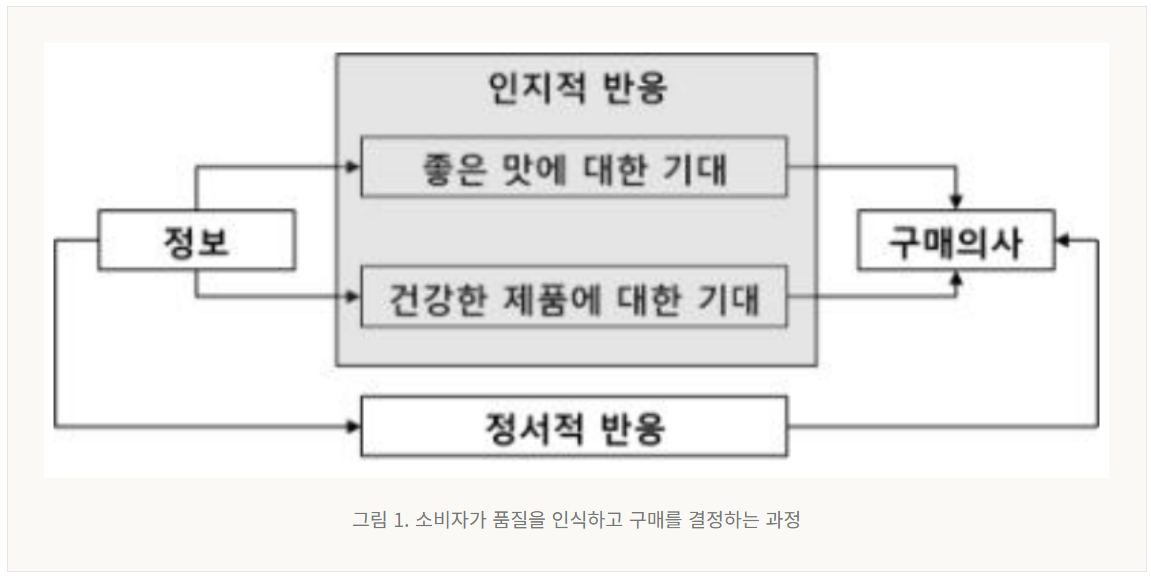
Figure 1 below makes it easy to understand the process by which consumers perceive the quality of meat and make purchasing decisions. When consumers encounter 'information' about meat, they make purchasing decisions through two main reactions.

In this way, consumers synthesize both their expectations (cognitive response) and their emotions (emotional response) to ultimately form a 'purchase intention' to decide whether or not to buy meat.
Ultimately, the competitiveness of our Korean pork, ‘Han-don,’ lies in consistently delivering the taste consumers expect, thereby providing a pleasant sense of satisfaction; what makes this possible is ‘Meat Science,’ the scientific study of meat.
02
Thin back fat, rich marbling… Changing choices for breeding pigs
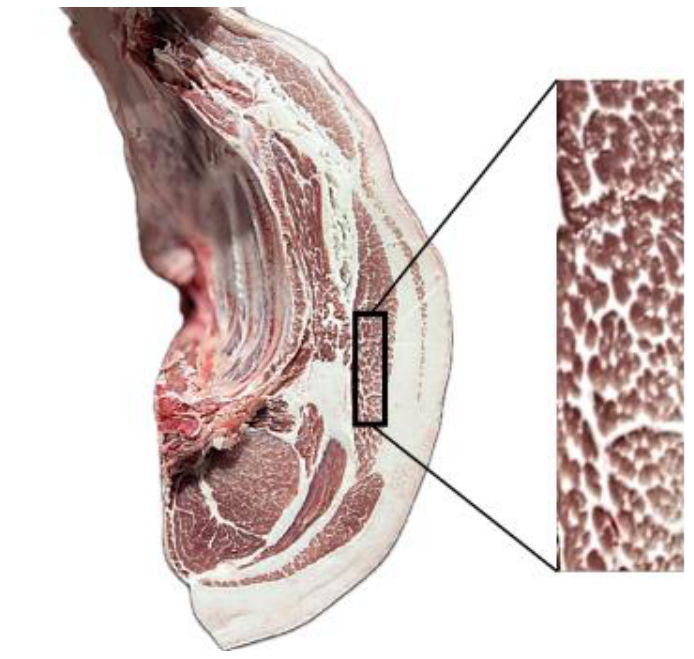
One of the most important factors in making delicious pork is fat. In particular, intramuscular fat (marbling), which is finely spread like snowflakes within the lean meat, creates a savory flavor and a tender texture.
In the past, it was easy to assume that pigs with thicker layers of outer fat would have more marbling inside the meat. However, recent breeding technology has advanced to the point where outer back fat and internal marbling can be managed separately. By analyzing the pig's genes, pigs are selected that have outer fat (back fat) that is not too thick while still producing good marbling within the lean meat (Figure 2).
This means that the goal of pig breeding is shifting beyond simply raising them quickly to planning in advance for the taste and quality of the meat that consumers will eat.
03
If you have selected a good pig, the next step is a customized meal and environment.
No matter how good a pig's innate genes may be, the taste of its meat varies depending on what it eats and how it is raised. If selecting breeding pigs is drawing the ‘blueprint’ of the flavor, then the process of feeding and raising them is the stage of coloring that blueprint to ‘complete’ it into the actual quality of the meat.
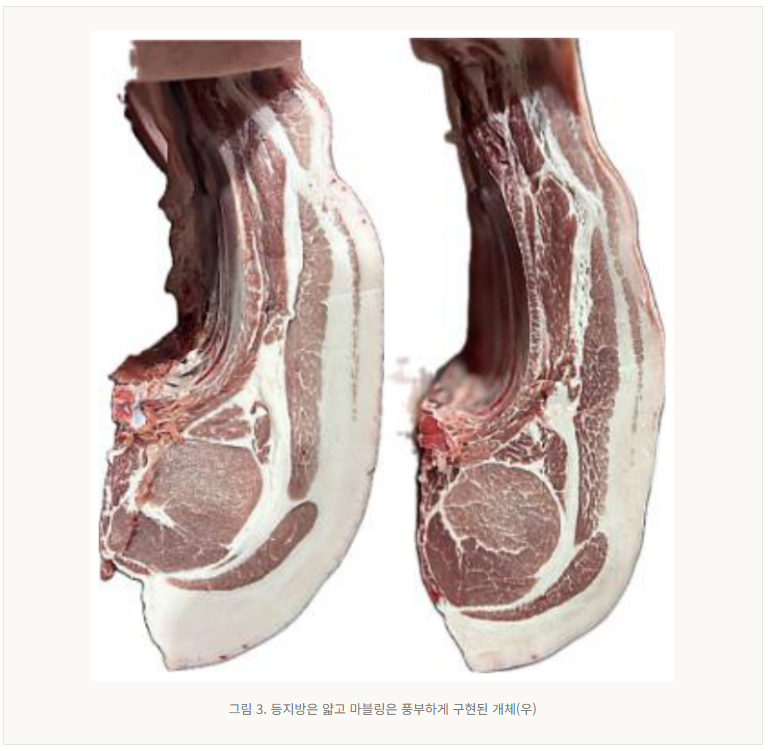
Pigs require different nutrients and energy depending on their growth stage. Similarly, marbling does not improve simply by feeding them excessive amounts of feed. Only by delicately adjusting the nutrients and quantity of the feed according to the pig's characteristics and growth stage can unnecessary surface fat be reduced and delicious meat preferred by consumers be obtained. In other words, proper quality control is possible only when the selection of the pig and how it is fed are integrated (Figure 3).
04
You must reduce stress before shipment to enjoy golden-brown pork.
The moistness and chewy texture when chewing the meat are also very important. This is influenced by the meat's ability to retain moisture (water retention) and freshness.
Pre-shipment ‘stress management’ is essential to maintain this moisture. If pigs experience severe stress while being transported from the farm to the slaughterhouse, the meat’s freshness (pH) can drop rapidly, causing the meat to turn white and easily lose blood and juices—a phenomenon known as ‘PSE meat.’ To ensure the juiciness and texture of the meat, which has been carefully raised, are delivered intact to the table, it is essential to manage the pigs comfortably during the final transportation process.
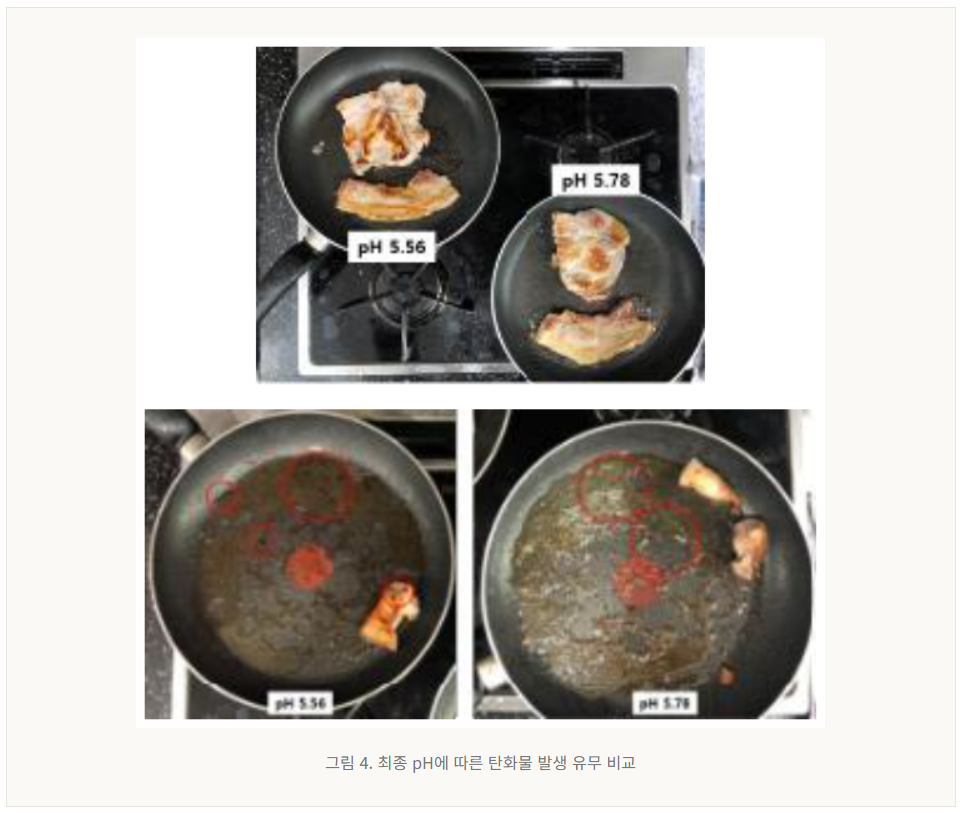
Looking at Figure 4 below, you can visually confirm the difference that appears in the frying pan when grilling meat depending on the acidity (pH) of the meat.
Meat with a pH of 5.56 (left frying pan): It is in a state where its ability to retain juices has decreased due to stress. As moisture and protein released while grilling the meat get heated and stick to the pan, a large amount of burnt residue (carbonized material) is produced, as indicated by the red circle.
Meat with a sirloin pH maintained at 5.78 (right frying pan): Stress is well managed, so the meat retains moisture tightly. Since the juices do not easily escape, the meat does not burn, and as you can see from the red circle, no black residue remains in the frying pan, and it is cooked cleanly to a golden brown.
05
AI Measures Marbling… Meat Quality Proven by Data
If good meat has been produced, the next step is to objectively verify its quality. While meat marbling and color have traditionally been evaluated by experts through visual inspection, analysis technologies utilizing artificial intelligence (AI) are being introduced recently (Figure 5).
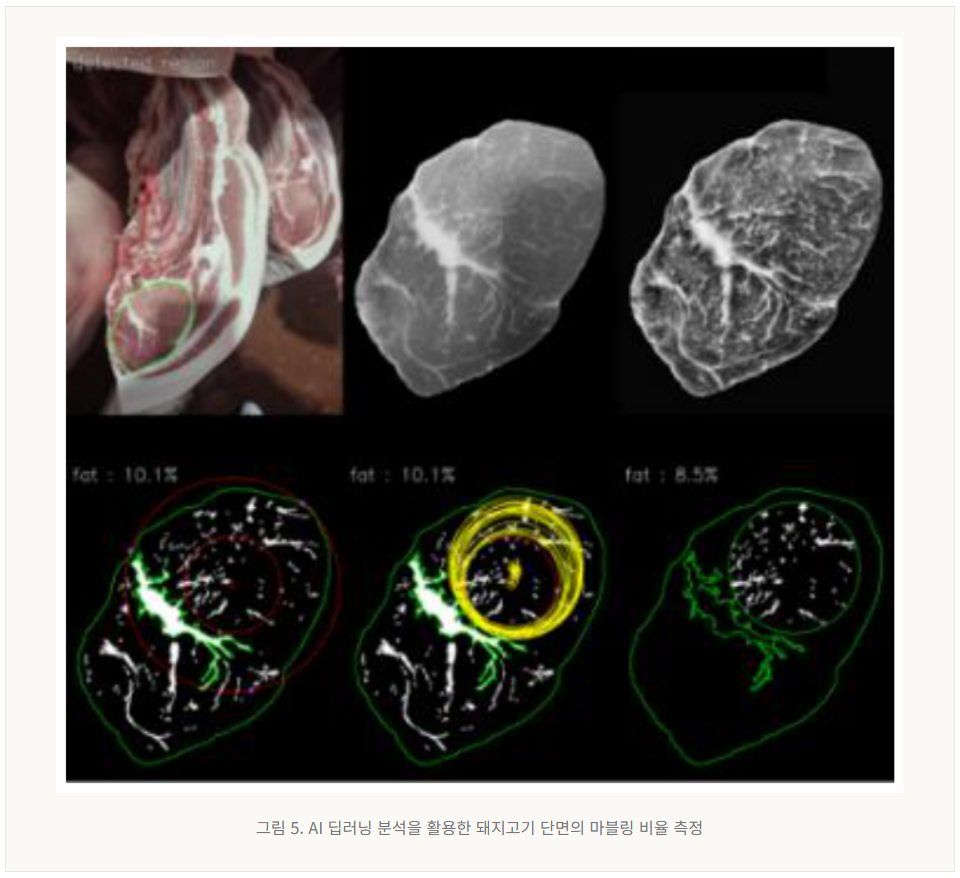
AI learns from countless cross-sectional images of pork to analyze the ratio of lean meat to fat and the degree of marbling distribution in precise numerical terms. Based on this data, it can accurately identify "which feed to which pig with which genes produces the most delicious meat." Moving away from methods that relied solely on experience or intuition, we have entered an era where quality is managed and predicted based on scientific data.
06
The Future of Korean Pork: From 'Well-Raised Pigs' to 'Deliciously Designed Pork'
Imported pork is threatening our dinner tables by advancing not only prices but also refrigeration and aging technologies. Even Korean pork finds it difficult to open consumers' wallets with just the label of being domestic.
We must preserve meat quality by selecting breeding pigs with superior genes, feeding them customized feed, and raising them in a stress-free environment. Furthermore, a virtuous cycle must be established where the produced meat is evaluated using AI and data, and the results are reflected back into the farm.
Boosting farm productivity while stably supplying delicious meat that butchers and consumers can always trust and seek out—this is the future of Korean pork envisioned by meat science. The taste of meat is no longer left to chance. The future of Korean pork depends on the technological capability to design and produce the perfect taste we desire using science and data.
- #축산물
- #브랜드
- #유통
- #기술
Related Content
Opinion
Meat Production and Climate Change: Time to Escape the ‘Carbon Tunnel Vision’ Trap
How should we view meat production to address climate change? I suggest that, in addition to the goal of carbon reduction, we need to examine nutritional security, soil health, industrial byproducts, and the characteristics of the methane cycle.
2026.9.28

Opinion
Supply and demand signals to read before price numbers
Column on Reading the Industry
2026.8.20
Opinion
Good deals ultimately create good industries.
Column on Reading the Industry
2026.8.19