
Issues & Insights
Government Pushes for Full-Scale Goat Industrialization… Academics Propose ‘Standardization of Meat Parts’
Overhaul of systems and infrastructure in the production, distribution, and disease sectors by 2029
The government has embarked on full-scale industrialization efforts to transform the goat industry from a "niche sector" into a core livestock industry. While efforts are underway to enhance productivity and distribution transparency and overhaul slaughter and processing infrastructure, the academic community is also raising the need to introduce a standardized butchering system to support the commercialization of black goats by specific cuts.
On February 23, the Ministry of Agriculture, Food and Rural Affairs announced the "Goat Industry Development Plan" to strengthen the competitiveness of the domestic goat industry. The government plans to promote institutional improvements and infrastructure development centered on production, distribution, and disease control by 2029, and subsequently formulate measures for the second growth stage. This plan was prepared based on discussions by the "Goat Industry Development Task Force," which included the government, research institutions, producers, and academic experts, and includes a total of 30 detailed tasks.
The Ministry of Agriculture, Food and Rural Affairs announced the "Goat Industry Development Plan" to strengthen the competitiveness of the domestic goat industry. The government plans to promote institutional improvements and infrastructure development centered on production, distribution, and disease control by 2029, and subsequently formulate measures for the second growth stage. This plan was prepared based on discussions by the "Goat Industry Development Task Force," which included the government, research institutions, producers, and academic experts, and includes a total of 30 detailed tasks.
Rising Consumption, Declining Self-Sufficiency
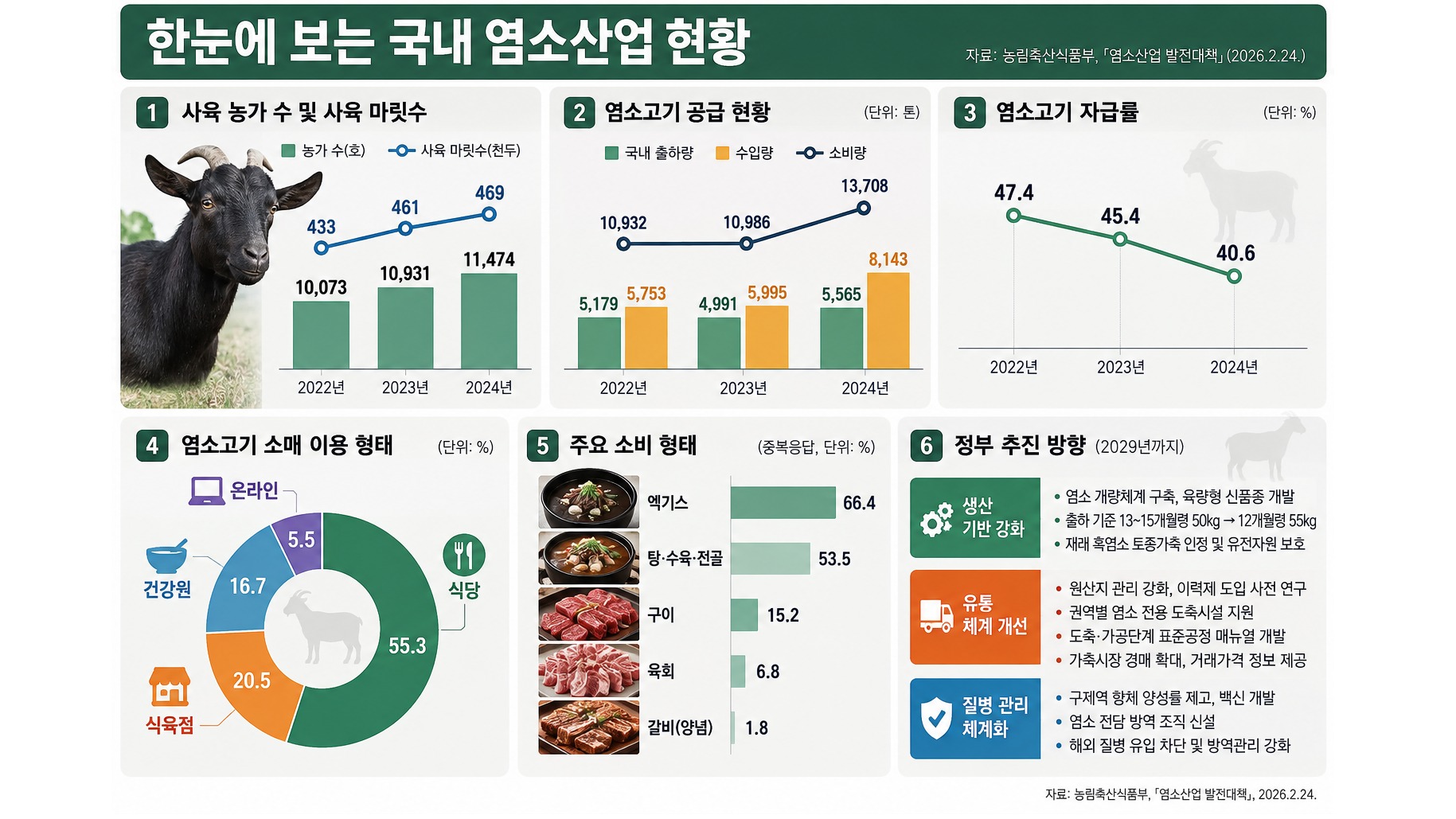
According to data from the Ministry of Agriculture, Food and Rural Affairs, domestic consumption of goat meat increased from 10,986 tons in 2023 to 13,708 tons in 2024. During the same period, domestic shipments rose from 4,991 tons to 5,565 tons, but imports increased even more significantly from 5,995 tons to 8,143 tons. Consequently, the self-sufficiency rate for goat meat decreased from 45.4% in 2023 to 40.6% in 2024.
The production base is also expanding. The number of goat farming households increased from 10,073 in 2022 to 11,474 in 2024, and the number of goats raised rose from 433,000 to 469,000 during the same period. On the other hand, consumption patterns remain concentrated on traditional methods such as extracts, soups, boiled meat, and hot pots. Retail usage patterns are in the order of restaurants (55.3%), butcher shops (20.5%), health food stores (16.7%), and online (5.5%).
Boosting productivity and overhauling slaughter and distribution infrastructure
The government will first establish a goat breeding system at the production stage and embark on the development of new meat-producing breeds. The goal is to improve the current slaughter standards from 13 to 15 months of age and 50 kg to 12 months of age and 55 kg. It will also promote the protection of genetic resources by recognizing native black goats as indigenous livestock.
In the distribution sector, preliminary research for the introduction of a goat traceability system will be conducted alongside strengthened origin management. The initiatives also include supporting regional goat slaughter facilities, developing standard process manuals for the slaughter and processing stages, expanding livestock market auctions, and providing transaction price information.
In particular, the government plans to promote pilot projects for the construction of new goat slaughter facilities by region and conduct a survey on the current status of domestic goat slaughter and the distribution and sale of goat meat. The scope of the survey will include slaughtering processes, shipment information, the distribution of carcasses and cuts, and sales status at specialized restaurants and butcher shops.
The academic community has raised the need for ‘standardization of body parts.’
As the government moves to overhaul the production, slaughter, and distribution infrastructure of the goat industry, academia is proposing the need to standardize specific cuts to enhance the industrial utilization of black goats.
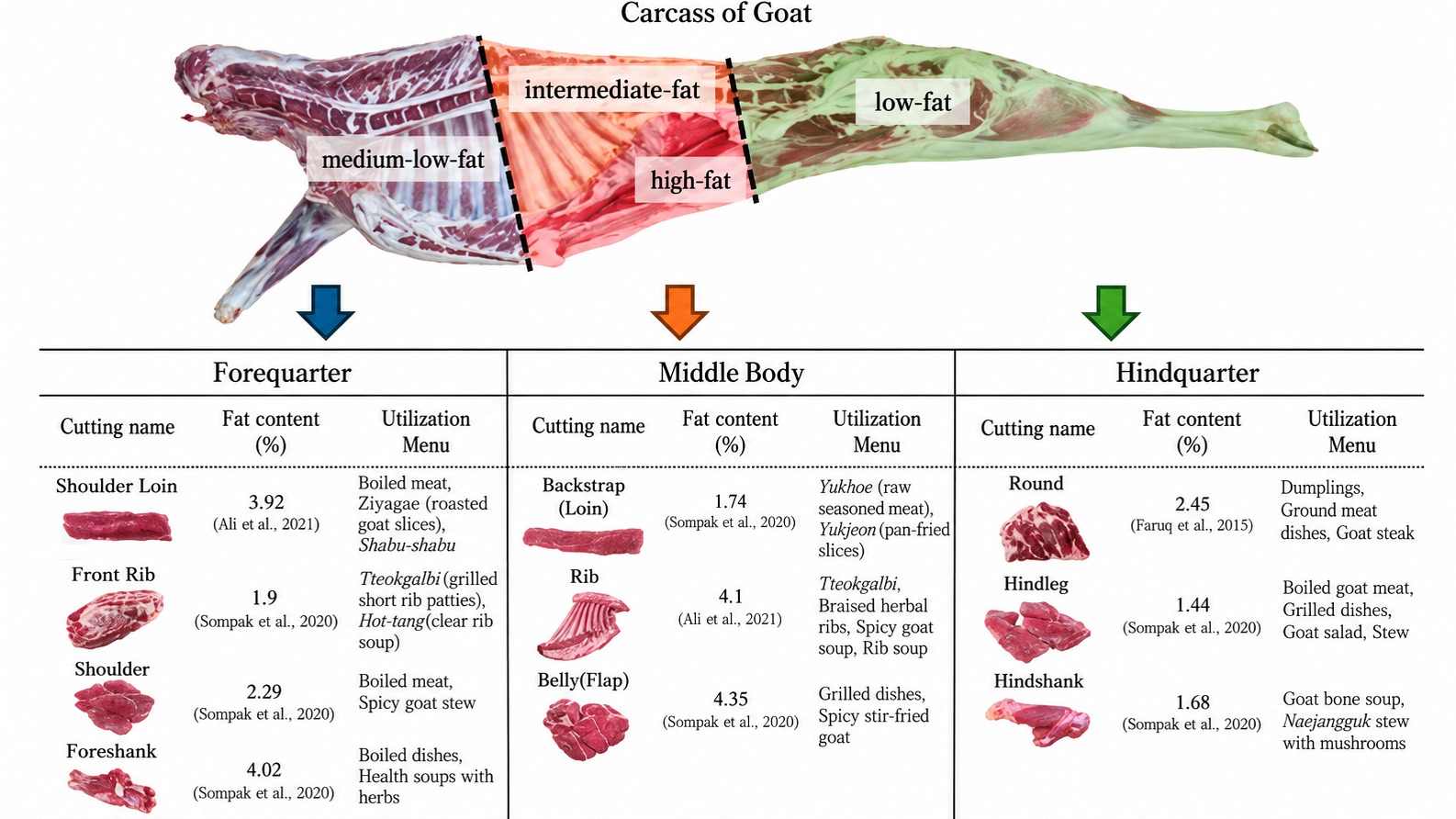
Researchers Son Woo-young, Hwang Jun, Na Yu-jeong, and others presented a standardized system applicable to the domestic black goat industry in "Proposing standard cutting and fabrication concepts for the Korean goat industry: Anatomical, practical, and industrial perspectives," published in the first issue of *Food and Life* in 2026.
The research team pointed out that while domestic black goat carcasses are currently generally divided into three main sections—front, middle, and rear—and partially deboned for distribution, there is a lack of unified cutting and trimming standards. They explained that this leads to inconsistencies in the classification, naming, pricing, and distribution of parts, and limits quality and price comparisons among producers, distributors, and consumers.
Proposal for ‘3 Major Divisions and 10 Subdivisions’
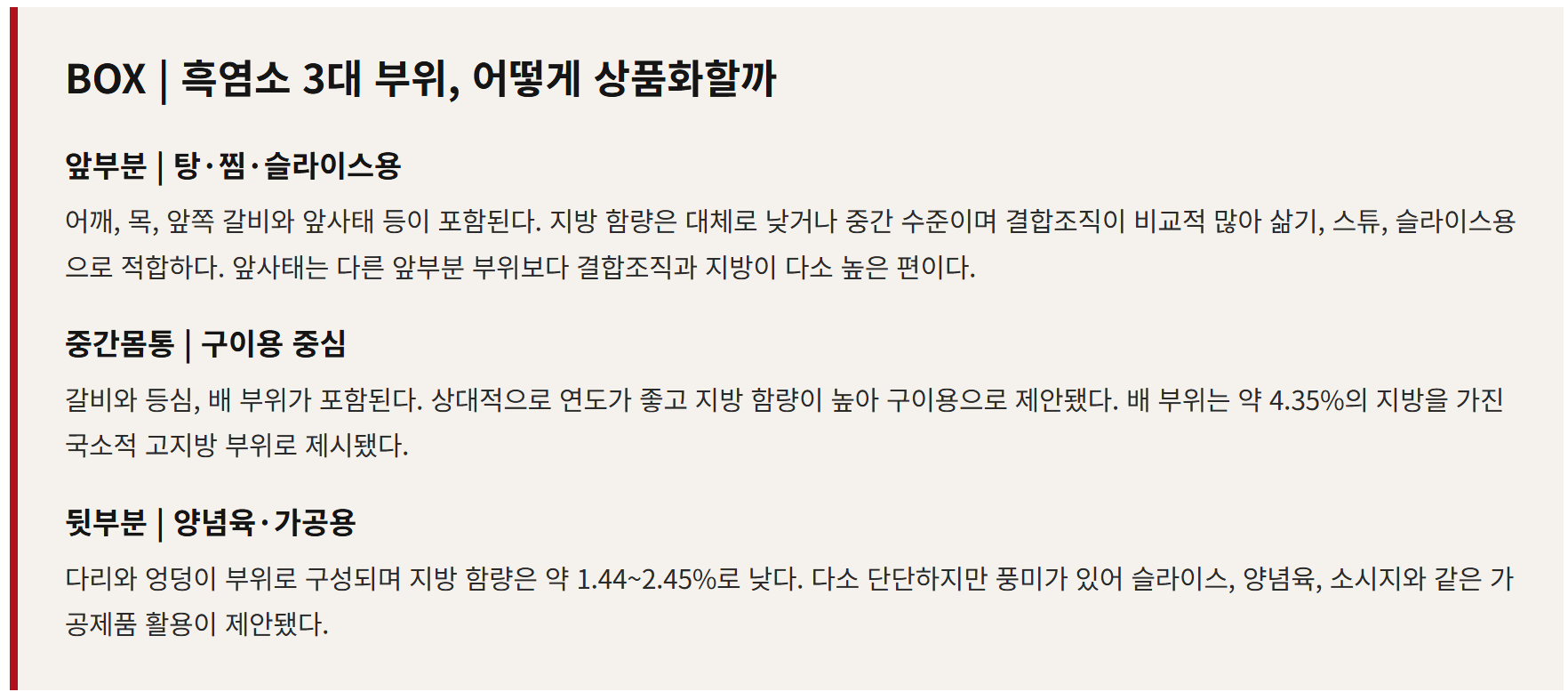
The basic structure proposed by the research team is3 major divisions · 10 minor divisionsIt is a method of dividing the front part into 4 parts, such as shoulder loin, front ribs, shoulder, and front shank; the middle body into 3 parts, such as loin, ribs, and belly; and the back part into 3 parts, such as rump, hind leg, and hind shank.
The research team determined that it is difficult to apply existing butchering standards for beef or pork directly to black goats because their body size and muscle structure differ from those of cattle. They explained that while black goats have a ruminant skeletal structure similar to cattle, their overall carcass size is much smaller and their muscle development patterns differ, requiring separate species-specific butchering standards.
Korean Market Growing Amidst Rising Imports
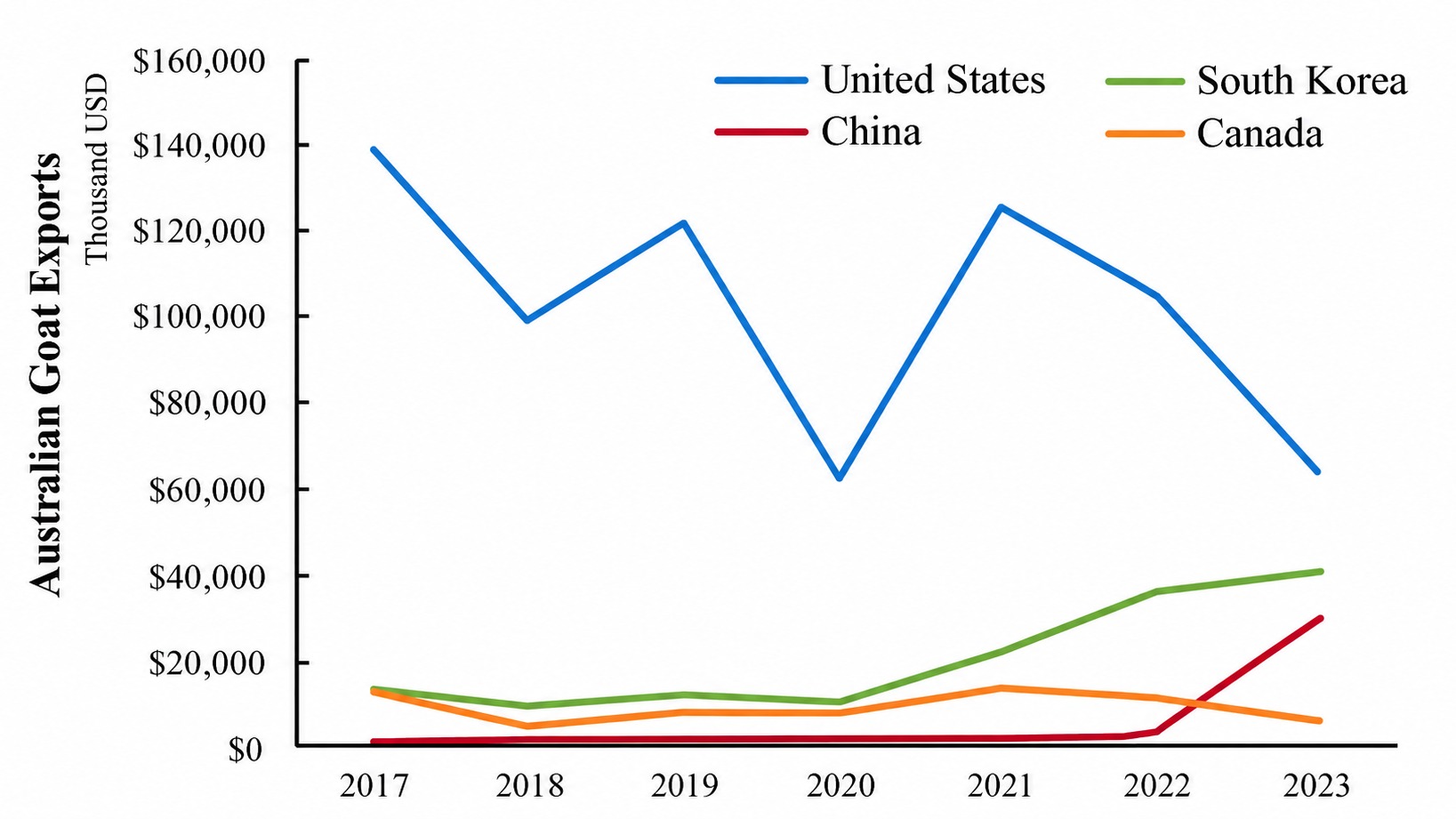
The paper presented standardization cases from major goat-producing countries along with export trends for Australian goat meat. The graph shows that while the United States is the largest market, Korea has also emerged as a market where import volumes have expanded significantly in recent years.
This aligns with the background behind the government elevating the goat industry to a separate policy target. As consumption grows while the domestic self-sufficiency rate declines, it signifies a growing need to enhance the competitiveness of domestic goat meat by overhauling production infrastructure and distribution systems.
If establishing productivity and infrastructure for slaughter and distribution forms the foundation for the industrialization of the goat industry, then discussions on how to establish standards, names, uses, and pricing systems for different parts need to continue in the future.
The challenge after industrialization is ‘commercialization’
This study was not included in the government's official "Measures for the Development of the Goat Industry." However, it is noteworthy that a specific standardized system for trading black goats by cut and commercializing them in the actual market has been presented by academia at a time when the government is pushing to standardize slaughtering and processing procedures and overhaul the distribution system.
The Ministry of Agriculture, Food and Rural Affairs announced its direction through these measures to systematically foster the goat industry, enhance farm productivity and income stability, and supply safe and high-quality goat meat.
The three major divisions and ten minor divisions proposed in this study can be seen as a concrete starting point for the discussion.

- #축산물
- #브랜드
- #정책
- #유통
- #품질관리
- #기술
Related Content
SPECIAL FOCUS
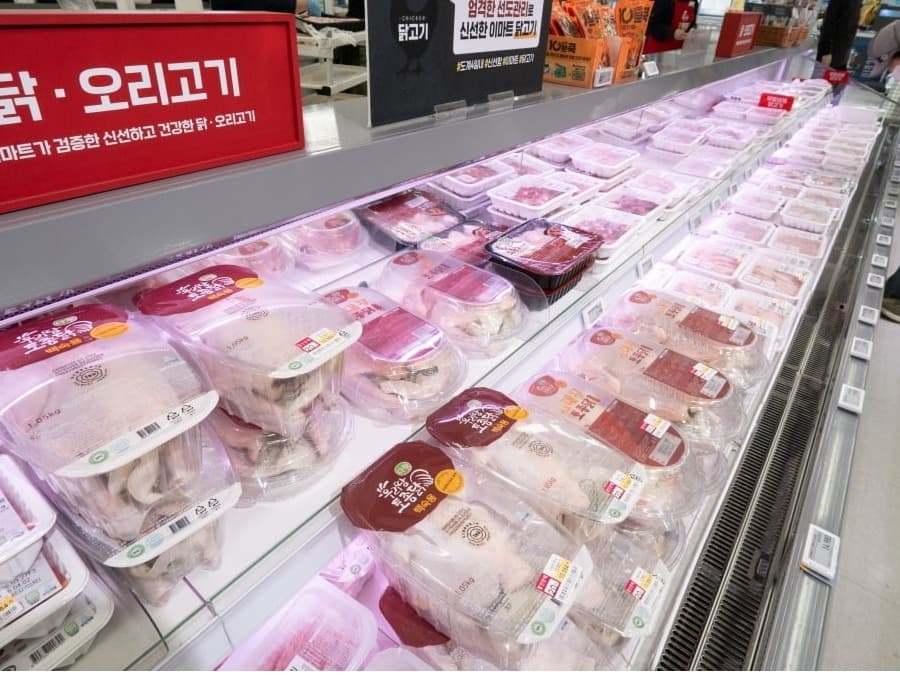
Chicken Supply Rises, But Cuts Are Short… Mixed Supply and Demand Battle Amidst November Price Drop
The broiler market in November is expected to face increasing downward price pressure due to the rise in slaughter volume. However, it is difficult to conclude that the overall supply and demand in the chicken market has become sufficient based solely on the increase in supply.
2026.11.6
terrestrial broadcast
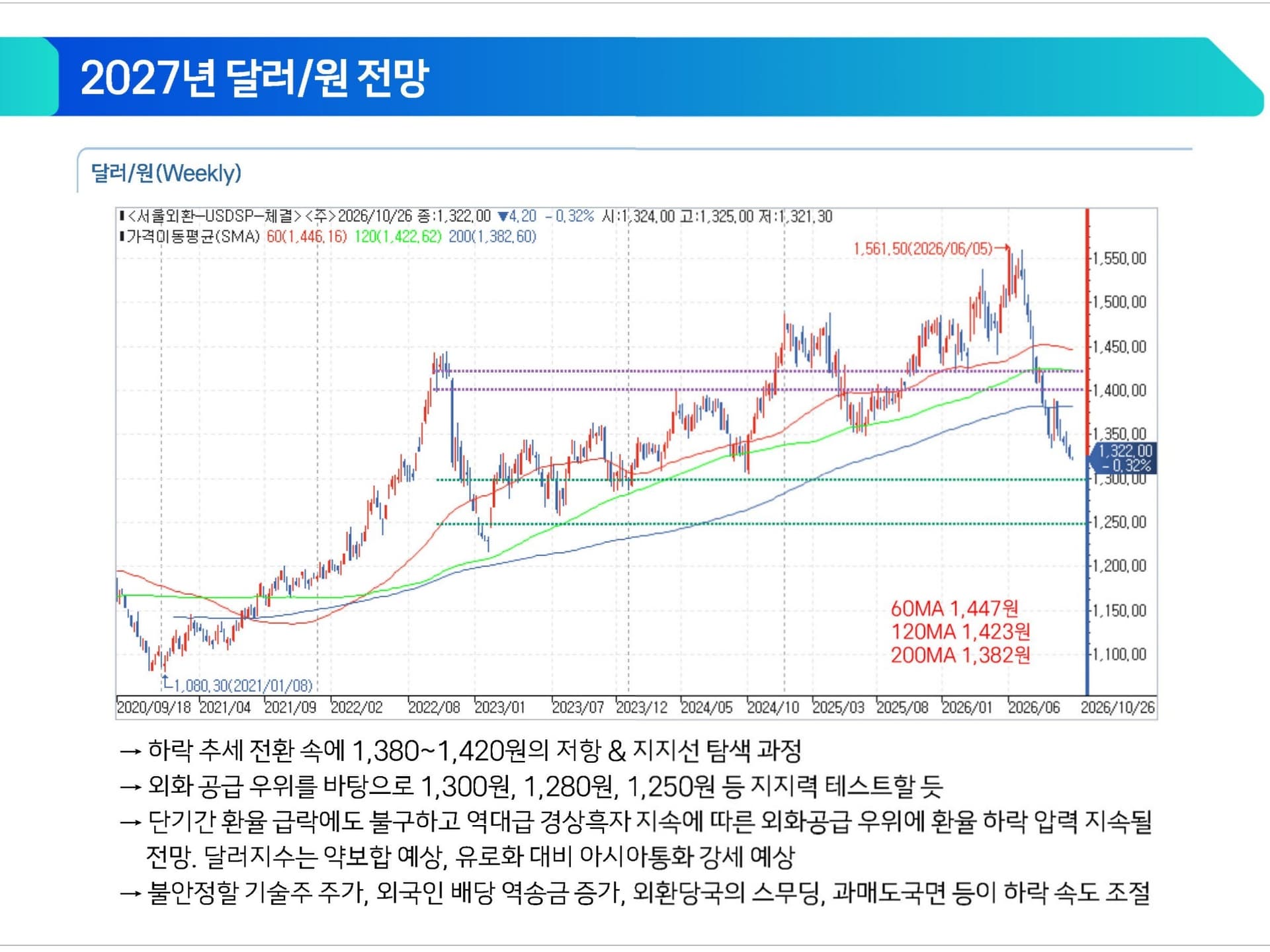
Dollars piling up in Korea… Will the exchange rate head below 1,300 won next year?
If the power to earn dollars is stronger than the demand to buy them, how low will the exchange rate fall? For Jung Mi-young, Director of the Research Center at Samsung Futures, who looks ahead to next year's won-dollar exchange rate, the starting point is the volume of dollars flowing into Korea.
2026.11.2

Issues & Insights
Japan Begins Review of ASF Localization for Spanish Pork
The Japanese government is officially reviewing whether to apply "zoning," a system that classifies risk levels by region, to Spanish pork imports that have been suspended due to the outbreak of African Swine Fever (ASF).
2026.11.2