
DAILY BRIEF
Strengthening Residue Management for Heat-Treated Poultry Exported to the EU… Inspections Extend to Raw Meat and Shipping Farms
Export quarantine and inspection guidelines revised to reflect results of EU on-site inspection in April

Management of residues in heat-treated poultry products exported to the EU will be strengthened. The key measures involve production-stage management, including the inspection of raw meat used in export products, investigations into the causes of standard violations at farms, and verification of corrective measures.
On November 2, the Korea Meat Processing Association notified its member companies of the revisions to the "Quarantine and Inspection Guidelines for Export of Heat-Treated Poultry Products to the European Union (EU)" by the Ministry of Agriculture, Food and Rural Affairs and the Ministry of Food and Drug Safety. This revision was made to strengthen the management of residual substances, reflecting the results of on-site inspections conducted in Korea by EU authorities last April.
Antiprotozoals and some antibiotics to be tested by private institutions again this year
The additional residue testing subjects under the revised guidelines are raw meat used in heat-treated poultry products for export to the EU. Annex 5 specifies the testing methods and tolerance limits for the non-steroidal anti-inflammatory drug phenylbutazone, the heavy metals lead and cadmium, the antiprotozoal agents clopidol and etopabate, and the aminoglycoside antibiotic aframycin.
For antiprotozoa and aminoglycoside antibiotics, the testing method according to Annex 5 will be implemented starting in 2027. However, testing will also be conducted this year, and it has been advised to entrust the task to private testing institutions.
It is stipulated that additional residue testing must be conducted three consecutive times per export application starting from the first export for each workplace, and twice consecutively starting from the second year. City and provincial inspectors select inspection targets for slaughterhouses registered as EU export workplaces, taking into account factors such as the farms from which animals are shipped, and record and manage the relevant details.
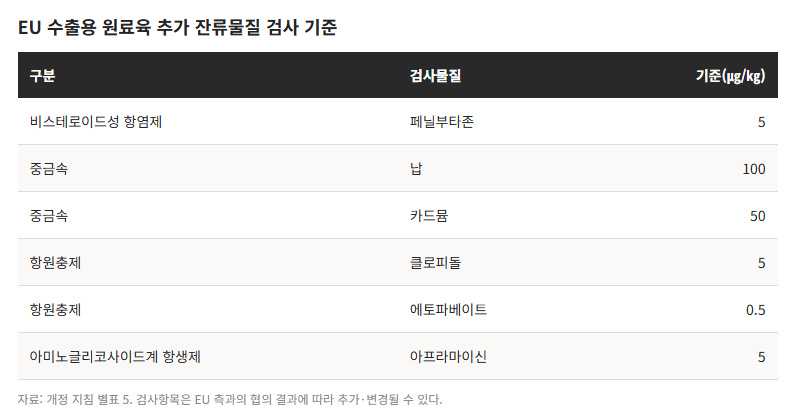
Management of raw materials detected or exceeding standards… Investigation into causes of violations at farms
The guidelines also include measures based on the inspection results of raw meat. If a sample tests positive during qualitative testing, all poultry meat shipped from the farm on that day must be excluded from export slaughtering operations; furthermore, livestock products determined to be positive are to have their release withheld and be sent for quantitative testing.
In addition, if chloramphenicol, cephalexin, josomycin, bacitracin, gentamicin, streptomycin, hygromycin B, abamectin, or ivermectin are detected during screening tests on poultry meat exported to the EU, it will be excluded from the raw materials for export. These items are subject to change depending on future consultations with the EU.
If the standard limits are exceeded during a precise quantitative inspection, the poultry meat in question cannot be used as a raw material for export products, and the manager in charge of the export slaughterhouse may not request a re-inspection of the poultry meat. Livestock products exceeding domestic standards shall be processed in accordance with relevant laws and regulations.
Violations of residual substances also lead to follow-up management of the shipping farms. The competent animal health testing laboratory is required to investigate the cause of residues in farms that exceeded the standards, verify corrective measures within 14 days based on the investigation results, and conduct relevant education.
In principle, farms subject to regulatory inspection are prohibited from shipping poultry meat for export during the inspection period. However, if an exporter and a farm request shipment for export, the farm must undergo regulatory inspection at least three times in a row and receive a favorable judgment, and at least 30 days must pass since the date of designation as a farm with residue violations.
Exporters also verify medication administration and shipment management by contract farms
Management of farms by exporters is also required. Companies must conduct guidance and publicity campaigns for supplying farms to prevent the occurrence of residues, including compliance with withdrawal periods for veterinary drugs, precautions regarding feed administration, and live animal residue testing before shipment. Export slaughterhouses are required to keep shipment contracts and other documents verifying the origin of the raw meat on file, and to submit the status of supplying farms when applying for export slaughter inspections.
This amendment is significant in that it links raw meat inspection with the management of supplying farms to ensure the safety of heat-treated poultry meat for export to the EU. Exporters need to verify the medication history, withdrawal periods, and residue test results of the raw material supplying farms, along with the heat treatment and hygiene management of the finished product.
Source: Korea Meat Processing Association Revision Notice (No. 26-128, Nov. 2, 2026), “Directive on Quarantine and Inspection for Export of Heat-Treated Poultry Products to the European Union (EU)” (October 2026), Annexes 4 and 5.
Photo: Ministry of Agriculture, Food and Rural Affairs / Ceremony commemorating the first export of Samgyetang to the EU in 2024.
Related Content
DAILY BRIEF
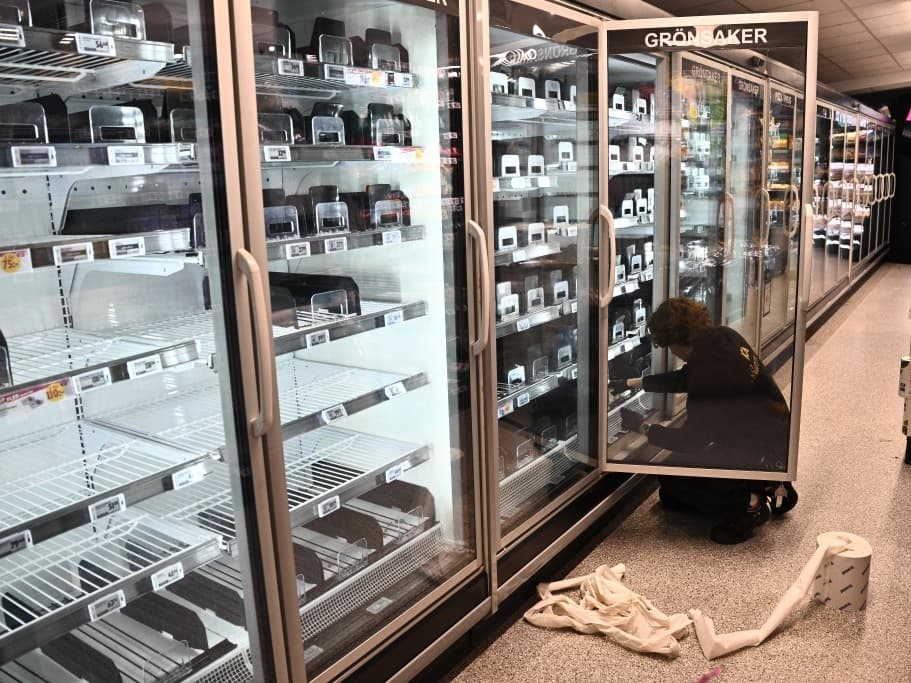
Cyberattacks on European Cold Storage Facilities Continue… EU Urges Urgent Security Measures
European Union (EU) authorities have launched a joint response following a series of cybersecurity incidents targeting commercial refrigeration facilities in Europe. Digital security for refrigeration equipment is also emerging as a major management challenge in distribution sites handling temperature-sensitive foods, such as meat.
2026.11.6
DAILY BRIEF
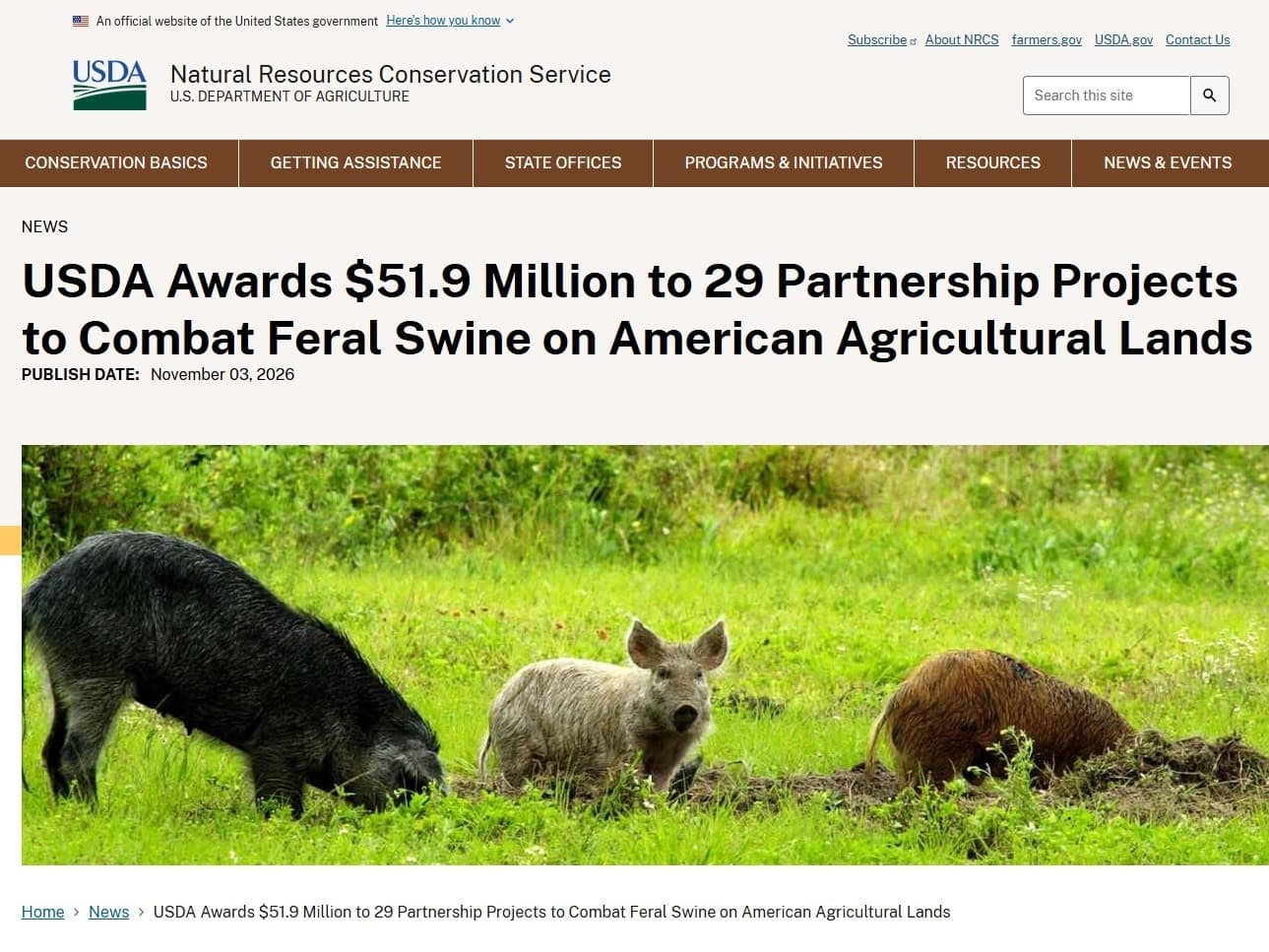
U.S. USD Provides $51.9 Million for Wild Boar Control and Management
The U.S. Department of Agriculture (USDA) is providing a total of $51.9 million to 29 cooperative projects in 13 states to reduce agricultural damage caused by wild boars and protect the health of livestock and people.
2026.11.6
DAILY BRIEF
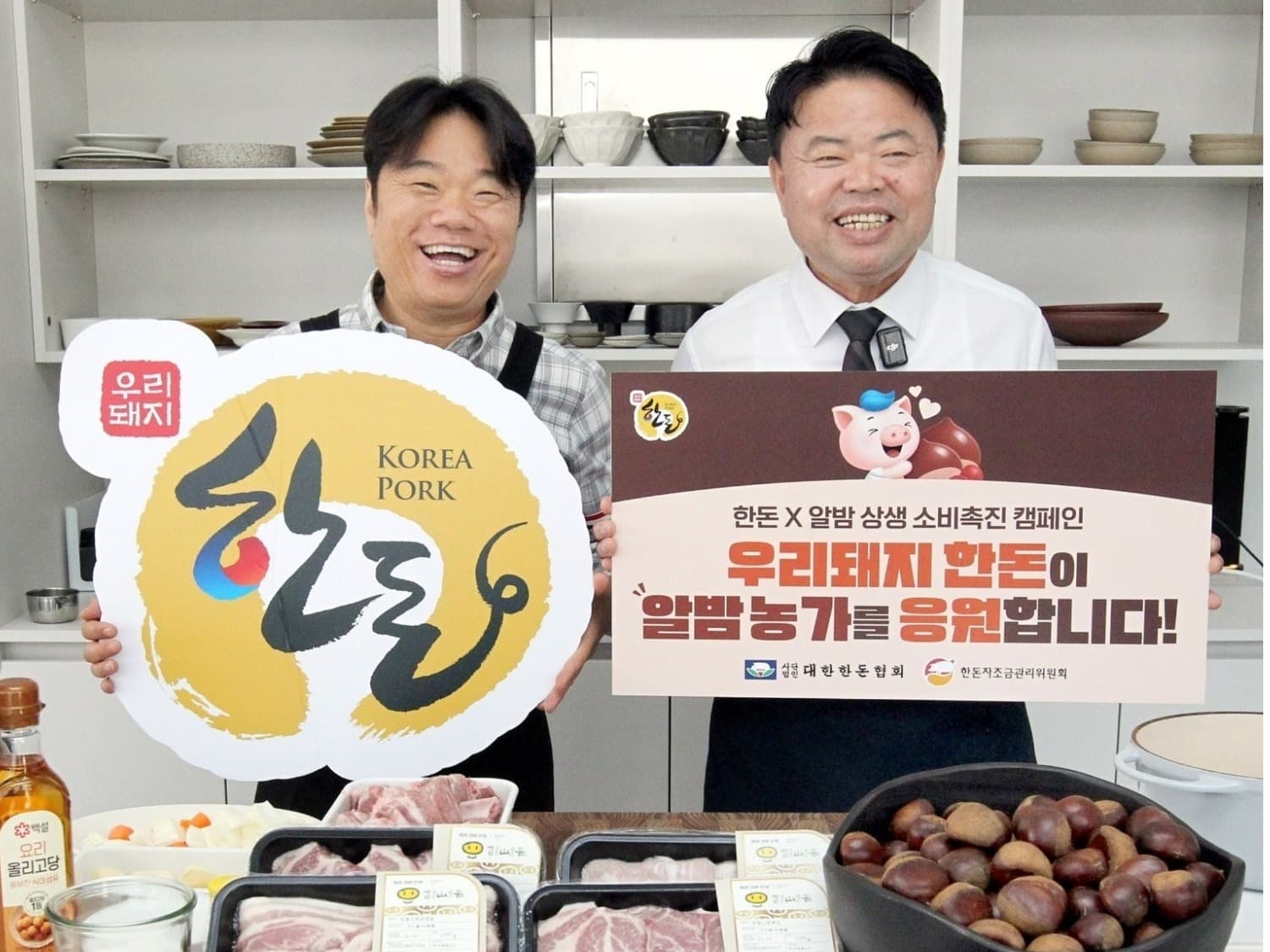
The Meeting of Korean Pork and Domestic Chestnuts… ‘Ok-Jubu’ Jung Jong-cheol Unveils 3 Dishes for Coexistence
The Korea Pork Self-Funding Committee announced on the 6th that it filmed special cooking content for ‘Han-don x Our Night’ on November 5th with comedian Jung Jong-chul, an honorary ambassador for Han-don, and Chairman Lee Ki-hong.
2026.11.6