
SPECIAL FOCUS
From Santa Catarina to Rio Grande do Sul… Moves to Expand Brazilian Pork Imports 'Attract Attention'
Taking the local hygiene assessment in Rio Grande do Sul as an opportunity, we examined in three parts the pork supply base in southern Brazil, the Korea-Mercosur negotiations, and the variables that will affect the domestic pork market.

( Part 1 )
Korean government officials conduct on-site inspection in Rio Grande do Sul, Brazil
Sanitary assessment to expand permitted import regions for Brazilian pork… Decision on approval subject to follow-up review
A hygiene assessment is underway to examine the feasibility of accessing the Korean market for pork produced in Rio Grande do Sul, Brazil.
The government of Rio Grande do Sul state in Brazil announced that a South Korean technical delegation visited the site last September to conduct a hygiene assessment of the pig production system. The delegation visited commercial pig farms in the Taquari Valley to verify the official animal hygiene management system and the production process of pigs for export.
On-site, the farm's biosecurity measures, pig traceability procedures, hygiene management protocols, and the disease surveillance system implemented by official veterinary authorities were inspected. The Rio Grande do Sul state government explained that this visit was part of a process to assess whether the hygiene conditions required for exporting unprocessed pork to Korea are being met.
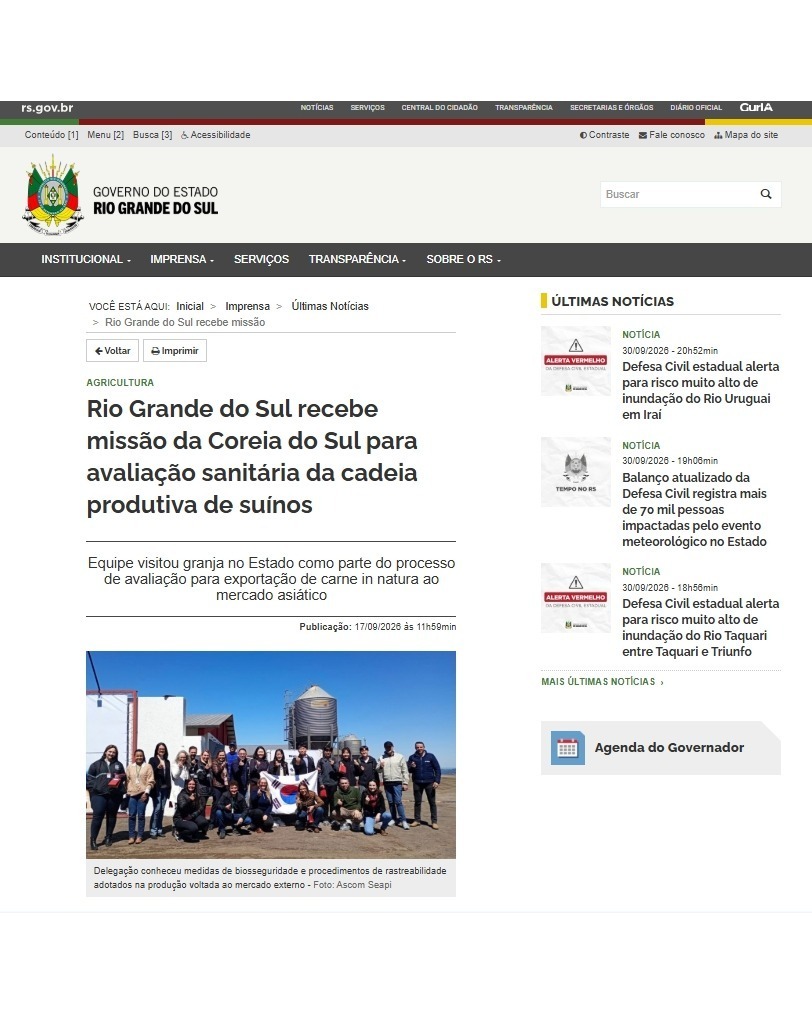
The data collected locally will be compiled into reports and technical review materials and utilized by Korean authorities to review market access and determine whether to approve relevant processing plants in Brazil in the future. However, the mere fact that an on-site inspection was conducted does not imply that the import of pork from Rio Grande do Sul is permitted.
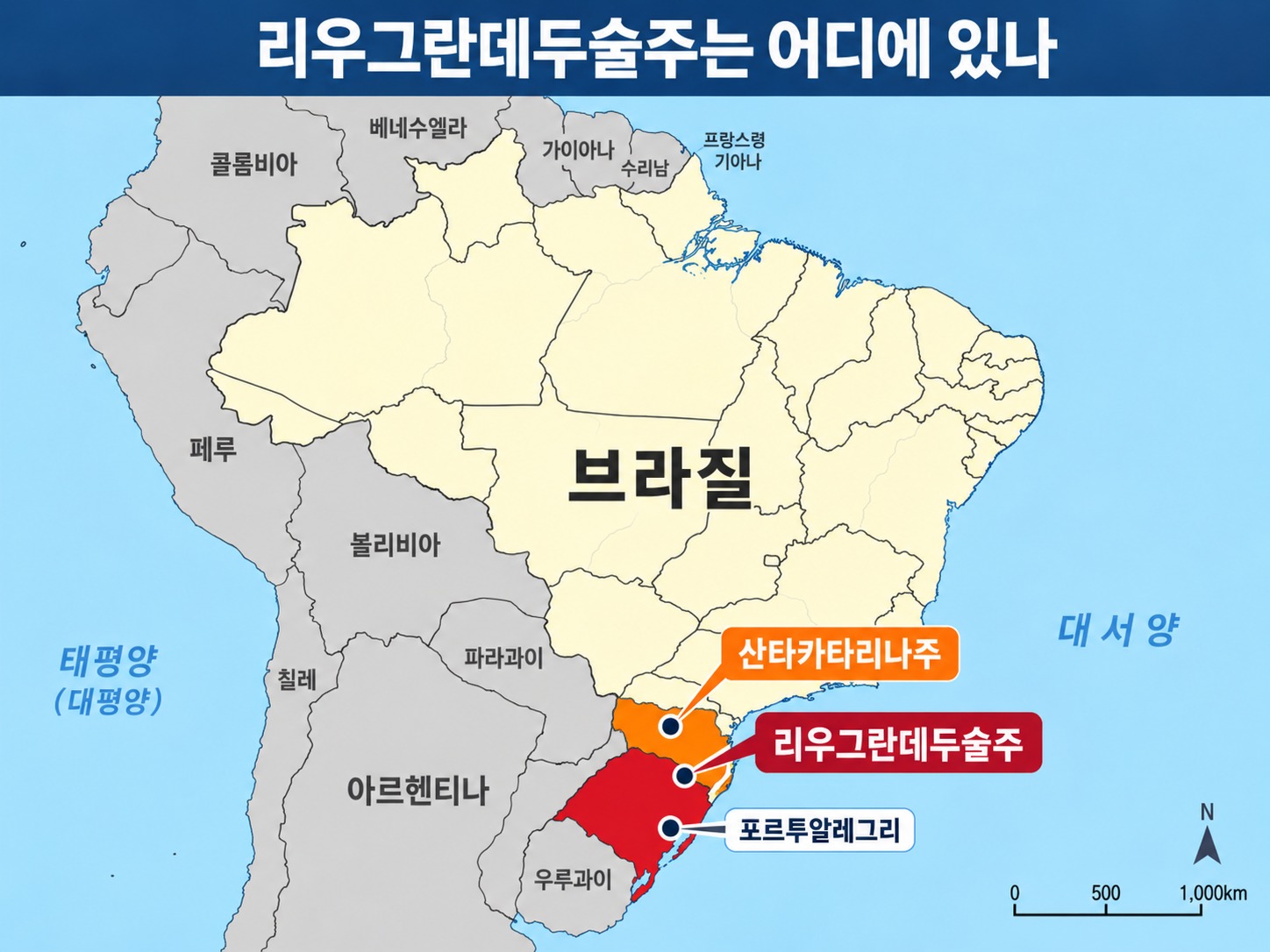
Currently, Brazilian pork permitted for export to Korea is limited to that from Santa Catarina state. In the joint statement by the leaders of Korea and Brazil last July, the two countries agreed to continue joint efforts to expand access to the Korean market for pork produced in Brazilian regions other than Santa Catarina state.

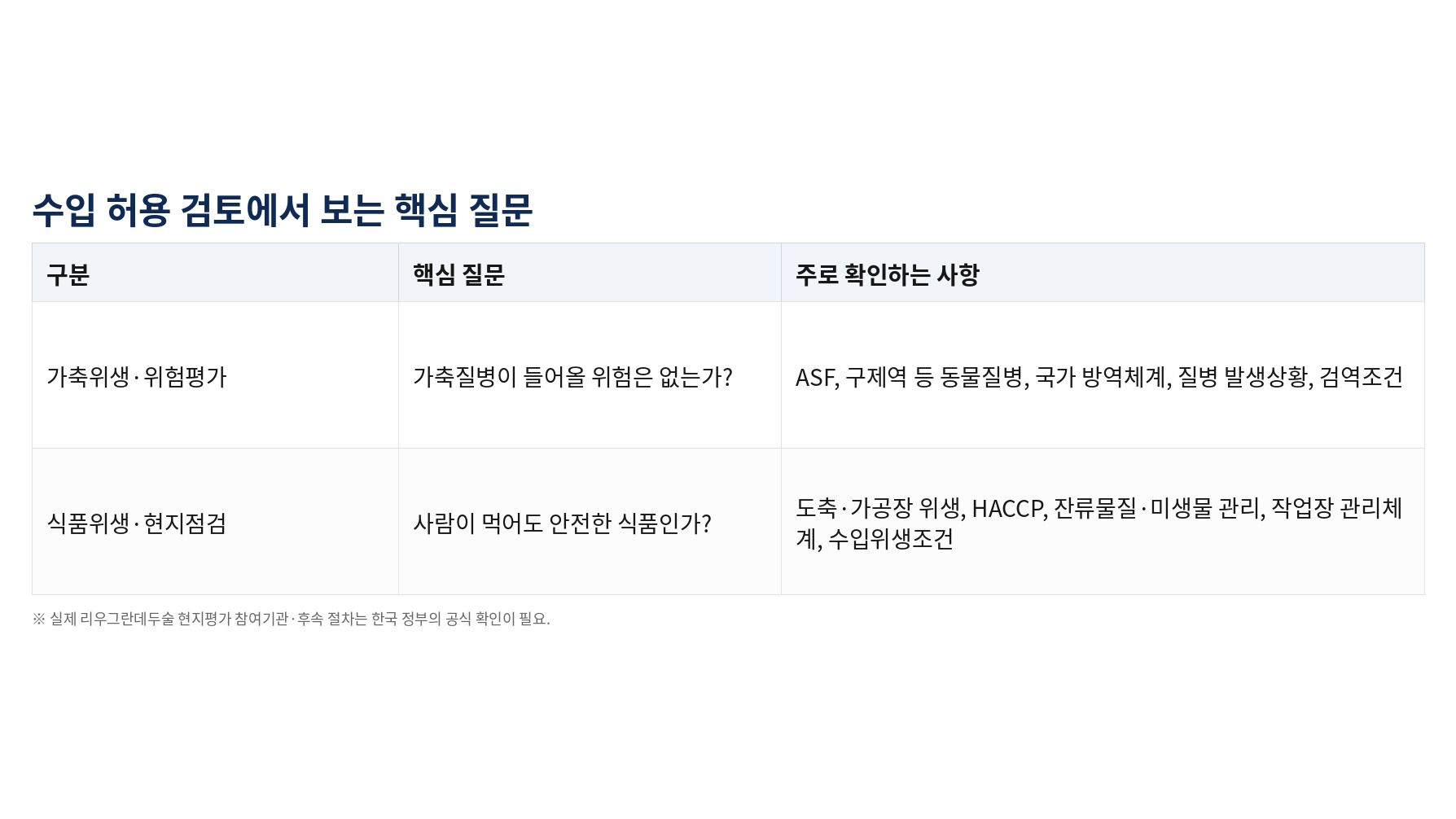
The approval of livestock product imports may be followed by additional reviews, such as consultations on import hygiene requirements, the preparation of hygiene certificates, and the registration of overseas processing plants, in addition to evaluations of hygiene management systems and on-site inspections. Therefore, the only confirmed fact at present is that an on-site inspection was conducted to assess the feasibility of accessing the Korean market for pork produced in Rio Grande do Sul.
It is necessary to wait for the results of the Korean government's follow-up review regarding whether actual imports will be permitted, the timing, target workplaces, and import conditions.
( Part 2 )
From Santa Catarina, the No. 1 exporter, to Rio Grande do Sul, the No. 2... Brazil's pork supply base is
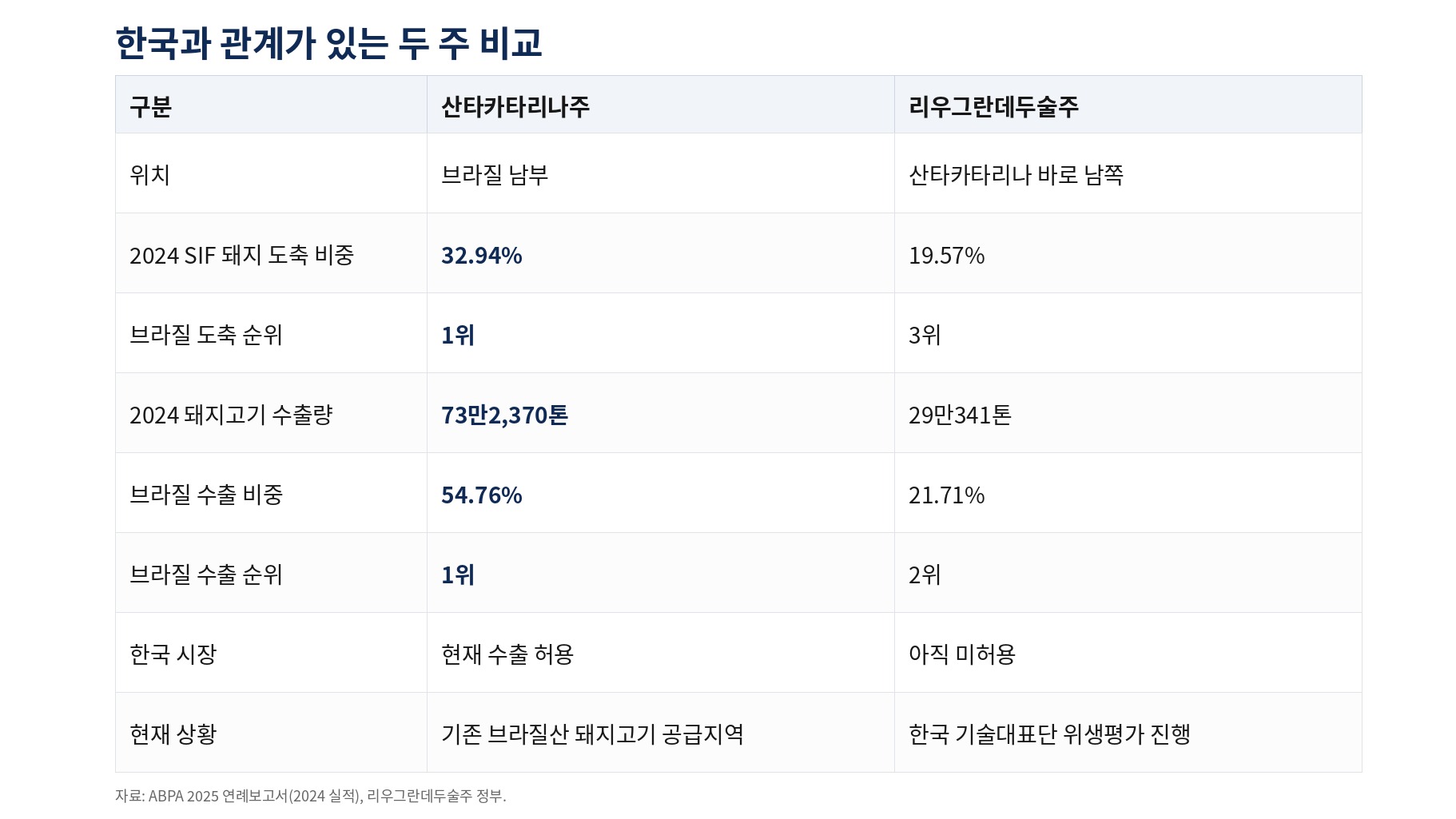
Brazil's top two pork export regions share the Korean market; the two provinces are projected to account for approximately 76.5% of Brazil's pork exports in 2024.
One of the reasons Korea's sanitation assessment of Rio Grande do Sul is drawing attention is the scale of pork production and exports in the region.
Brazil's pork industry is concentrated in the southern region. At its center are Santa Catarina, Rio Grande do Sul, and Paraná.
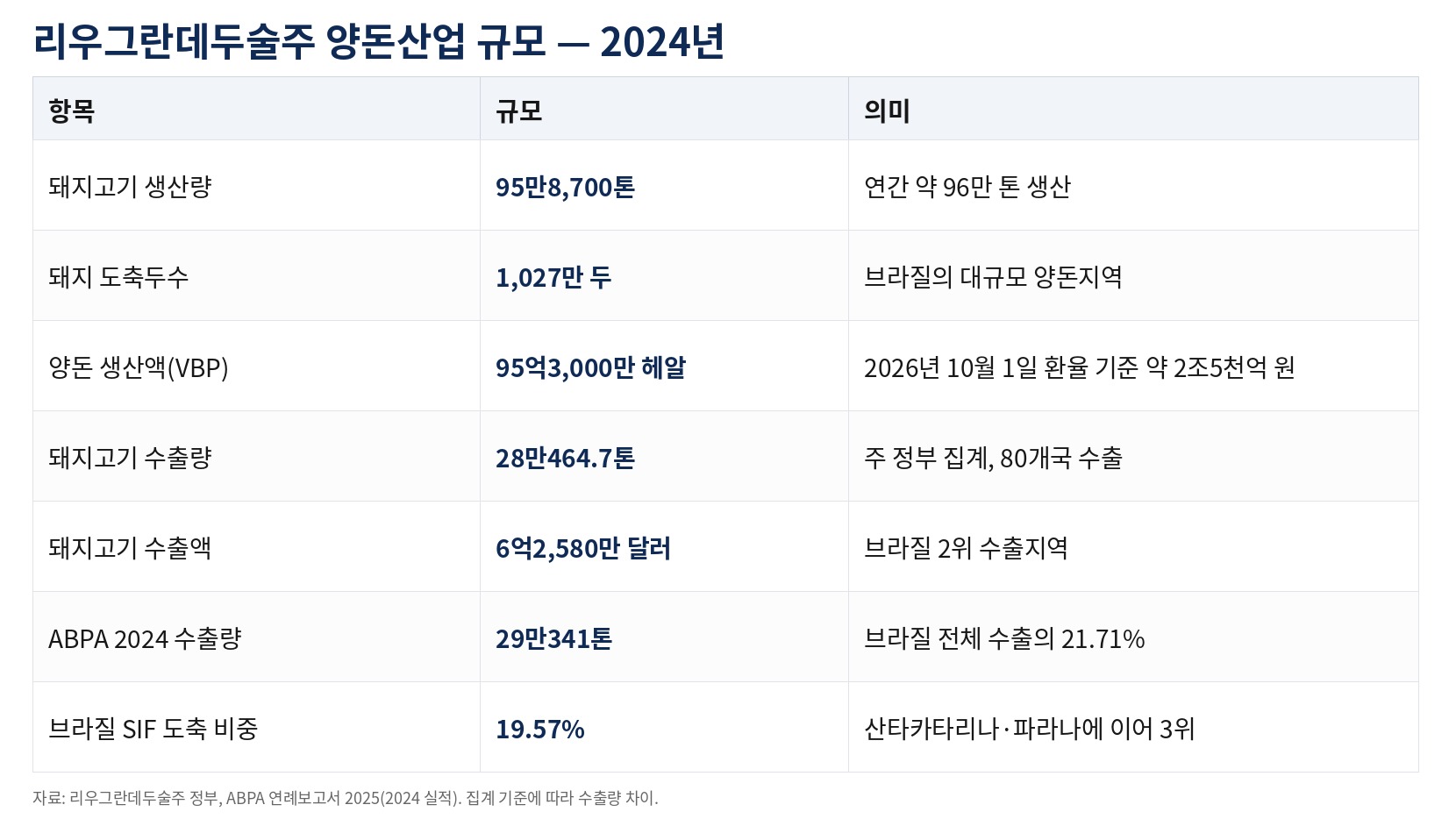
According to 2024 statistics from the Brazilian Animal Protein Association (ABPA), pork exports from Santa Catarina state totaled 732,370 tons, accounting for 54.76% of Brazil's total. Rio Grande do Sul ranked second with 290,341 tons, or 21.71%. Together, the two regions account for approximately 76.5% of Brazil's pork exports. Paraná accounted for 185,640 tons, or 13.88% of the total.
Part 2
Rio Grande do Sul itself has a substantial production base. According to "Radiografia da Agropecuária Gaúcha 2025" published by the government of Rio Grande do Sul, pork production in 2024 was recorded at 958,700 tons, and the number of pigs slaughtered was 10.27 million. The total value of production (VBP) of the pig farming sector is 9.53 billion reais, which is approximately 2.5 trillion won based on the exchange rate as of October 1, 2026.
According to the same data, Rio Grande do Sul exported 280,464.7 tons of pork to 80 countries in 2024, with an export value of $625.8 million. The state government identifies Rio Grande do Sul as Brazil's second-largest pork exporting region.
Santa Catarina's export volume is larger. According to Epagri/Cepa's 2025 annual data, Santa Catarina exported 748,719 tons of pork with an export value of $1.85417 billion. Exports to Korea amounted to 20,145 tons with an export value of $48.99 million, with Korea accounting for 2.7% of Santa Catarina's pork exports.
For this reason, the hygiene assessment of Rio Grande do Sul cannot be viewed merely as the review of another region in Brazil. This is because Rio Grande do Sul, the second-largest export region, has been included in the market access assessment, following Santa Catarina, Brazil's largest export region currently supplying pork to the Korean market.
However, the fact that the two regions account for about 76.5% of Brazil's pork exports does not mean that this volume can be exported to Korea.
The decision on whether to allow the import of Rio Grande do Sul has not yet been made, and even if it is permitted in the future, the actual export volume to Korea may vary depending on the number of approved processing plants, import conditions, export prices, exchange rates, logistics costs, and competition with other export markets.
( Part 3 )
Moves to Resume Korea-Mercosur Negotiations… New Variable in Market Access for Brazilian Pork
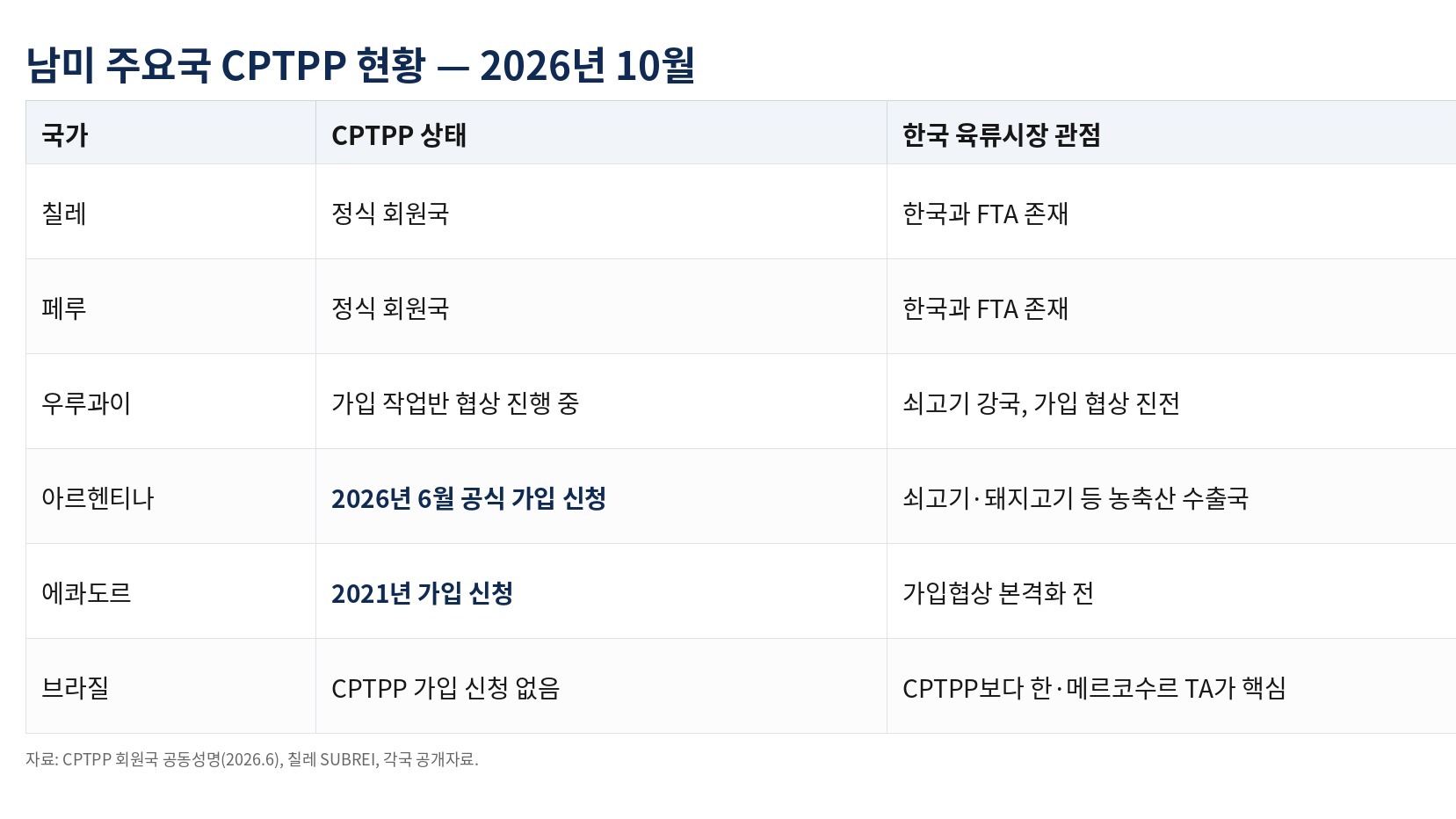
Although negotiations began in 2018 and were suspended after the 7th round in 2021, the leaders of South Korea and Brazil agreed to push for the resumption of talks in 2026.
To examine the movements regarding Brazilian pork access to the Korean market, it is necessary to look separately at the progress of the Korea-Mercosur trade agreement along with the sanitary assessment.
South Korea and Mercosur began trade agreement negotiations in 2018, but formal negotiation rounds have been suspended since 2021. This year, however, movements to resume negotiations are reappearing.
The Brazilian government began collecting domestic opinions regarding the Korea-Mercosur trade agreement in April 2026 and received feedback from companies and related organizations until May 15. Subsequently, at the Korea-Brazil summit in July, the leaders of both countries agreed to pursue a plan to announce the resumption of negotiations for the Korea-Mercosur trade agreement at the 69th Mercosur Summit, provided that the consent of other Mercosur parties is secured.
Therefore, as of October 2026, the accurate expression is not that "Korea-Mercosur negotiations have resumed," but that "the resumption of negotiations is being pursued."
The sanitary assessment currently underway for pork from Rio Grande do Sul and the Korea-Mercosur trade agreement are not the same procedure. The former concerns procedures related to sanitary and phytosanitary inspections and market access necessary for Brazilian pork to enter the Korean market, whereas the latter is a trade negotiation dealing with bilateral terms of trade, such as tariffs and rules of origin.
In fact, in the joint statement between the South Korean and Brazilian leaders in July, the two leaders addressed the issue of access to the Korean market for Brazilian beef and pork, separate from the push to resume negotiations between South Korea and Mercosur. Regarding pork in particular, they agreed to continue joint efforts to expand access to the Korean market to regions of Brazil other than Santa Catarina.
It is still too early to judge the impact on the domestic pork market.
At this stage, it is difficult to predict the impact on import volumes or domestic pork prices in numerical terms. This is because the approval status, timing, designated processing plants, and import conditions for pork from Rio Grande do Sul have not yet been finalized.
However, it is clear that if the permitted import regions are expanded, the range of supply areas within Brazil from which domestic importers and meat processing companies can source will broaden.
Brazil's overall pork exports have continued to rise recently. According to ABPA, Brazil's pork exports from January to August 2026 totaled 1.057 million tons, an 8.9% increase compared to the same period last year. In terms of weekly export volume for August, Santa Catarina ranked first with 64,091 tons, followed by Rio Grande do Sul with 30,369 tons.
According to the same ABPA data, Brazilian pork exports to Korea from January to August 2026 totaled 19,798 tons, a 33.7% increase compared to the same period of the previous year. With volumes to Korea already increasing based solely on the existing Santa Catarina supply, the possibility arises that supply options will broaden if the permitted regions are expanded to include Rio Grande do Sul.
What is currently confirmed is that the Korean technical delegation conducted a process to assess the feasibility of pork market access in Rio Grande do Sul. However, caution is needed in immediately interpreting this as a signal that import approval is imminent.
- #수입육
- #축산물
- #브랜드
- #유통
Related Content
SPECIAL FOCUS
Chicken Supply Rises, But Cuts Are Short… Mixed Supply and Demand Battle Amidst November Price Drop
The broiler market in November is expected to face increasing downward price pressure due to the rise in slaughter volume. However, it is difficult to conclude that the overall supply and demand in the chicken market has become sufficient based solely on the increase in supply.
2026.11.6
SPECIAL FOCUS
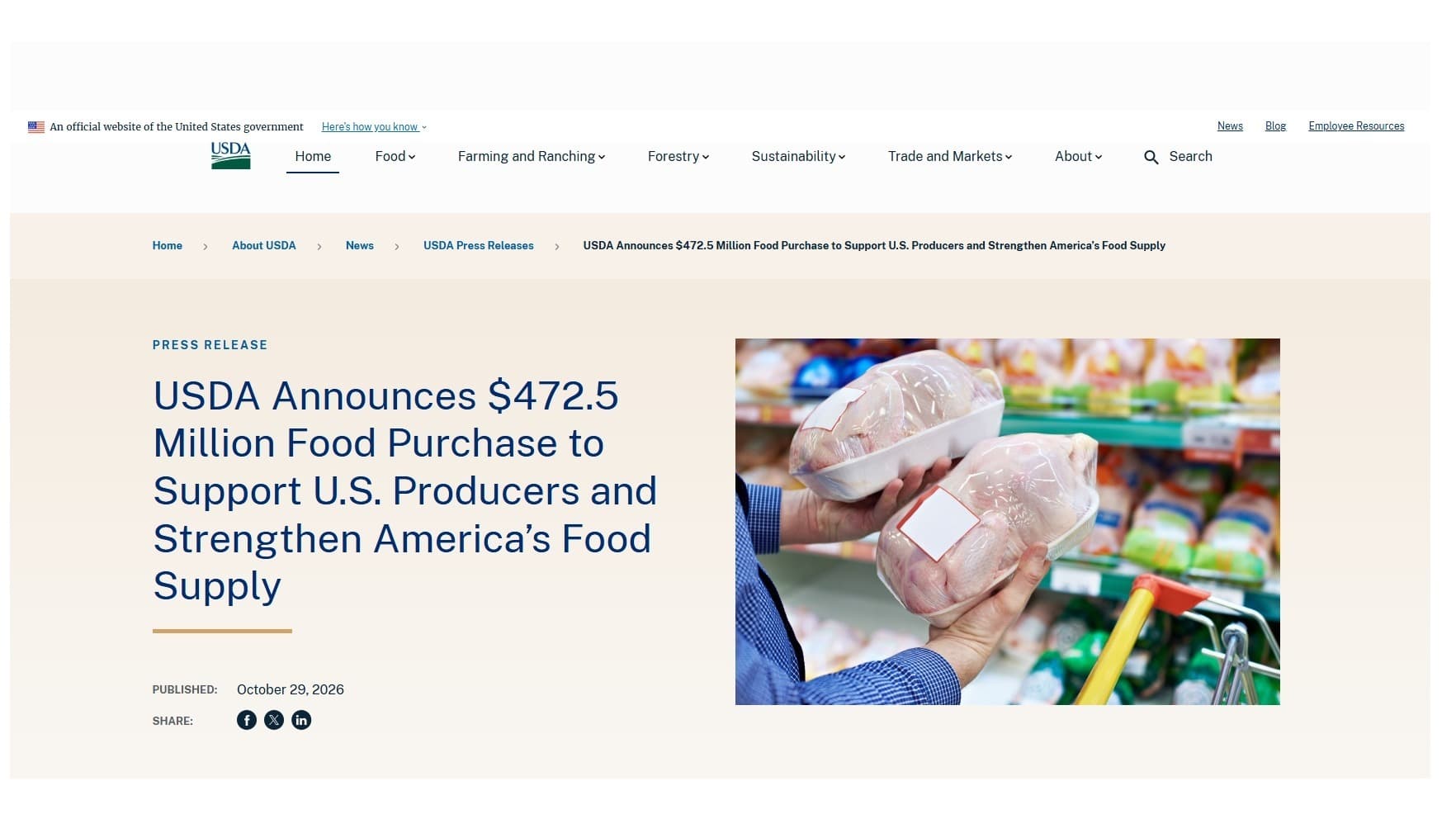
U.S. Government to Purchase $41 Million in Pork… Supporting Market Stabilization for Agricultural, Livestock, and Fisheries Products
The U.S. Department of Agriculture (USDA) announced a plan to purchase agricultural and fishery products worth a total of $472.5 million, including $41 million in pork and $20 million in chicken.
2026.11.1

SPECIAL FOCUS
Pork trotters restaurants have changed, but the raw material market remains the same… What is the way out for domestic pork trotters?
The fact that domestic pig's trotters are not selling does not mean that consumption of pig's trotters has disappeared. The issue lies in how well the market supplying the raw materials has kept pace with the changes in how consumers select and order pig's trotters.
2026.10.29