
Global Field Report
China's Muyuan Invests Approx. 190 Billion Won in Vietnam... Sets Out to Establish 2 Million Head Production System
Construction begins on a pig farm in Gia Lai Province with a capacity of 16,200 sows and 209,000 fattening pigs per cycle.
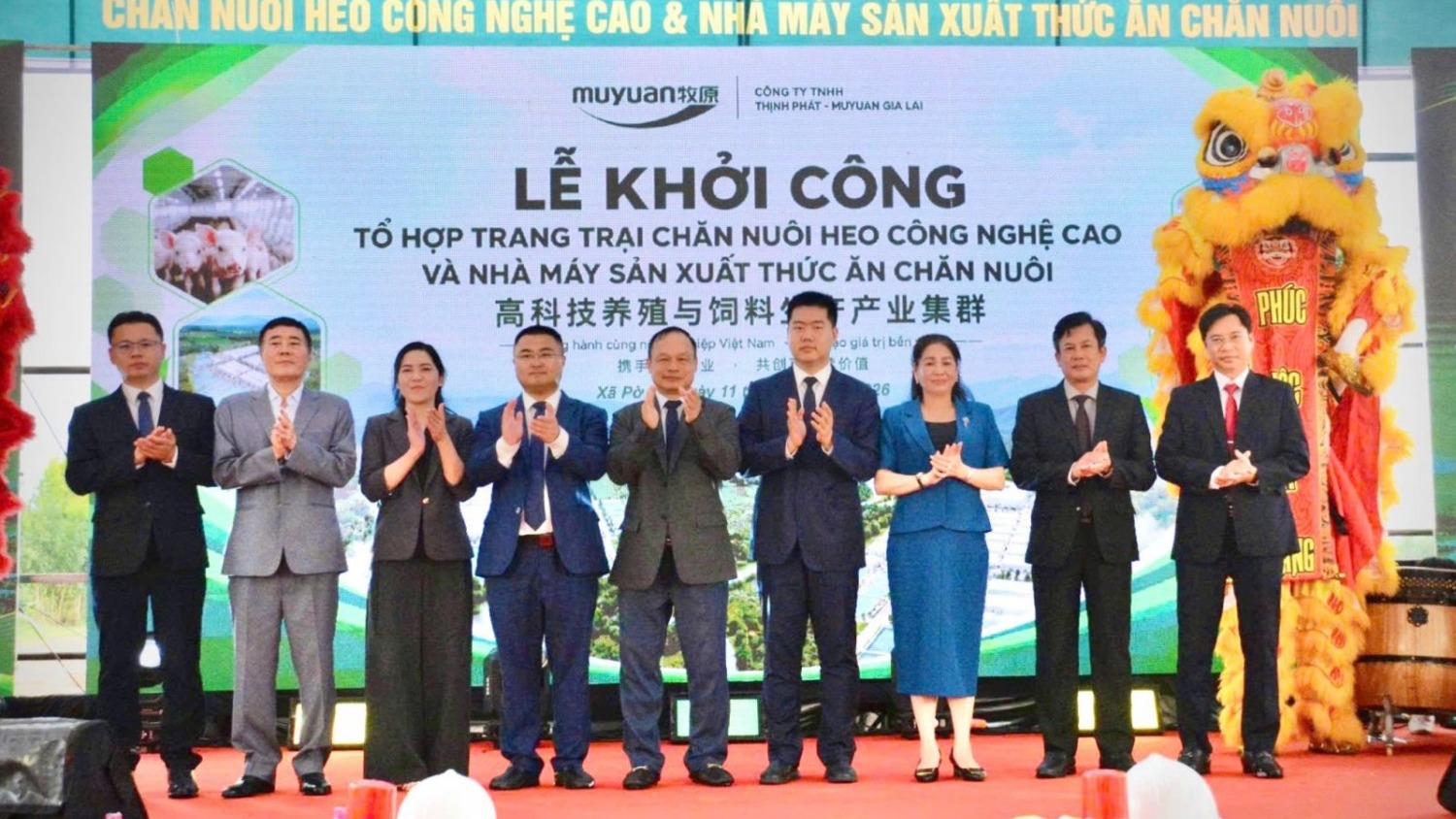
Muyuan, a major Chinese pig farming company, is investing approximately $140 million (about 200 billion won) to build a large-scale pig farm and feed factory in Vietnam. With plans to secure an annual pig production capacity of 2 million head in Gia Lai Province, Vietnam, over the next five years, the entry of Chinese pig farming companies into the Southeast Asian market is drawing attention.
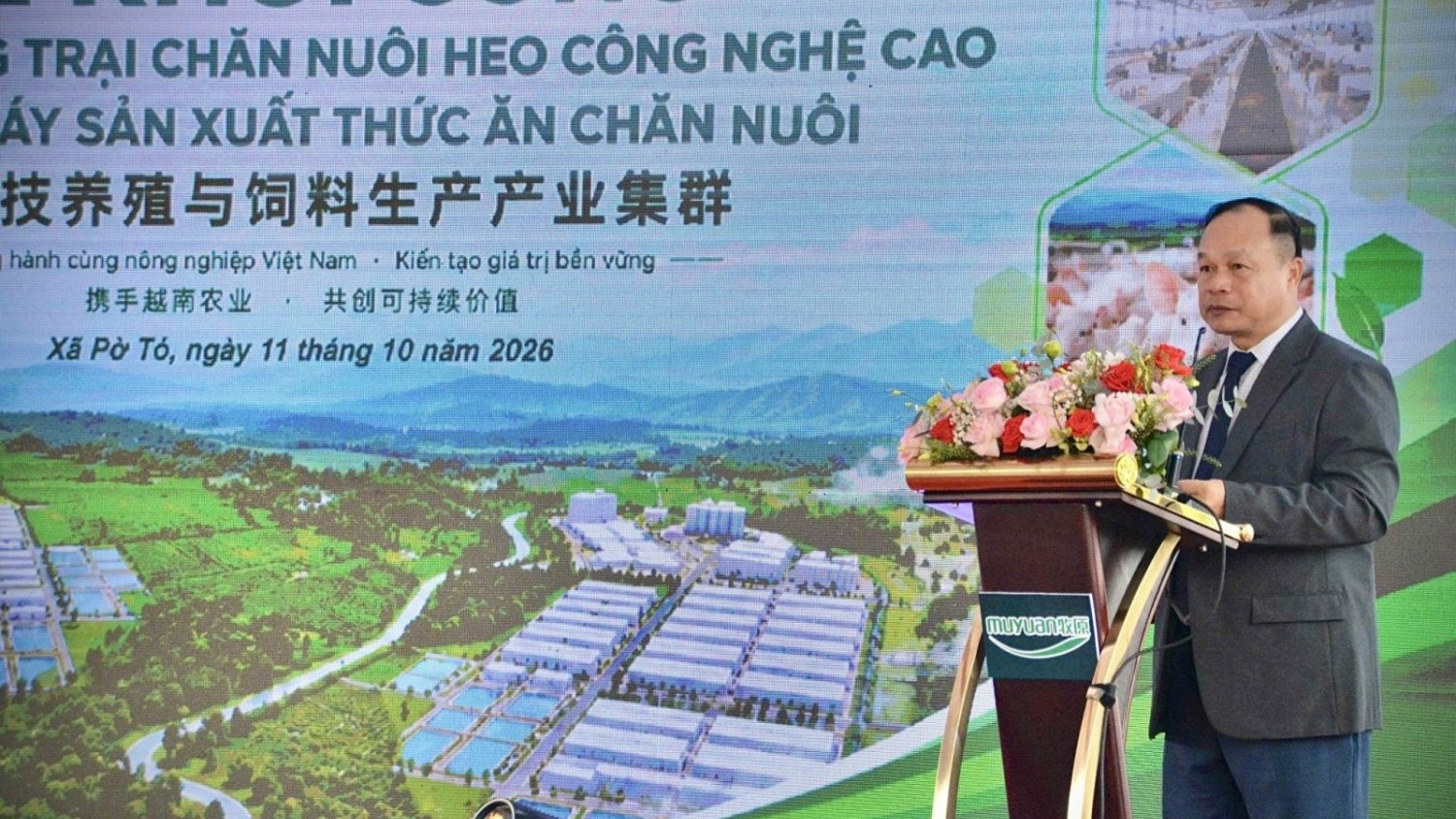
According to a report by the livestock industry media outlet Asian Agribiz on October 19 and an announcement by local Vietnamese authorities, Thinh Phat–Muyuan Gia Lai, a local affiliate of Muyuan, held a groundbreaking ceremony on the 11th for the construction of a state-of-the-art pig farm and a compound feed factory in Po To, Gia Lai Province, central Vietnam.
The total investment amounts to 3.615 trillion Vietnamese Dong, of which 3.1 trillion Dong will be invested in the construction of pig farms and 515 billion Dong in the construction of feed factories. In US dollars, this is approximately $137 million to $140 million, depending on the conversion time.

16,200 sows, 209,000 fattening pigs… Securing a large-scale production base
The pig farm will be built on a site of over 106 hectares and is designed to accommodate 16,200 sows and 209,000 fattening pigs per batch.
The planned annual rearing turnover is 2.17 times, which, based on a simple calculation, corresponds to a production scale of approximately 454,000 fattening pigs per year. However, this is a calculation based on design capacity, and the actual number of pigs shipped may vary depending on the operating rate and productivity.
The feed plant being constructed alongside it will have an annual production capacity of 360,000 tons. It is scheduled to produce compound feed, feed in powder and pellet form, and premixes.
This project focuses on establishing an integrated production system that links feed production with the rearing of breeding and fattening pigs. Plans are also underway to expand the business scope to include slaughtering, meat processing, and product distribution in the future.
Goal of an annual production system of 2 million heads over the next 5 years
Muyuan set a goal to secure an annual pig production capacity of 2 million head over the next five years in Gia Lai Province, starting with the construction of this pig farming and feed complex.
This is interpreted as a strategy to establish a large-scale pig production base in Vietnam, going beyond the expansion of a single farm. Muyuan is expanding its local business through cooperation with the Vietnamese pig farming company BaF Vietnam.
Gia Lai Province has a high proportion of pig farming in Vietnam. As of 2025, the number of pigs raised exceeded 1.68 million, ranking second nationwide. The local government has set a goal to raise approximately 75% of the total pigs in corporate and farm-based production systems and to apply advanced technology to more than 66% by 2030.
Targeting operation in Q1 2028… Environmental management is also a key task
The pig farm and feed plant are being pursued with a target construction period of approximately 12 months, and according to the original investment approval plan, production is scheduled to begin in the first quarter of 2028. However, the actual completion and start of commercial production after groundbreaking need to be verified separately.
The local government demanded the thorough implementation of livestock manure and wastewater treatment, odor management, and the establishment of a disease control system following the construction of the large-scale pig farming complex.
Muyuan plans to develop this complex into a leading pig farming facility in Vietnam by applying advanced breeding technology and environmental management systems.
Overseas Expansion of Chinese Pork Companies… Attention on Changes in the Competitive Landscape of the Southeast Asian Pork Market
Muyuan's investment in Vietnam is significant in that it represents a major Chinese pig farming company expanding the large-scale breeding technology and production management systems it has accumulated domestically into overseas markets.
In particular, if a vertically integrated model connecting feed production, pig farming, and future meat processing takes root in Vietnam, it is likely to affect local pork production costs and the supply structure.
However, as the current phase involves facility investment and securing production capacity, actual increases in pork production or price reductions have not yet been confirmed. Key points to watch going forward include the pace of Muyuan's additional investment, the utilization rate of production facilities, and changes in the competitive landscape with local Vietnamese companies.
COMPANY PROFILE
What kind of company is Muyuan?
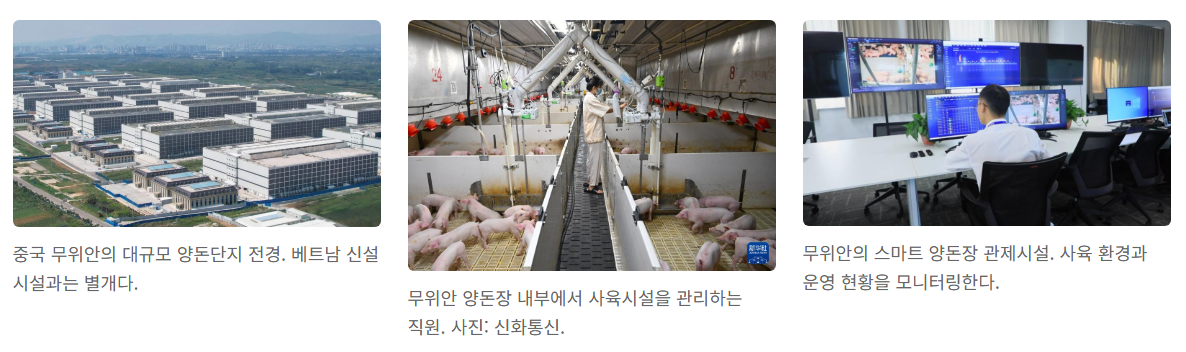
Muyuan is a global large-scale pig farming company headquartered in Nanyang, Henan Province, China. It started its pig farming business in 1992 and established a vertically integrated system connecting feed manufacturing, breeding pigs, pig rearing, slaughtering, and meat processing. It was listed on the Shenzhen Stock Exchange in 2014 and on the Hong Kong Stock Exchange in February 2026.
According to the company's announced 2025 annual performance, the shipment volume of marketable pigs77,981,000 heads, the number of slaughtered animals28,663,000 headswas. The sales revenue was144.145 billion yuan, net profit is15.812 billion yuanIt was tallied as such. As of the end of 2025, it operates in 25 provincial-level administrative regions of China.
Muyuan has been strengthening its smart rearing technologies, such as automated feeding, ventilation, and environmental control, as well as its proprietary breeding capabilities. In 2025, it pursued expansion into overseas markets by establishing strategic partnerships with Vietnam's BaF and Thailand's CP Group. This investment in Gia Lai Province can be seen as a move to expand the large-scale integrated production model established in China to the local Vietnamese market.
data: Muyuan 2025 Annual Report·
Original text and verification materials
- #수입육
- #축산물
- #정책
- #유통
Related Content
Global Field Report
South American Beef Makes a Strong Presence… Meat Export Competition at SIAL Paris 2026
South American beef companies stood out in the meat section of SIAL Paris 2026, where the global food industry gathered.
2026.11.1
Global Field Report
U.S. Expands Import Channels for Live Cattle from Mexico… Phased Reopening of 4 Border Quarantine Facilities
The United States is accelerating the normalization of livestock trade by successively reopening border quarantine facilities for the import of live cattle from Mexico. This approach involves gradually expanding import channels while maintaining the disease control system to prevent the introduction of New World Screwworm (NWS).
2026.10.26
Global Field Report
Danish Crown Reorganizes Business Centered on European Market… Aims for 50% High Value-Added Meat Sales by 2030
Danish Crown announced a reorganization plan on October 2 and stated that it would increase the proportion of high value-added meat supplied by member farms from the current approximately 25% to 50% by the end of 2030. To achieve this, seven of the existing eight business divisions will be integrated into a single organization.
2026.10.13