
SPECIAL FOCUS
"Not selling even at lowered prices… Domestic pig's trotters piling up in cold storage"
The 'one-piece' trading practice has collapsed, and even inquiries for frozen pig's trotters have dried up... Meat processing companies face severe inventory burden.
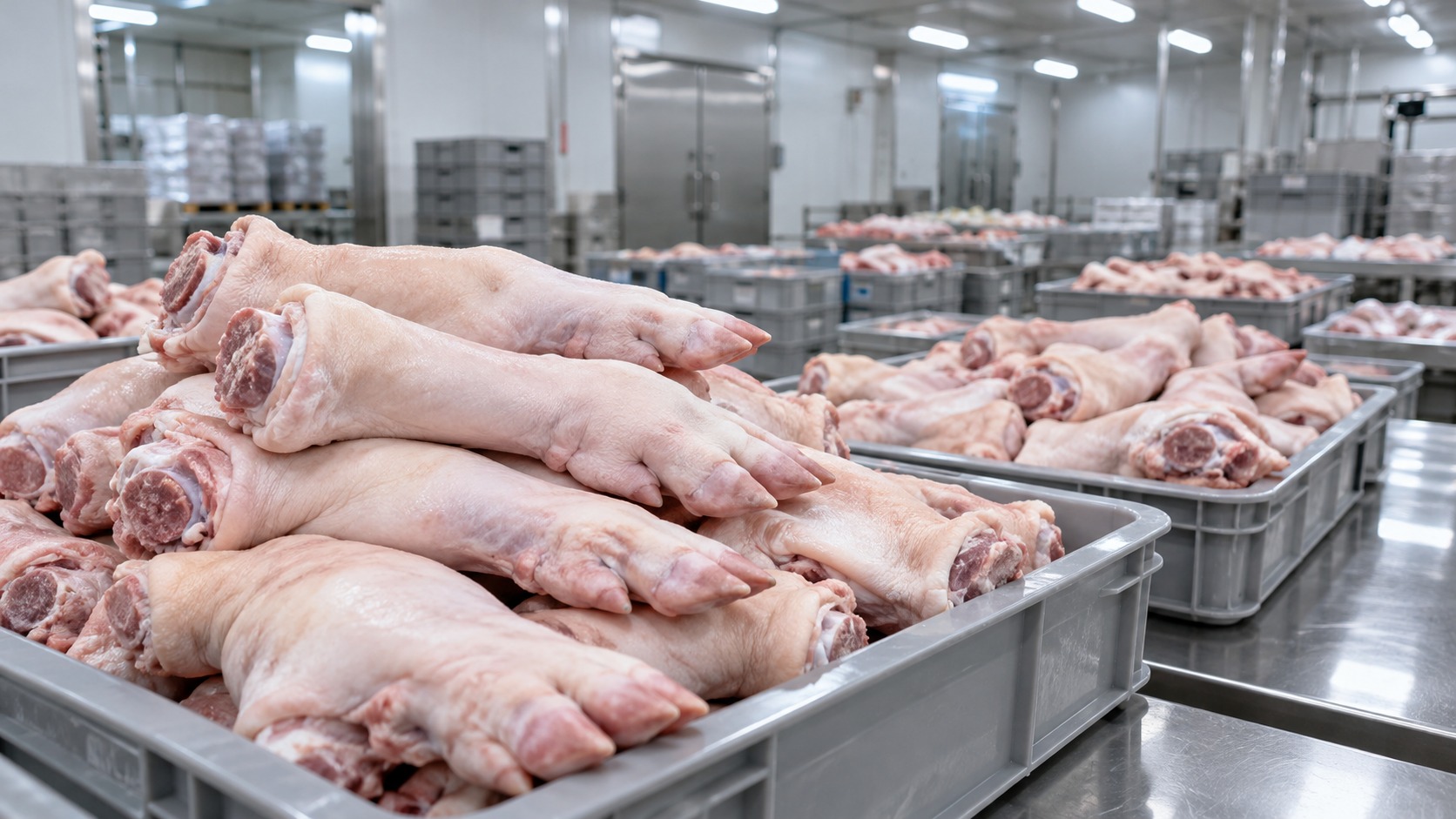
Pigs are slaughtered every day, but the pig's trotters produced in the process are not being sold on time.
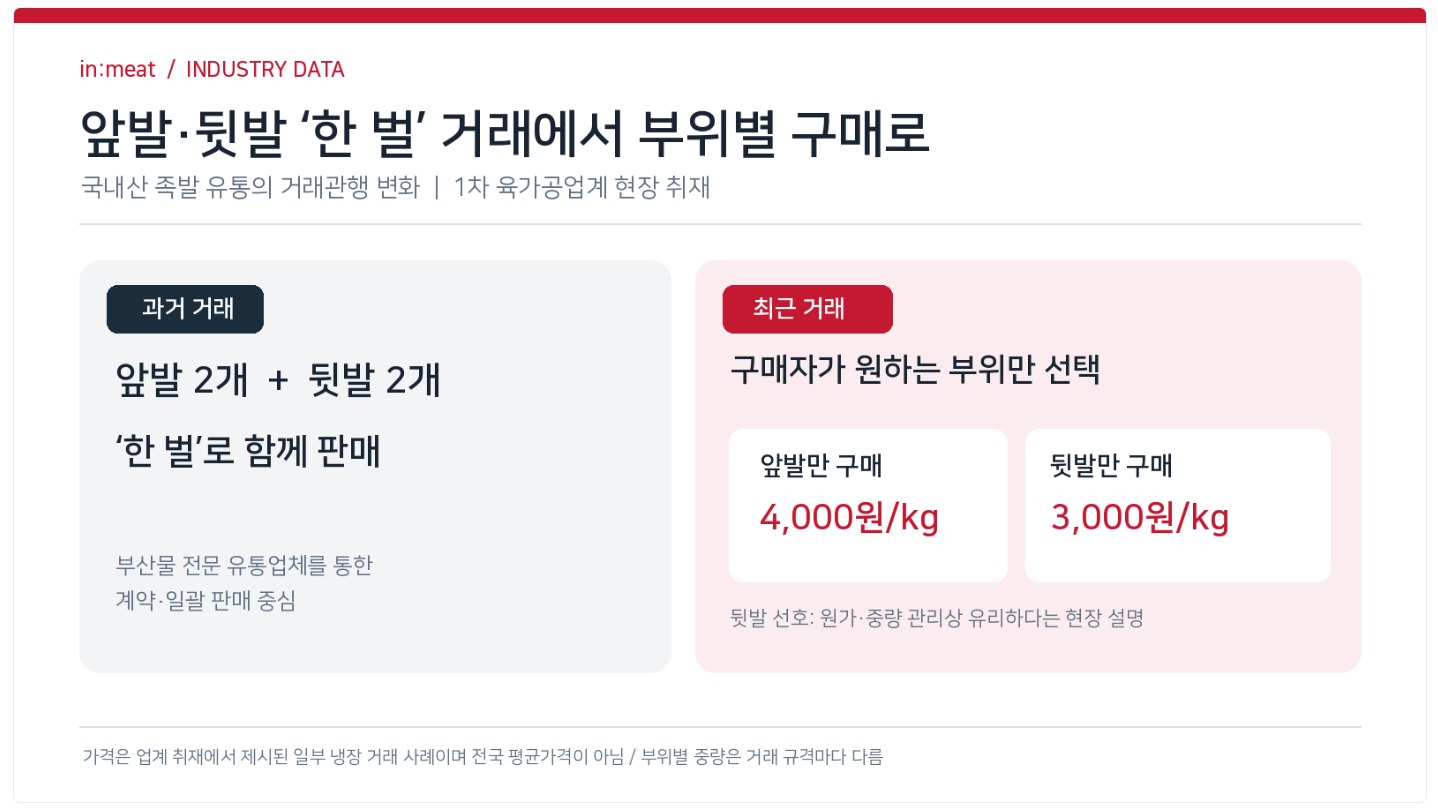
In the past, front and hind trotters were sold bundled together as a ‘set,’ but now the situation requires supplying only the specific parts the buyer wants. The primary meat processing industry explains that pig trotters that cannot be sold while refrigerated are sent to cold storage, and it is difficult to find buyers even if prices are significantly lowered.
The problem with frozen pig's trotters is particularly severe because the sales channels themselves have been blocked, rather than just the decline in selling prices. Unlike regular meat, the bones remain attached, making it difficult to utilize them as raw materials for other processing.
The domestic pig's trotters market is currently facing complex issues that go beyond simple price drops, including changes in trading practices, the accumulation of frozen inventory, and the restructuring of the distribution system.

The 'set' trade, where front and hind legs were sold together, is faltering.
Changes in the field are first evident in the transaction units. In the past, primary meat processing companies often handed over front and hind legs in bundles of ‘sets’ to specialized byproduct distributors. This was a method that allowed for the simultaneous disposal of all four legs from a single pig.
The explanation is that transactions where buyers specifically order only the parts they want are currently on the rise. If an order comes in for only hind hooves, only hind hooves must be supplied, and the unsold front hooves remain as inventory for the meat processing company.A structure where the seller could transfer the entire garment, shifting to a structure where the buyer selects and purchases specific parts.It amounts to the balance of power shifting.
Why do they look for hind legs more?… The calculation at a restaurant that buys by the kilogram and sells by the ‘one’
The industry also cites a recent trend among suppliers, such as specialty shops, to prefer hind trotters. While raw materials are purchased by the kilogram, cooked pig's trotters are typically sold individually or in fixed menu units. If a single piece of raw material weighs more than the standard, it is difficult to fully reflect the additional cost in the selling price when charging the same menu price.
The on-site transaction price for chilled hind legs is approximately 3,000 won per kilogram, which is 1,000 won lower than that of front legs at about 4,000 won. This amounts to a 25% price difference when purchasing the same weight. From a restaurant's perspective, this creates an incentive to manage weight and utilize relatively inexpensive ingredients to meet menu prices. However, individual restaurants' actual preferences may vary depending on menu composition, weight specifications, and cooking methods.
This choice is another burden for meat processing companies.This is because processing one animal yields two front paws and two hind paws simultaneously, and it is impossible not to produce only front paws to meet demand.am.
We need to at least get rid of the freezing. Because that is the problem right now.
— Remarks by a participant in the meat distribution industry meeting
Potential annual supply of 140,000 tons… Production cannot stop
The number of domestic pigs graded in 2025 was 18,715,278. Applying the industry standard of four trotters and a total weight of 7.5 kg per pig, the annual volume that could be generated isApproximately 74.86 million units, 140,364 tonsam.
This is not actual distribution performance or actual sales volume. It is calculated by multiplying the number of graded animals by the standard weight, without reflecting standard specifications and processing losses.Arithmetic estimate of potential supplyHowever, it is sufficient to demonstrate the size of the sales channels required for domestic pig's trotters.

500-head processing plant, 75 tons of pig's trotters if sales are blocked for just 20 days
Assuming a primary meat processing plant that processes 500 pigs per day, 2,000 pig trotters are generated daily. The weight is 3.75 tons. If the entire quantity is not sold within 20 working days...40,000 units · 75 tonsThis accumulates as inventory.
If the weight of the front and hind legs is distributed equally and a price of 4,000 won and 3,000 won is applied respectively, the recoverable sales proceeds based on 20 days of refrigerated sales amount to 262.5 million won. Conversely, if the entire quantity is not sold, that amount ofDelay in the opportunity to collect sales proceeds based on refrigerated pricesIt amounts to that. This does not mean that it is a confirmed loss amount.
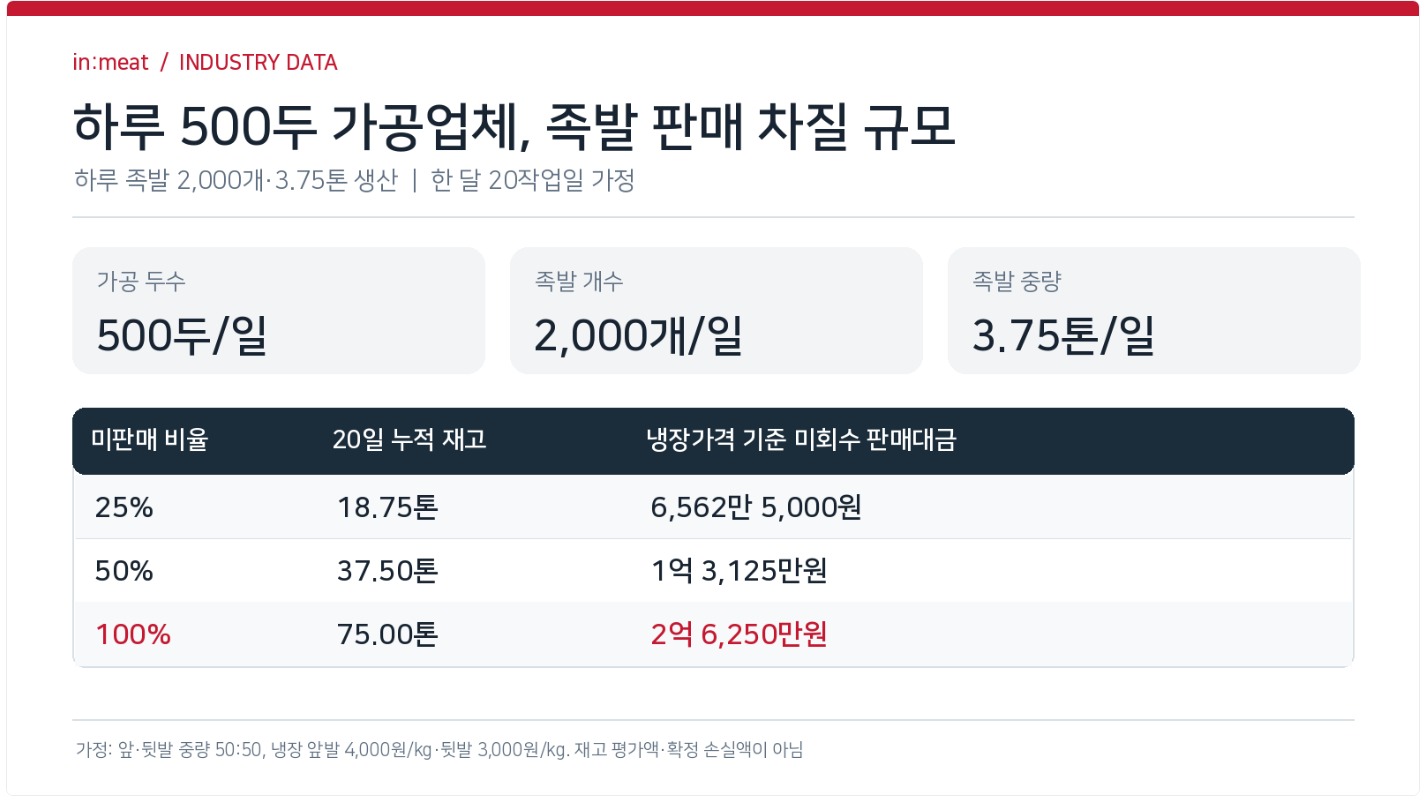
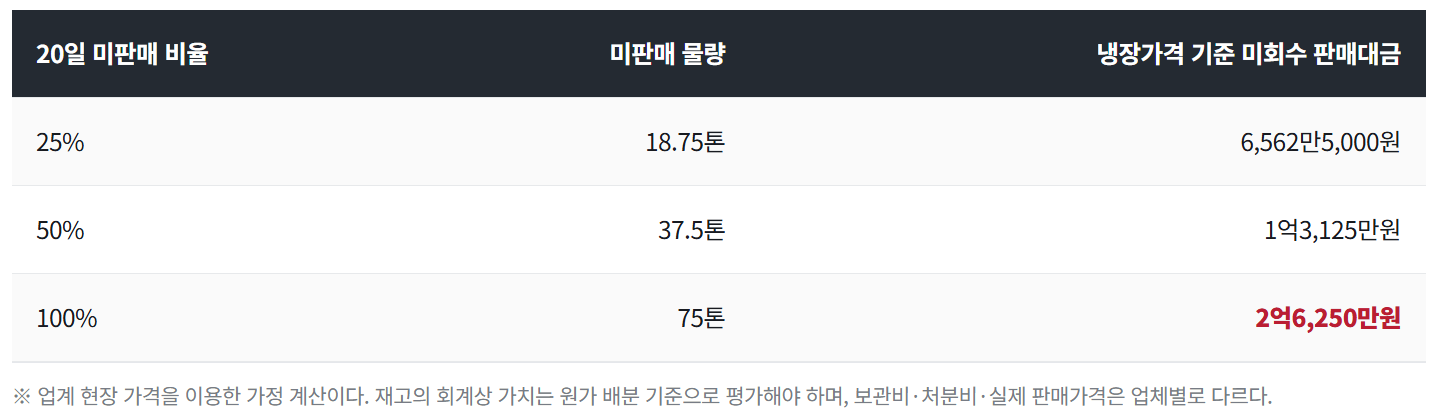
Even assuming the entire 75 tons of frozen pig's trotters are sold at 1,800 won per kg, the sales revenue amounts to 135 million won. This is approximately half of the estimated sales revenue based on the refrigerated price mentioned above. However, the issue the industry views more urgently is not the frozen price itself, butThe fact that there are few buyers willing to take it even at that priceam.
Putting it in the freezer isn't the end of it… The risk of claims grows over time
The industry explains that inventory of frozen pig's trotters with bones must be cleared within approximately one year if possible. This is because there have been cases where business partners have complained about off-flavors around the bones in products stored for extended periods. This period is not a legally mandated expiration date applied equally to all products, but rather a practical judgment made in the field that considers marketability and transaction risks.
This is why unsold pig's trotters cannot simply be piled up indefinitely in a cold storage warehouse. The longer the inventory remains, the lower the recoverable price becomes, while new pig's trotters continue to be produced in the meantime. This also entails the burden of warehousing costs and inventory management costs.
Primary meat processing companies taking on sales and inventory instead of specialized by-product distributors
In the past, under a structure where specialized by-product distributors purchased volume through contracts, primary meat processing companies could shift some of the sales burden of pig's trotters to distributors. However, according to industry sources, there has recently been an increase in cases where primary meat processing companies directly secure suppliers and manage everything from promotions and shipments to frozen inventory.
As a result, sluggish sales of pig's trotters lead not only to a decrease in byproduct revenue but also to problems with business capital turnover and warehouse operations. In particular, if the asymmetrical demand—where hind trotters sell but front trotters remain unsold—persists in the long run, risks may manifest more directly than with the previous contractual distribution structure.
Separating the shoulder blades from the trotters and selling them as raw materials for meat processing is also not an easy alternative. Deboning and trimming costs are added, and quality requirements for commercialization, such as hair removal, become stricter. If there is no separate market to accept the separated shoulder blades, it could result in only increased processing costs.
What is more important than the price is ‘time to sell’
The crisis in the domestic pig's trotters market cannot be explained solely by falling prices. It is compounded by the inevitable daily volume, unstable 'one-set' transactions, limited processing facilities, the risks of long-term storage, and the burden placed on primary meat processing companies that have taken on direct sales.
The industry no longer just asks when pig's trotters prices will recover.Is there a market where remaining inventory can be sold in time?This question has become more urgent.

- #수입육
- #축산물
- #브랜드
- #유통
Related Content
SPECIAL FOCUS
Chicken Supply Rises, But Cuts Are Short… Mixed Supply and Demand Battle Amidst November Price Drop
The broiler market in November is expected to face increasing downward price pressure due to the rise in slaughter volume. However, it is difficult to conclude that the overall supply and demand in the chicken market has become sufficient based solely on the increase in supply.
2026.11.6

SPECIAL FOCUS
U.S. Government to Purchase $41 Million in Pork… Supporting Market Stabilization for Agricultural, Livestock, and Fisheries Products
The U.S. Department of Agriculture (USDA) announced a plan to purchase agricultural and fishery products worth a total of $472.5 million, including $41 million in pork and $20 million in chicken.
2026.11.1

SPECIAL FOCUS
Pork trotters restaurants have changed, but the raw material market remains the same… What is the way out for domestic pork trotters?
The fact that domestic pig's trotters are not selling does not mean that consumption of pig's trotters has disappeared. The issue lies in how well the market supplying the raw materials has kept pace with the changes in how consumers select and order pig's trotters.
2026.10.29