
SPECIAL FOCUS
Brazilian Pork Exports to China Expanded... Includes Internal By-products, Skin, and Bones
Brazil and China Sign Sanitary Protocol to Expand Pork By-product Exports

China has allowed the import of Brazilian pig internal by-products, pig skin, and pig bones.
The Brazilian Ministry of Agriculture and the Ministry of Foreign Affairs announced in a joint notice on September 29 that China has allowed the export of internal by-products, skin, and bones of Brazilian pigs.
This measure follows the sanitary protocol for expanding the export of pork by-products signed between Brazil and China on September 26. According to local Brazilian reports, the protocol was signed in the presence of Brazilian Agriculture Minister André de Paula and Chinese Ambassador to Brazil Zhu Qingchao.

Not the first export to China, but ‘expansion of product range’
Brazilian pork was already being exported to the Chinese market. ABPA stated that Brazil exported 2.7 million tons of pork to China from 2013 to 2024.
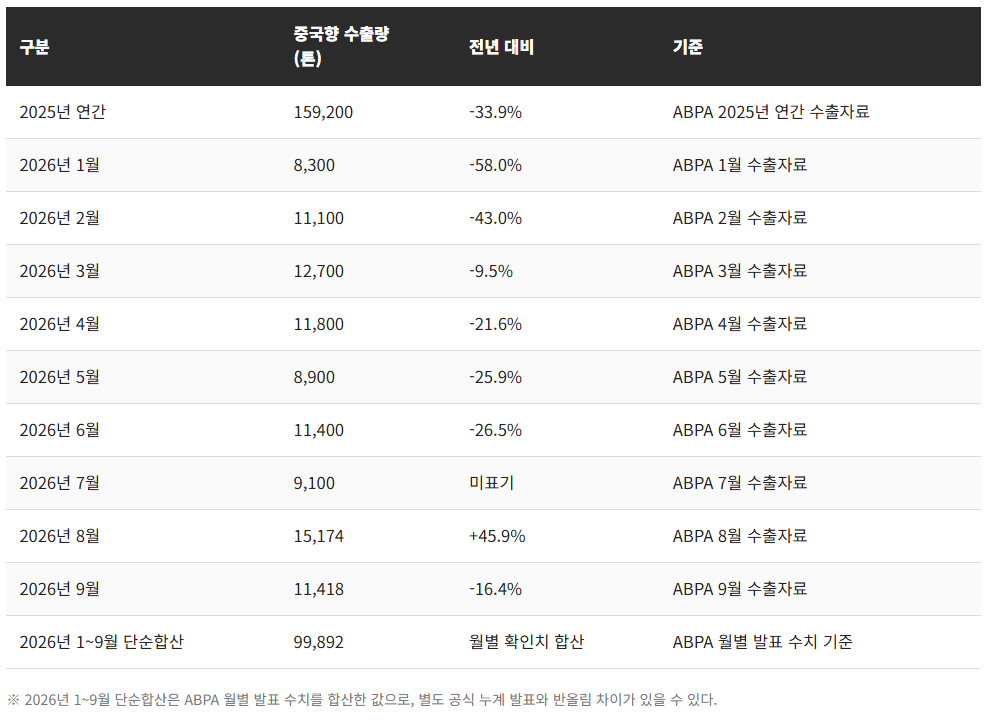
China remained a major export destination for Brazilian pork in 2025. According to ABPA's 2025 annual export data, Brazil's pork exports to China totaled 159,200 tons.
Therefore, this measure does not mark the first export of Brazilian pork to China, but rather expands the range of exportable items from the existing focus on meat to include internal pig by-products, skin, and bones.
Trends in China's imports of Brazilian pork
The figures below represent the volume of Brazilian pork exports to China, as disclosed by ABPA in its monthly export data. In accordance with ABPA standards, the categories include all pork products, such as fresh and processed pork.
Items permitted for export
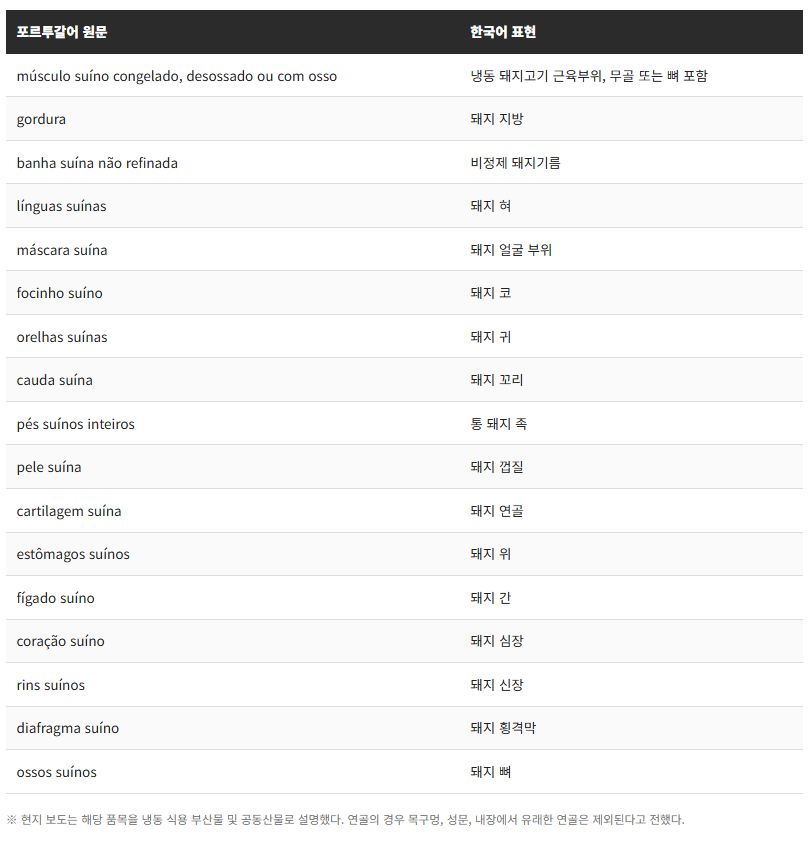
According to local reports, the items permitted for export include frozen pork muscle, fat, unrefined lard, tongue, face, nose, ears, tail, whole pig's trotters, skin, cartilage, stomach, liver, heart, kidney, diaphragm, and bones.
ABPA “Annual export of over 100,000 tons possible”
The Brazilian Animal Protein Association (ABPA) announced that it welcomes the signing of this protocol.
ABPA estimated that this expanded market access could enable the export of over 100,000 tons of Brazilian pork by-products to the Chinese market annually. It also stated that selling these products to higher value-added markets could generate over $100 million in additional annual revenue for the Brazilian pork industry.
Regional potential volume presented by ABPA
According to ABPA, 65,900 tons of internal by-products from Santa Catarina state could be shipped to the Chinese market annually. In Rio Grande do Sul state, it was estimated that there are export opportunities for over 40,000 tons of pork by-products and pork including bones. ABPA explained that the combined potential volume from the two regions exceeds 100,000 tons per year.
Protocol formalized following on-site inspection in China
According to local reports, this protocol was formalized following an inspection of Brazilian meat facilities by the Chinese side that began on September 20.
Chinese inspectors visited production facilities, farms, slaughterhouses, and official laboratories in six Brazilian states.
The Brazilian Ministry of Agriculture stated that during the consultation process, hygiene requirements, certification requirements, and conditions that facilities within Brazil wishing to export must meet were discussed.
With the opening of the Chinese market, Brazil is now able to export pig internal by-products, skin, and bones to China.
data
Joint announcement by the Brazilian Ministry of Agriculture and Ministry of Foreign Affairs, local reports including the Brazilian Animal Protein Association (ABPA), 3tres3, and Página Rural.
Original link
-Joint Announcement by Brazil’s Ministry of Agriculture and Ministry of Foreign Affairs:gov.br/agricultura
-ABPA Protocol Announcement:abpa-br.org
-ABPA 2025 Export Data:abpa-br.org/2025exports
-ABPA Export Data for January–September 2026:abpa-br.org/2026Jan-Sep
-Related consultation image:3tres3/MAPA
- #수입육
- #정책
- #유통
Related Content
SPECIAL FOCUS
Chicken Supply Rises, But Cuts Are Short… Mixed Supply and Demand Battle Amidst November Price Drop
The broiler market in November is expected to face increasing downward price pressure due to the rise in slaughter volume. However, it is difficult to conclude that the overall supply and demand in the chicken market has become sufficient based solely on the increase in supply.
2026.11.6
SPECIAL FOCUS
U.S. Government to Purchase $41 Million in Pork… Supporting Market Stabilization for Agricultural, Livestock, and Fisheries Products
The U.S. Department of Agriculture (USDA) announced a plan to purchase agricultural and fishery products worth a total of $472.5 million, including $41 million in pork and $20 million in chicken.
2026.11.1

SPECIAL FOCUS
Pork trotters restaurants have changed, but the raw material market remains the same… What is the way out for domestic pork trotters?
The fact that domestic pig's trotters are not selling does not mean that consumption of pig's trotters has disappeared. The issue lies in how well the market supplying the raw materials has kept pace with the changes in how consumers select and order pig's trotters.
2026.10.29