
R&D FRONTIER
Packaging Changes Color as Meat Freshness Deteriorates… Japan’s Kyushu University Develops Smart Film
Discoloration and fluorescence confirmed in chilled lamb experiment
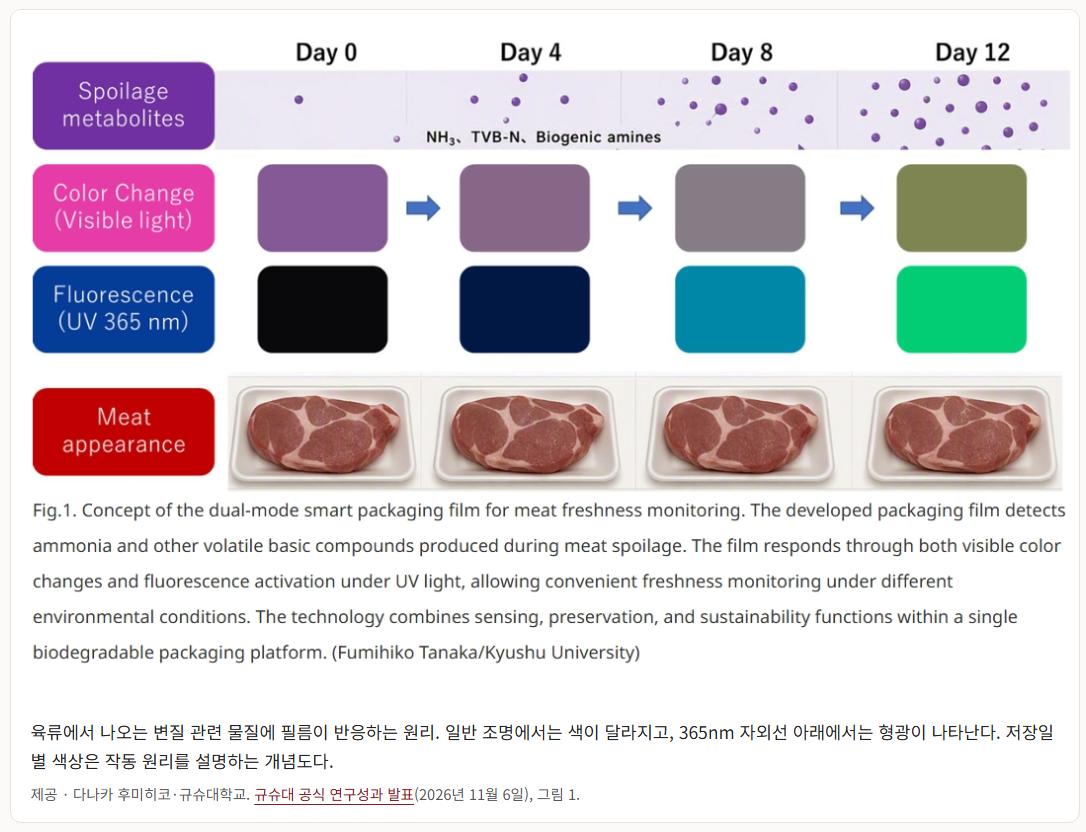
It can sometimes be difficult to determine how much the freshness of meat displayed on refrigerated shelves has changed based solely on its appearance. Researchers at Kyushu University in Japan have developed a smart packaging film that detects substances released as meat deteriorates. The film changes color under normal lighting, and a fluorescent signal appears when exposed to ultraviolet light.
Kyushu University released the results of applying this film to chilled lamb on November 6. The research, led by Professor Fumihiko Tanaka and Associate Professor Fumina Tanaka, involved researchers from Nanjing Agricultural University in China, Ghent University in Belgium, and Nguyen Tat Thanh University in Vietnam. The paper was published in an international academic journal.Chemical Engineering JournalIt was published in.
Black bean hull pigment reacts with substances from the meat
The film's base is casein, a milk protein. The research team added a fluorescent reaction to anthocyanin extracted from black bean hulls by treating it with pyridine. They then combined this pigment with ZIF-67, a material with numerous fine pores, and incorporated it into the film.
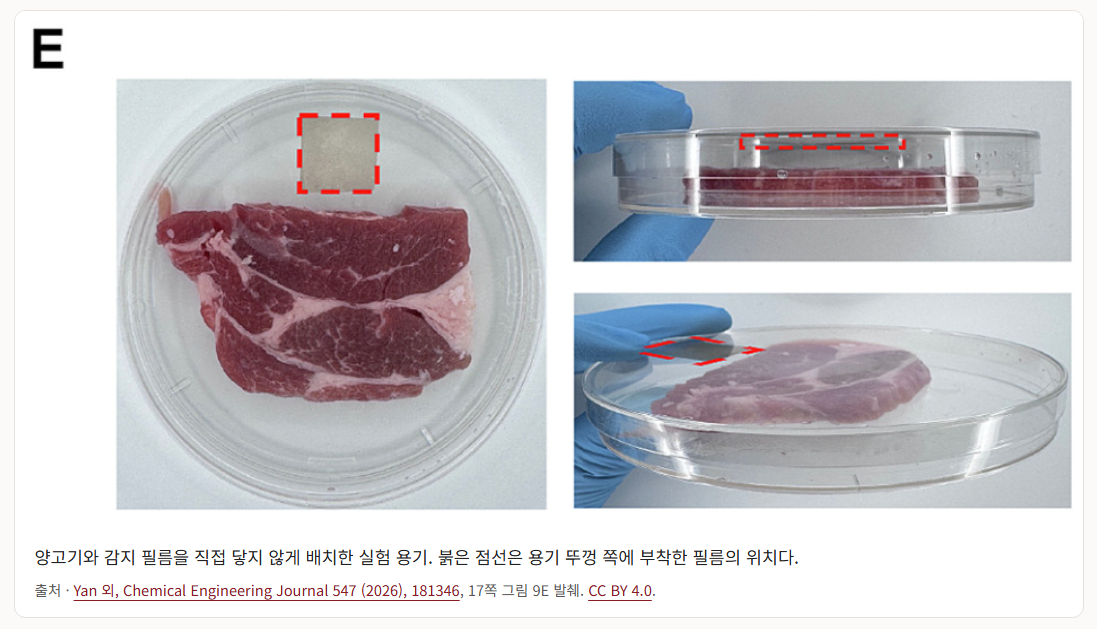
When lamb spoils, volatile substances such as ammonia are released. In the experiment, a film was attached to the lid of a container to keep it separate from the meat. The film reacts as substances released from the meat accumulate inside the container.
Discolors under normal lighting, fluorescent under UV light
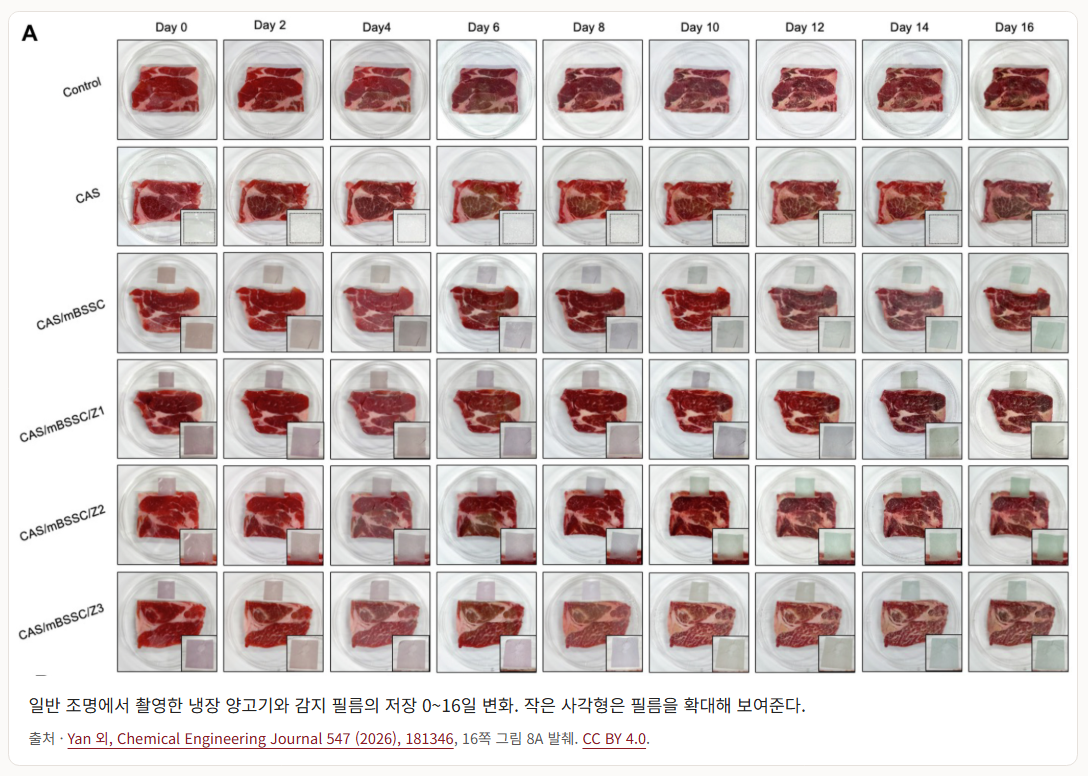
The research team tested three formulations with different ZIF-67 contents. Among them, Z2, which had an intermediate content, showed the best balance in detection performance, preservation characteristics, and material usage. Under normal lighting, the film color gradually changed during storage. When the color difference is subtle, as in the initial stage, fluorescence can be confirmed by shining ultraviolet light on it.
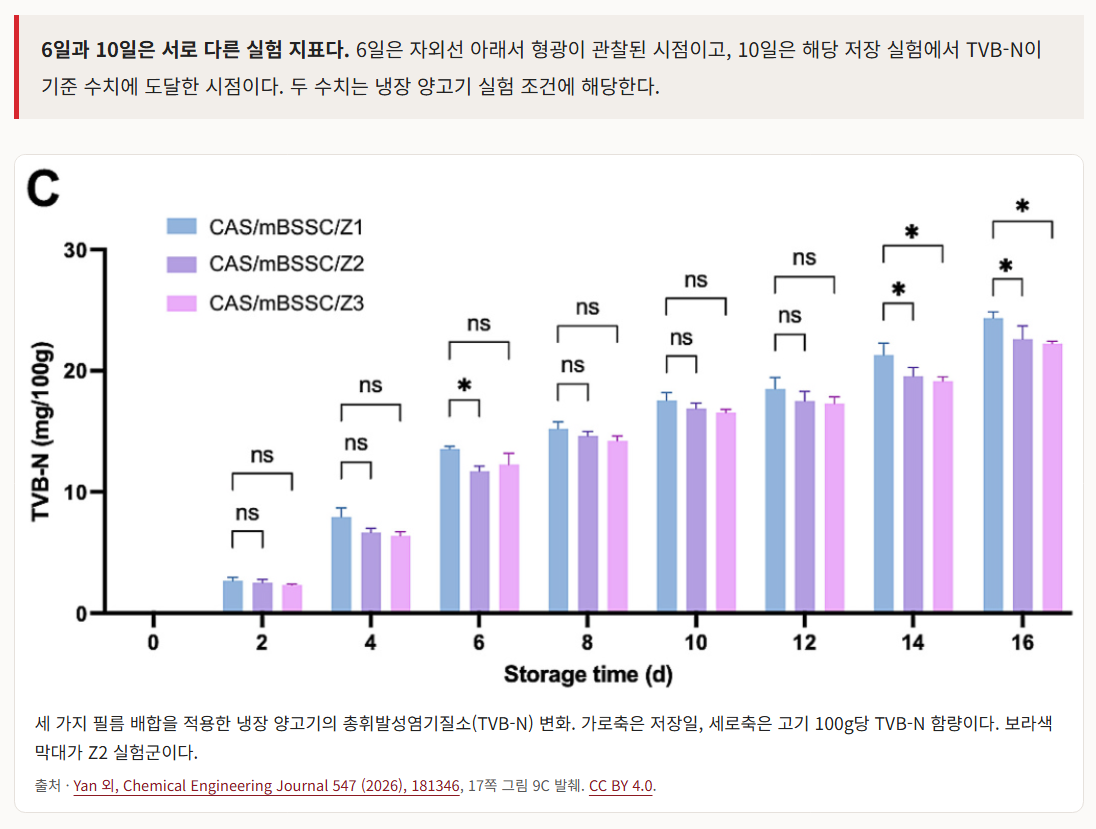
When 365 nanometer (nm) ultraviolet light was shone, fluorescence was observed on the Z2 film starting from about the 6th day of storage. The photo below shows the point at which fluorescence first becomes noticeable and how the signal changes thereafter for each formulation.
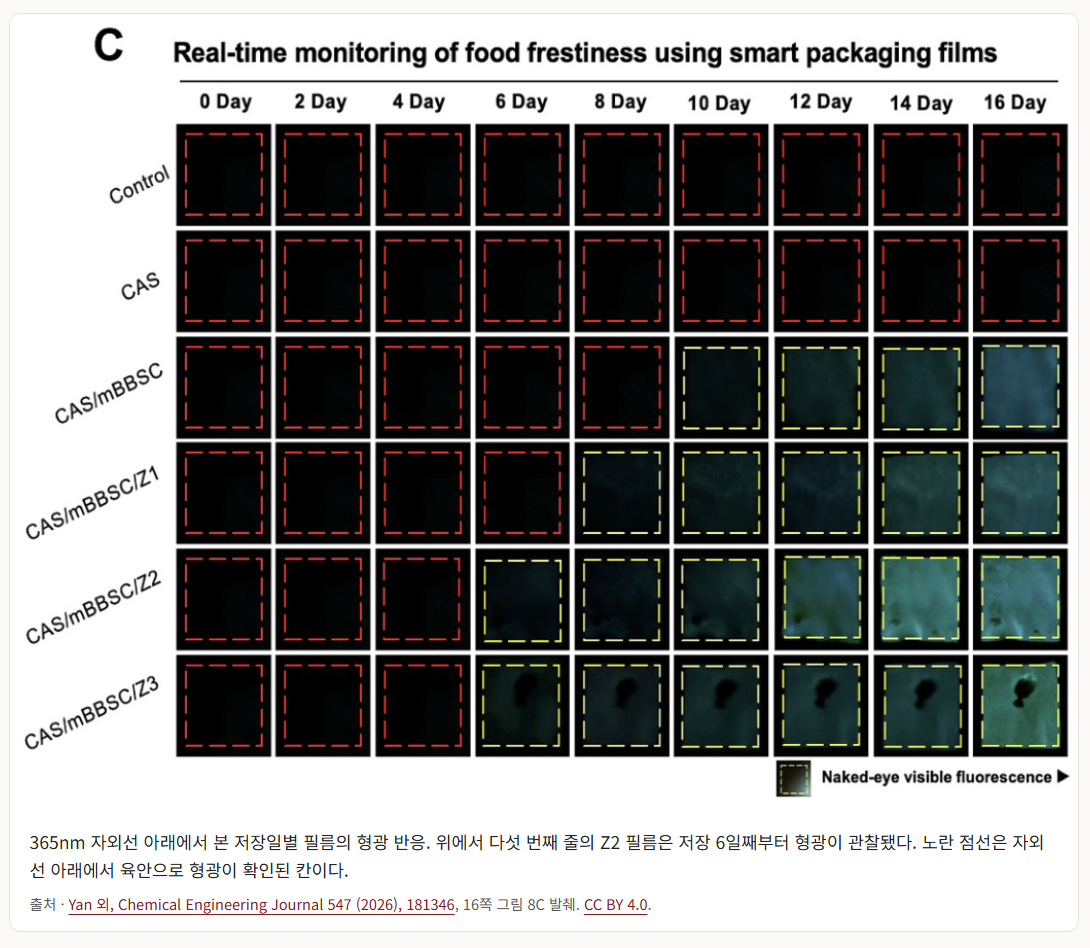
6 days when fluorescence appeared and 10 days when decomposition indicators were measured
The research team also investigated preservation performance. When measuring total volatile basic nitrogen (TVB-N), an indicator of the sum of nitrogen compounds that increase as meat spoils, the Z2 experimental group reached 15 mg/100 g, the standard set in the paper, on the 10th day of storage.
Compared to films using only casein, water resistance and antioxidant and antibacterial properties were also improved. In experiments exposed to soil and seawater, the film broke down and its mass decreased. Further verification is required regarding complete decomposition and long-term environmental impact.
Auxiliary indicators to check quality in stores and distribution centers
Once performance is verified in actual distribution environments, stores or logistics centers can check for quality changes during storage by examining the film color along with the date marked on the packaging. The research team stated that it is necessary to verify whether the reaction is consistent with other meats and foods, and whether the signal remains stable under transportation and display conditions. The safety of the material, the feasibility of mass production, and cost are also issues that need to be reviewed prior to commercialization.
Introduction to the Research Team · Professor Fumihiko Tanaka
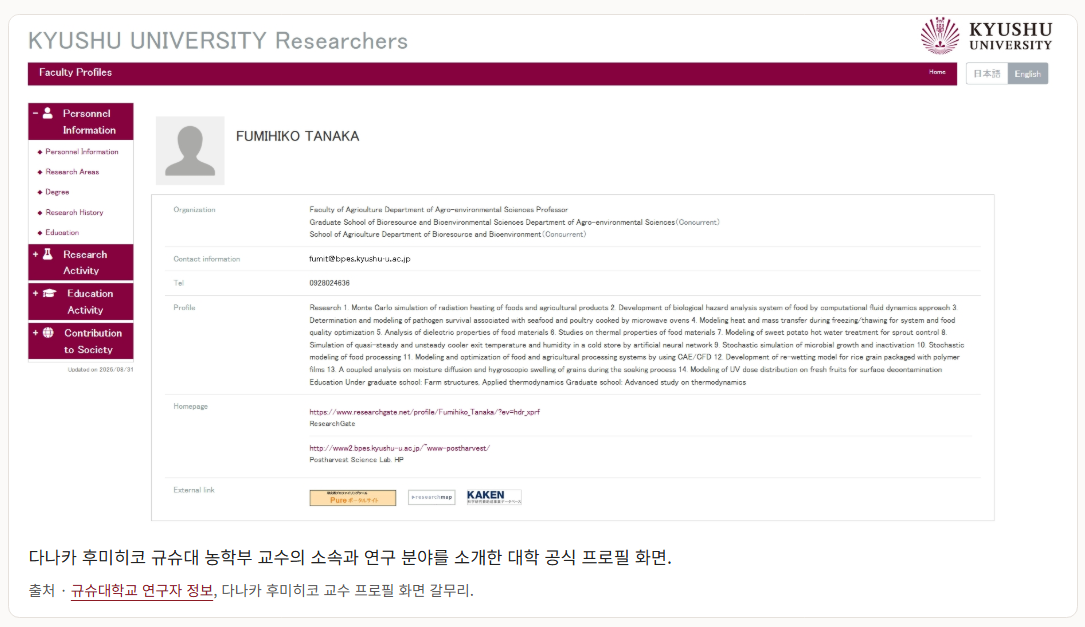
Fumihiko Tanaka is a professor in the Department of Agricultural Environmental Sciences at the Faculty of Agriculture, Kyushu University, Japan. He has been researching heat and moisture transfer during the freezing and thawing of food, changes in temperature and humidity in refrigerated storage facilities, and the growth and control of microorganisms in food. He led this research together with Associate Professor Fumina Tanaka.
Kyushu University Announces Official Research Results·Original research paper